



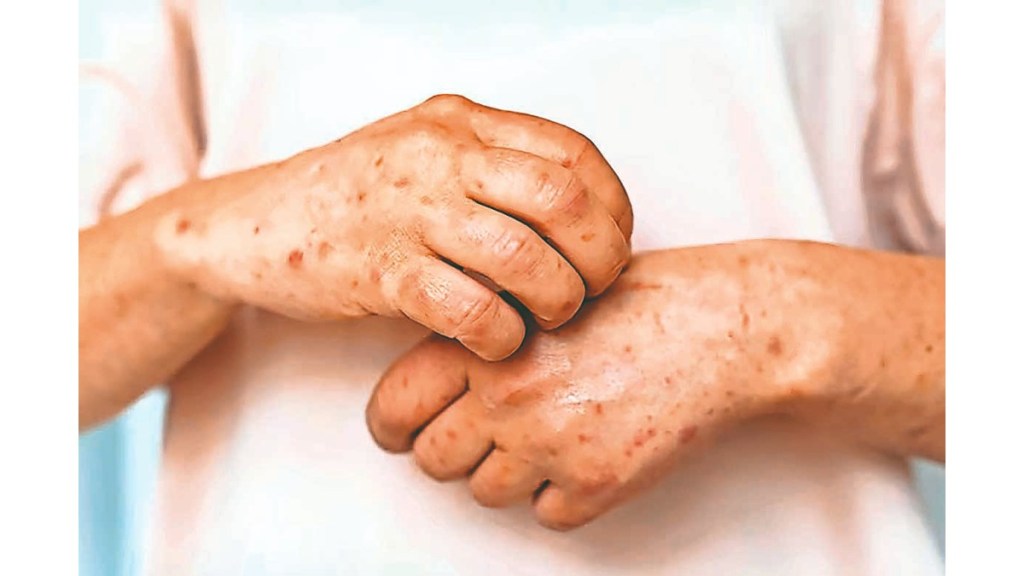
Mpox vs Chickenpox: The increasing number of mpox cases around the world has become a cause of concern among health experts. One of the most common symptoms of mpox is skin rashes.
However, it’s hard to tell the difference between a rash from the mpox virus, also known as the monkeypox virus, and one from the chickenpox virus. According to a report by Ohio State University, Both viruses, start with a fever before any marks that look like blisters or pimples appear. Usually, the sores fill with fluid, get bigger, then scab over and disappear. Mpox sores are usually larger than sores from chickenpox, and they’re deeper in the skin.
According to health experts, mox sores show up all at once, but chickenpox sores arrive in waves. With chickenpox, some spots might appear on your chest, back and face, then you notice your forearm is dotted, then maybe your legs. However, not all chickenpox sores will be in the same stage, while mpox sores progress at the same time then scab over all at once.
Typically, mpox sores are extremely painful, and chickenpox sores are just very itchy. Chickenpox sores usually last about two weeks, and mpox sores usually last two to four weeks.
What are the symptoms of mpox?
It could take days or even weeks after exposure before you experience symptoms. Early indications of monkeypox include symptoms similar to the flu, such as:
- Headache
- Fever
- Chills
- Pain in muscles
- Lethargy
- Lymph nodes with swelling
What are the symptoms of Chickenpox?
The symptoms of chickenpox are noticeable. Doctors can often tell if someone has chickenpox by looking at their skin. The following symptoms of chickenpox typically appear in that order:
- Fever
- Feeling lethargic
- Headache
- Continuous stomach ache for 1 or more days
- Irritating and constant skin rash that may appear as several tiny blisters
- Bumps containing what appears to be whitish translucent water
- Scabs appearing after blisters rupture
- Skin that seems patchy
- Spots that vanish eventually
How mpox is treated?
Mpox is treated with supportive care for symptoms such as pain and fever, with close attention to nutrition, hydration, skin care, prevention of secondary infections and treatment of co-infections, including HIV where present, as per the World Health Organization (WHO).
How chickenpox is treated?
Chickenpox typically clears up on its own within a few weeks. Most of the time, treatment involves easing the symptoms such as itching and discomfort.
You can keep the itch down by:
- Keeping cool (being in an air-conditioned room, applying cool clothes to the skin)
- Soaking in a lukewarm bath with uncooked oatmeal or baking soda
- Applying calamine lotion over the blisters
- Taking an oral antihistamine, such as Benadryl (diphenhydramine) or Zyrtec (cetrizine)
- You can also try nonaspirin over-the-counter (OTC) fever and pain medications.