



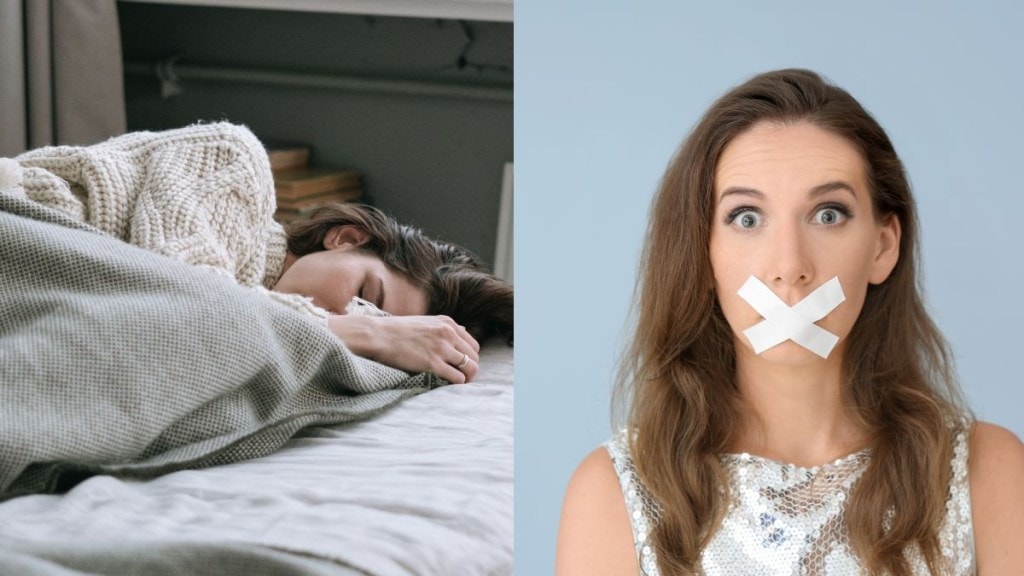
In a time when some chase ‘perfect sleep’ and others barely get any at all, the surge in unconventional sleeping techniques feels inevitable. The sleep trends that dominated 2025 reflected people’s need for self care and point towards growing insomnia issues. According to 2025 Global Sleep Survey by Resmed, a medical device company most people experience just 4 nights of good sleep per week. 29% struggle to stay asleep three or more times per week while 34% have trouble falling asleep. Stress, anxiety, and financial pressure are top sleep disruptors. The sleep trends that dominated reflect exactly that as people are either spending too much time in bed or risking their health by taping their mouth shut.
In this article, top sleep specialists talk about 2025’s craziest sleep trend:
Mouth taping
Mouth taping is exacting what it sounds like. A growing trend on social media platforms like TikTok, it involves wearing a tape over the mouth during sleep to encourage nasal breathing. Proponents of the practice say it can improve sleep quality, reduce snoring and increase oxygenation of the body. Dr Prashant Saxena – Principal Director & HOD Pulmonology, Critical Care & Sleep Medicine, Fortis hospital Vasant Kunj, says the practice could backfire as it can cause difficulty breathing, and there’s a risk of choking if the tape obstructs the airways. In some cases, Dr Saxena days it may also cause skin irritation. The sleep expert advises people to consult a healthcare professional before practicing mouth taping, especially those suffering from respiratory issues.
Potato bed sleep trend
Some sleep trends are all about self care and pampering and potato bed sleep is just that. Creating a nest like space in your bed by rearranging pillows and sheets to surround you in the bed sounds like ultimate sleep luxury. It works psychologically too. Fortis Hospital’s sleep specialist Dr Prashant Saxena says the viral internet trend has its own benefits as it has the potential for improved sleep due to the cozy, secure feeling it provides and this could be particularly beneficial for individuals with anxiety. Dr Saxena, however, adds a word of caution saying one must consider practicality and hygiene of such a setup as there could be potential allergic reactions or respiratory issues if not properly maintained.
Bed rotting
While creating a comforting setting for sleep could add to sleep quality, excess of it could reverse the benefits. Bed rotting is one such trend especially popular among Gen Z where people spend extended hours in bed watching movies, scrolling reels, or simply relaxing. While bed rotting may have some short-term benefits, in long term, it can spell disaster. Dr Ankit Kumar Sinha, Senior Consultant and Unit Head, Pulmonology, Respiratory & Sleep Medicine, Max Super Speciality Hospital, Vaishali says the trend says more about feeling overwhelmed than about resting. “While it’s okay to take a break now and then, doing it often can mess up the body’s natural sleep cycle.” Dr Sinha warns that too much ‘bed rotting’ can lead to broken sleep, feeling slow, and make someone even more anxious. If done in excess this can be a sign of bigger issues like stress or depression.
Apart from mental health, bed rotting has serious impacts on physical health. Dr Saxena says it can cause muscle atrophy due to lack of physical activity characterised by muscle weakness and loss of mass. Worse, there could be heightened risk of heart disease due to sedentary behaviour. Too much bed rotting can impact immune function which makes individuals more susceptible to illnesses.
Sleep divorce
Sleep divorce refers to the trend of couples sleeping in separate beds or bedrooms. According to the 2025 Global Sleep Survey by Resmed, a medical device company, one-third of couples say their partner’s snoring, loud breathing or gasping for air interrupts their sleep. The trend can work well in improving sleep quality, however it may have side effects on mental health. Dr Saxena says sleep divorce can help in enhancing sleep quality, reducing disturbances, and potentially improved relationship dynamics by reducing sleep-related conflicts.
However, Dr Saxena, says it’s important to not let sleep divorce come in the way of communication and bonding with partner as the trend may lead to potential feelings of isolation, and raises concerns about the impact on intimacy and relationship quality.
“Overall, any sleep trend is safe only when it works in a balanced way with your natural sleep patterns, physical health, and mental well-being. Consultation with a doctor or a sleep specialist is best before trying any new sleep-related practice,” concludes Dr. Venkatesh B. C, Senior Consultant Pulmonologist, SPARSH Hospital, Infantry Road, Bangalore.