



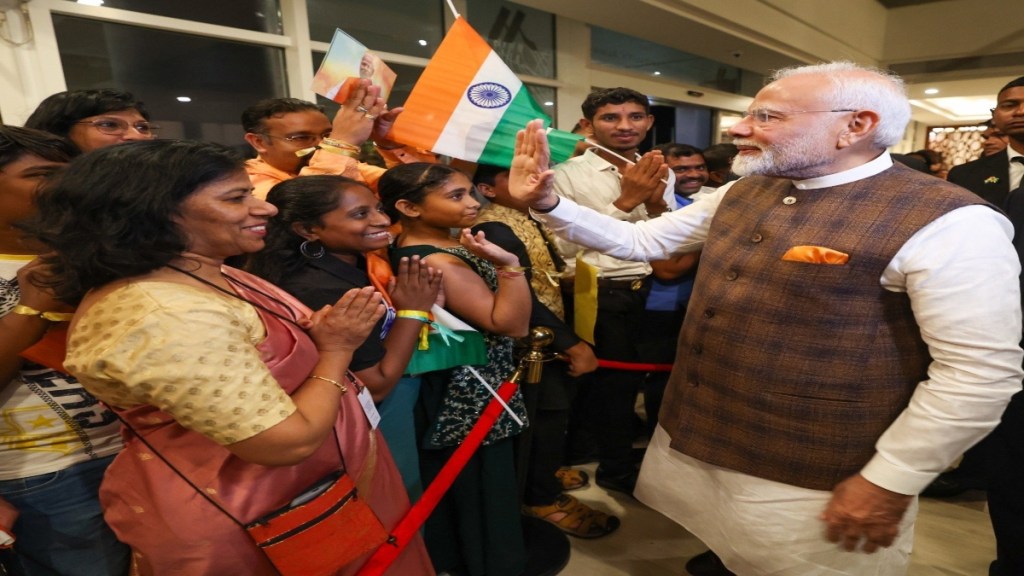
Prime Minister Narendra Modi’s arrival in Guyana on November 20, 2024, marks a historic moment in India-Guyana relations, as it is the first visit by an Indian head of state to the Caribbean nation in over 50 years. This visit, part of a broader diplomatic tour that included Nigeria and Brazil, serves as a significant step in deepening cooperation between the two countries. It highlights areas such as trade, defence, energy, and cultural exchange while also acknowledging the longstanding ties between India and Guyana’s Indian diaspora.
Upon his arrival in Georgetown, the capital city of Guyana, Prime Minister Modi received a warm and unprecedented welcome. In a rare display of hospitality, Guyanese President Irfaan Ali, Prime Minister Mark Anthony Phillips, and over a dozen cabinet ministers were present at the airport to greet the Indian Prime Minister. In addition, the Prime Ministers of Grenada and Barbados, Dickon Mitchell and Mia Amor Mottley, joined the welcome at the hotel, highlighting the regional importance of Modi’s visit.
In a special gesture, the Mayor of Georgetown presented Modi with the “Key to the City,” a symbolic recognition of the growing diplomatic and cultural ties between India and Guyana. Modi expressed his gratitude for the warm reception, posting on X social media: “Landed in Guyana a short while ago. Gratitude to President Dr Irfaan Ali, PM Mark Anthony Phillips, senior ministers, and other dignitaries for coming to receive me at the airport. I am confident this visit will deepen the friendship between our nations.”
The Prime Minister’s visit also underscores Guyana’s strategic importance in India’s growing foreign policy agenda. Guyana, which has recently emerged as one of the world’s fastest-growing economies due to its vast oil reserves, presents significant opportunities for cooperation in sectors such as defence and security, energy, infrastructure, and trade. India, with its growing energy needs and expertise in renewable technology, sees Guyana as a potential partner in these areas, making this visit all the more timely.
The Indian Diaspora: A Pillar of Connection
A key highlight of Modi’s visit was his interaction with Guyana’s vibrant Indian diaspora, which plays a crucial role in the nation’s economy and culture. The approximately 320,000 people of Indian origin in Guyana are descendants of indentured labourers who arrived in the country more than 180 years ago. These individuals have maintained strong cultural ties to India while making significant contributions to the development of Guyanese society.
During his visit, Modi met with members of the Indian community, and he expressed admiration for the community’s achievements.
Expanding Bilateral Cooperation
The Prime Minister is set to meet with President Irfaan Ali to discuss a range of issues, including energy, trade, and regional security. Guyana’s growing oil industry, combined with India’s expertise in energy production and renewable technologies, presents ample opportunities for collaboration. Modi’s visit could pave the way for deeper engagement between India and Guyana in energy, infrastructure, and even education.
In addition to bilateral talks, Modi will also participate in the second India-CARICOM Summit, where leaders from the Caribbean Community will discuss cooperation on issues such as climate change, energy security, and economic development. This summit highlights India’s increasing engagement with the Caribbean, as the country looks to build stronger ties with its regional partners in the face of global challenges like climate change and energy transition.
A Broader Diplomatic Agenda
Modi’s visit to Guyana forms the final leg of a comprehensive diplomatic tour that began in Brazil. At the G20 Summit in Rio de Janeiro, the Prime Minister participated in key discussions with global leaders on pressing issues such as food security, climate change, and economic inequality. Modi’s calls for greater attention to the concerns of the Global South—especially in relation to the food, fuel, and fertilizer crises—resonated with many nations. His focus on these issues further underscores India’s leadership on the global stage, particularly in advocating for the needs of developing nations.
Looking to the Future
From energy cooperation to cultural exchanges and trade, this visit signals the beginning of a new chapter in India-Guyana relations. It also underscores the importance of the Indian diaspora in bridging connections between the two nations.