



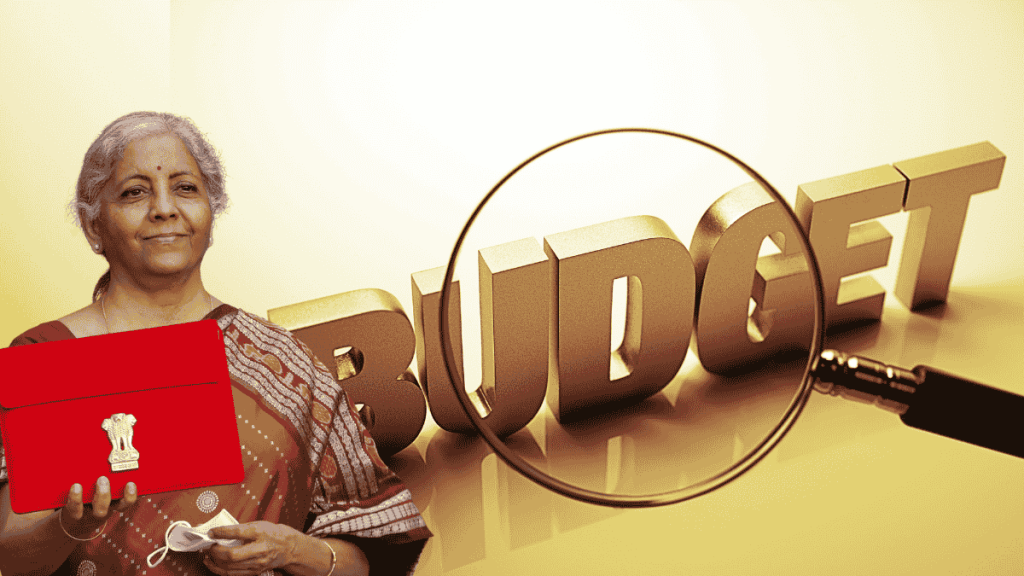
The countdown for Budget 2026 has begun. One of the year’s most watched financial event, Finance Minister Nirmala Sitharaman will present the budget for the 9th time in the Parliament. This year’s Budget is expected to take forward the Government’s consumption push that it began last year. Following up the income tax incentives announced in the Budget last year, the Government also rationalised the GST rates to give consumption a greater push.
For this Budget, the focus is is expected to be on steps taken towards-
- 1. Fiscal and policy support
- 2. Defence sector boost
- 3 MSME growth
- 4. Railway and infra sector development
- 5. Green transition and energy reforms among others
Industry body ASSOCHAM said MSMEs need urgent policy support to drive employment and exports. It called for strict enforcement of payment timelines, faster tax refunds and targeted relief for sectors hit by tariff shocks such as textiles, gems and jewellery, and seafood.
Budget 2025: Key Highlights
In the previous Budget, the government introduced a new income tax bill to simplify the law and reduce litigation. Under the new tax regime, no income tax is payable up to Rs 12 lakh, and up to Rs 12.75 lakh for salaried taxpayers due to standard deduction. Tax slabs have been revised to benefit all income groups. TDS and TCS norms have been rationalised to reduce compliance burden.
Fiscal deficit was estimated at 4.4% of GDP for 2025–26. Focus was also on agriculture, MSMEs, employment and skilling, energy and Indian exports.
To support urban development in the Union Budget of 2025, FM announced Rs 1.5 lakh crore for states as 50-year interest-free loans for capital expenditure. To boost employment and skilling, a scheme for first-time entrepreneurs was announced to support 5 lakh women, SC and ST entrepreneurs with loans up to Rs 2 crore.
Budget 2026 Expectations Live Updates: Budget likely to support manufacturing sector
Paresh Parekh, Partner and National Leader for Tax – Consumer Products and Retail Sector, EY India said that the budget is likely to support the manufacturing sector, which is crucial for the growth of the retail sector.
“The Budget may also aim to provide support to Micro, Small, and Medium Enterprises (MSMEs) to boost their retail activities. There is also a focus on promoting digital payments to enhance the ease of doing business in retail." Parekh said.
“Targeted fiscal relief through lower personal taxes are expected to enhance disposable incomes and strengthen consumer sentiment, directly stimulating retail growth.” he added
Budget 2026 Expectations Live Updates: PHDCCI suggests policy revision to help MSMEs
The industry body PHDCCI suggested the reintroduction of an interest subvention scheme for MSMEs, with a 2 per cent interest subsidy on new and incremental loans from banks and NBFCs. It argued that lower borrowing costs are expected to improve repayment discipline and enhance competitiveness.
It also pitched for upward revision of MUDRA loan ceilings, from Rs 50,000 to Rs 1 lakh for the Shishu category and from up to Rs 5 lakh to up to Rs 10 lakh for the Kishore category.
The Ministry of Statistics & Programme Implementation on Wednesday released the First Advance Estimates of Gross Domestic Product (GDP) for FY26, pegging GDP growth at 7.4%. Nominal GDP is estimated to grow at 8.0%.
Real Gross Value Added (GVA) is projected to rise 7.3% in FY26, with the services sector emerging as the key growth engine.
The First Advance Estimates of GDP were keenly awaited as they serve as the base for Budget 2026 calculations.
The Second Advance Estimates will be released on February 27.
READ MORE: India’s GDP set to jump to 7.4% in FY26, nominal growth seen at 8%: Govt estimates
Budget 2026 Expectations Live Updates: 'India used 62% of FY26 fiscal deficit target by November,' says ICRA
In the previous Budget, government stays firmly on the fiscal consolidation path, pegging the FY26 fiscal deficit at 4.4% of GDP. According to a report by ICRA, India’s fiscal deficit hit approximately 62% of the full-year budget estimate as of April–November 2025, indicating that over 3/5ths of the annual gap has already been used up in the first eight months.
Budget 2026 Expectations Live Updates: Focus on capex, monetisation and infrastructure reforms
ASSOCHAM lists policy recommendations to accelerate fiscal consolidation while supporting growth.
* Prioritise high-quality capital expenditure in logistics, transport, transmission, renewable energy and industrial corridors to sustain productivity-driven growth.
*Strengthen asset monetisation by instituting a single-point approval mechanism, ensuring regulatory predictability and providing clear fair-value disclosures to attract long-term private investors.
*Expand State participation in national infrastructure and monetisation pipelines through incentives, technical support and harmonised approval systems to improve fiscal efficiency at all levels of government.
*Improve fiscal predictability for exporters and MSMEs by ensuring timely GST and RoDTEP refunds, enforcing payment timelines for government entities, and setting up a tariff-impact relief mechanism for vulnerable sectors.
*Accelerate dispute resolution in infrastructure and PPP projects through a standing Vivad-se Vishwas–type mechanism to reduce contingent liabilities and unlock stalled fiscal assets.
*Promote integrated infrastructure planning through stricter time-bound state and central clearances under PM Gati Shakti to ensure better utilisation of public funds and avoid cost overruns
Budget 2026 Expectations Live Updates: ASSOCHAM recomends ease of investment
ASSOCHAM has recommended easing investment to enhance capital inflow. The industry body recommended encouraging stable FDI flows by modernising FOCC norms and easing downstream investment rules.
ASSOCHAM further advocated for improved liquidity stability through diversified funding for NBFCs and lower regulatory bottlenecks for small-ticket MSME lending. “Deepen corporate bond markets through expanded repo access, DVP-III settlements, and wider participation from insurers/pension funds”, ASSOCHAM suggested
CPI inflation in October fell to 0.25%, the lowest year-on-year CPI inflation in the current series. This marked a sharp easing from the 3.61% (YoY) recorded in the Budget month of February 2025. In November, CPI inflation increased by 46 basis points to 0.71%.
The December CPI data is yet to be released.
Read more: Budget 2026 preview: The sharp slide in inflation, RBI target and big expectation ahead of Budget
Budget 2026 Expectations Live Updates: ‘Budget may avoid tweaking new Income Tax Act’
The new Income Tax Act, 2025 is scheduled to come into force from 1 April 2026. Dinesh Kanabar, Chairman & CEO, Dhruva Advisors India believes the Budget should focus on improving tax administration and dispute resolution rather than announcing any change in income tax laws, “This Budget would carry no substantive proposals on direct taxes, particularly amendments to a law that has not yet come into effect. Any tinkering with the framework at this stage would undermine the very purpose of introducing a clean-slate legislation.”
He added that India’s tax challenges do not lie in the architecture of the law, but in its administration and implementation. “Despite several progressive reforms over the last few years—faceless assessments, electronic interfaces, reduced physical interaction, and digitised processes—tax disputes continue to proliferate, and concerns around tax administration remain unabated,” he noted.
Budget 2026 Expectations Live Updates: ‘Airport, cargo capacity investments crucial for express logistics’
Balfour Manuel, Managing Director at Blue Dart, noted that Budget 2026 has the potential to be a defining inflection point in accelerating India’s logistics transformation under the PM Gati Shakti vision.
“For the express logistics sector, sustained investments in airport infrastructure, cargo-handling capacity and regional air connectivity will be critical to improving turnaround times and supporting high-value, time-sensitive shipments. In parallel, wider adoption of digital enablers such as unified logistics platforms, data-driven visibility and paperless processes can further enhance predictability, transparency and ease of doing business for exporters and MSMEs alike,” Manuel said.
“As sustainability becomes central to long-term competitiveness, policy levers can play a catalytic role. Differential taxation that favours greener modes of transport could accelerate modal shifts more effectively than standalone subsidies. Alongside this, focused investments in EV charging and alternative fuel infrastructure would help address practical adoption challenges, particularly across long-haul movements and urban delivery operations, enabling decarbonisation while maintaining service reliability,” he added.
He also highlighted that continued capital expenditure on road infrastructure, especially last-mile connectivity, would further extend reliable logistics services into Tier 2, Tier 3 and rural India, strengthening MSME participation, integrating them into national and global supply chains, and supporting inclusive growth.
Budget 2026 Expectations Live Updates: 'Liquidity, recovery and tax relief for NBFCs'
“The Union Budget 2026–27 must focus on three structural priorities- liquidity support, recovery mechanisms and tax relief,” said Ravi Narayanan, MD & CEO of SMFG India Credit, highlighting that NBFCs will be critical to sustaining credit flow to MSMEs and self-employed segments.
He also recommended a dedicated refinance window for NBFCs, similar to the National Housing Bank (NHB), and expanded credit guarantee coverage for MSMEs.
Narayanan said micro borrowers can significantly lower funding costs and improve credit availability for smaller enterprises. Aligning the SARFAESI Act threshold for NBFCs with banks and housing finance companies (HFCs) by reducing it from Rs 20 lakh to Rs 1 lakh would strengthen recovery efficiency and help contain asset quality risks. Similarly, removing the 10% TDS on NBFC interest income would ease cash-flow constraints and free up capital for lending.
Budget 2026 Expectations Live Updates: Assocham recommends reduced corporate tax for new firms, expansions
Industry body Assocham recommends the reintroduction of a reduced corporate tax regime similar to Section 115BAB to boost India’s manufacturing and service sectors. "To give boost to the manufacture and service sector such as companies engaged in logistics, renewables, healthcare, a reduced tax rate similar to section 115BAB should be introduced for new companies. The benefit should also be extended to new investments or expansion made by the existing companies. If required, conditions may be prescribed for the additional investment/ employment generation, etc. for entitlement of the regime."
In the Union Budget 2025, the finance ministry announced relief to the middle class by making income up to Rs 12 lakh tax-free under the new tax regime.
For salaried taxpayers, the effective tax-free threshold rises to Rs 12.75 lakh, after accounting for the standard deduction of Rs 75,000.
"To tax payers upto 12 lakh of normal income (other than special rate income such as capital gains) tax rebate is being provided in addition to the 159. benefit due to slab rate reduction in such a manner that there is no tax payable by them," Sitharaman said in her speech.
Budget 2026 Expectations Live Updates: Indian Railways utilises over 80% of FY26 budget
Railways Ministry on Monday, January 5, said it has made strong progress in utilising its Gross Budgetary Support(GBS) for FY2025-26.
As of end-December 2025, it has spent 80.54%, or Rs 2,03,138 crore, of its total GBS outlay of Rs 2,52,200 crore, marking a 6.54% improvement over the same period last year. The expenditure has primarily focused on safety measures, capacity enhancement, infrastructure modernization, and passenger amenities.
"These trends indicate that the Ministry of Railways’ GBS expenditure plan is on track, with infrastructural works being executed expeditiously. They also suggest that the targets for FY 2025-26 are likely to be fully achieved." Railway Ministry said in its release./
Budget 2026 Expectations Live Updates: Sitharaman set to table ninth Budget
Finance Minister Nirmala Sitharaman will present the Budget in Parliament. This will be her ninth Budget since assuming office in 2019. In 2021, she introduced the paperless format, using a tablet encased in a red cover adorned with the golden national emblem.
Budget 2026 Expectations Live Updates: Budget on Feburary 1
The annual Union Budget for the year 2026 is Scheduled to be presented on February 1. While There are a confusion if the dates will be changed as it is falling on Sundays. However, this year it falls on a Sunday, and there has been no official announcement yet regarding a change of date.
Since 2017, the Union Budget has been held on February 1.