



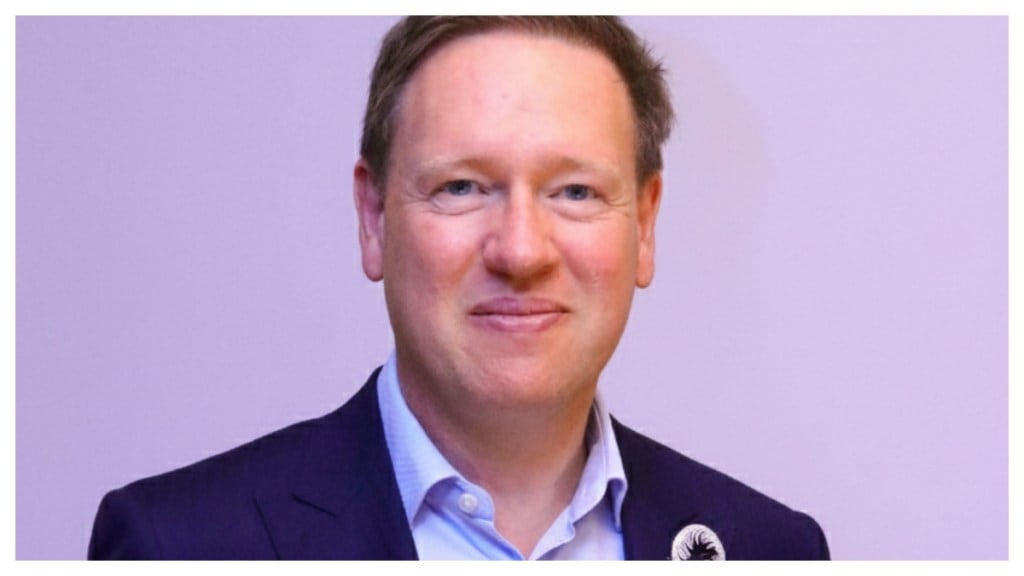
Al Cook, CEO of De Beers Group, sees India as a bright spot for natural diamonds as rising demand, growing aspirations, and higher disposable incomes pull consumers toward the category. Despite the inroads made by lab-grown diamonds as a cheaper alternative, Cook—who visited India for the second time in eight months this week—says domestic consumers remain discerning in their choices. In an interview with Viveat Susan Pinto, he outlines De Beers’ priorities for India and its retail strategy. Excerpts:
What brings you to India for the second time in months?
It underlines just how critical India is for us. Despite global turbulence, India continues to grow strongly. We expect GDP growth of around 7% through 2025. At a time of instability, India is increasingly viewed as a source of global stability. Diamonds were first discovered in India more than 2,500 years ago, and that heritage continues today—around 90% of the world’s diamonds are cut and polished here.
What we see now is a powerful convergence of India’s historical significance and its growing global prominence. We see the strongest natural diamond demand growth coming from India. Domestic demand in India remains very strong—about 11% growth last year, marking four consecutive years of double-digit growth. We expect the Indian diamond market to be roughly twice the size by the end of the decade (2030), at $20 billion compared to $10 billion now.
For centuries, diamonds were from India and by India. Increasingly, they are also going to India and for India. In many ways, diamonds are coming home. And India is the second-largest diamond market after the US. All this is bringing me here.
But diamond exports from India to the US have been hurt on account of steep tariffs. With the possibility of further tariffs looming, isn’t that a concern for you?
There are two distinct dynamics at play here. One is the domestic demand aspect, which I’ve highlighted earlier and its significance for us. Second is that India is the world’s hub for cutting and polishing of diamonds, while the US represents about half of global diamond consumption.
Due to US tariffs, diamond exports from India to the US have declined by roughly 50%, which is clearly challenging. That said, we’re confident that India and the US will reach a trade agreement. The US has indicated that once an agreement is in place, diamonds would move to zero tariff, which gives us confidence over the medium term.
What initiatives are you taking for the Indian market, given its importance for De Beers?
There are a few areas we are focusing on. While I’m not at liberty to disclose numbers, we have the highest-ever spend on marketing in India. That will continue into 2026.
We’re also seeing very positive progress with the Bureau of Indian Standards (BIS) issuing clear guidelines distinguishing natural diamonds from lab-grown diamonds. This is a critical step for consumer protection. We’re working with partners such as Tanishq to deploy detection technology across India that can identify natural versus lab-grown diamonds in about three seconds.
In our discussions with the government, the emphasis is consistently on transparency and consumer trust. This week, we have opened our largest-ever Forevermark store in Mumbai. Together, these developments reinforce India’s position as one of the most important diamond consumer markets globally.
You are also in India at a time when lab-grown diamonds are making strong inroads. While De Beers discontinued its lab-grown brand Lightbox last year, Titan has entered the space this year with beYon. Your thoughts.
We view lab-grown diamonds as a separate category. Indian consumers are among the most sophisticated jewellery buyers globally. We don’t believe there will be confusion.
Lab-grown diamonds are fashionable and accessible, with wholesale prices around $50 per carat—nearly 20 times cheaper than natural diamonds. That price difference alone creates a clear distinction. Separation is reinforced by three factors: price, detection technology, and regulation.
BIS standards are explicit—if a product is called a diamond, it must be a natural diamond. Consumers may choose lab-grown diamonds for casual or fashion jewellery. But for life’s most meaningful moments—engagements, marriages, the birth of a child—people typically want something enduring. That is where natural diamonds continue to matter.
At a broader level, lab-grown diamonds are inexpensive but have little to no resale value and should not be viewed as a store of value.
With gold prices at record highs, does this strengthen the case for diamond jewellery in India?
It creates an interesting dynamic. High gold prices can make consumers cautious in the short term, but they also support demand for diamond-studded gold jewellery. Studded jewellery allows consumers to purchase something distinctive while staying within budget, and many retailers are seeing strong growth in this category.
Having said that, Forevermark is a pure-play natural diamond jewellery brand. We don’t sell plain gold jewellery, coloured gemstones, or lab-grown diamonds. We’ve also shifted from a shop-in-shop approach to standalone Forevermark stores, with our name on the door.
This retail model is currently unique to India. We launched at the end of September and already have four stores. Our fifth store—also our largest globally—opened this week in Mumbai. In the next one year, we plan to open around 20 additional stores, through a mix of company-owned locations and franchise partners.
From a global perspective, how do consumption trends differ by region? And how are you addressing the needs of India’s growing middle class for diamond jewellery?
The US has seen strong growth during the 2025 holiday season. India, of course, continues to see strong double-digit growth as demand for natural diamonds increases. China has been more challenging due to declining marriage rates, though we believe the market will recover in the long term. West Asia continues to see sustained demand, with retail expansion including recent openings in Dubai.
Our research shows diamond jewellery ranks highest as a status symbol in India. As incomes rise, diamonds are often at the top of aspiration lists. We’re also working to expand the cultural relevance of diamonds beyond weddings and festivals—through everyday wear, second piercings, and celebrating friendships. Search trends show consumers asking how to wear natural diamonds daily, not just for special occasions.
Beyond retail, where else are you investing in India?
We have operated our Institute of Diamonds in India for more than a decade, focusing on certification and inscription. We also see strong potential for our technology-focused diamond business, Element Six.
While we don’t see lab-grown diamonds adding value in jewellery, they are highly valuable in industrial and technology applications. We’re particularly excited about partnerships with Indian AI and data-centre companies using synthetic diamonds.