



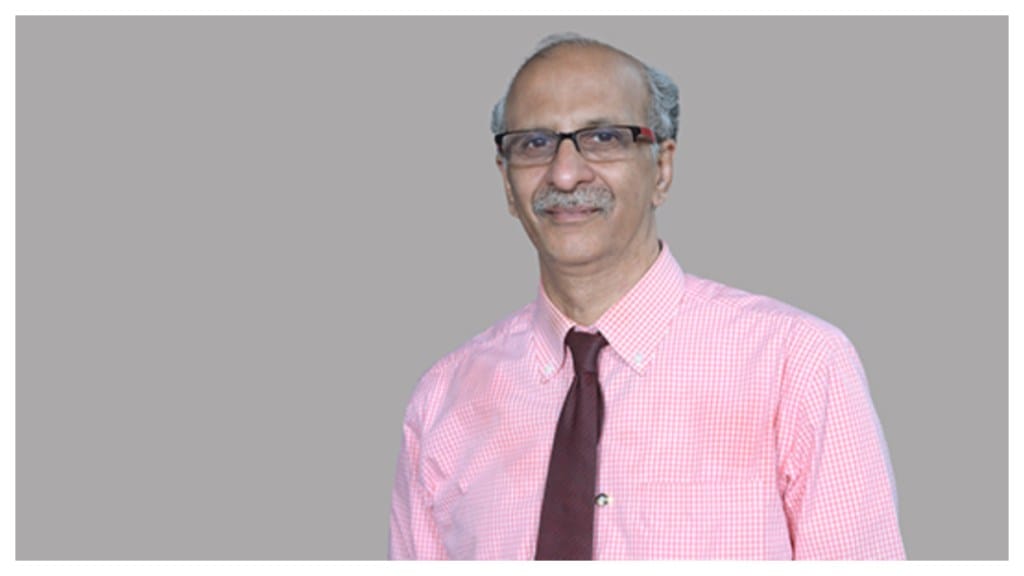
From a resilient capital‑raising pipeline and a deepening M&A cycle to the rise of domestic flows and maturing private capital, S Ramesh, MD & CEO of Kotak Investment Banking in conversation with Kshipra Petkar and Mahesh Nayak expects equity capital raising to rebound to Rs 6 lakh crore and M&A to climb toward $135 billion in CY2026, however flagging geopolitical risk that could briefly shut market windows even as long‑term activity stays resilient.
Excerpts:
What has been the broader investment banking landscape in 2025, and how do you see 2026?
CY25 has been a good year for investment banking. Looking at the trend over the last two years, the business has become more robust. In CY24, capital markets raised about Rs 6 lakh crore across IPOs, QIPs, OFS and other formats. In CY25, that number dipped slightly to Rs 5 lakh crore. My estimate is that CY26 should take us back to the Rs 6 lakh crore mark, given the pipeline. Within that, IPOs grew 13–14% and I expect that trend to continue, perhaps even accelerate.
Out of the Rs 6 lakh crore in 2026, my sense is Rs 2.5 lakh crore will be IPOs, another Rs 2.5 lakh crore will be sell-downs, and around Rs 80,000 crore to Rs one lakh crore will be QIPs—though QIPs may spill over 12–15 months. In CY25, QIPs saw a 50% decline, as real estate companies had already raised capital in CY24 and were now deploying it. FIG companies also preferred private or strategic capital over QIPs.
On M&A, we were at about $110 billion in 2024, moved to $120–121 billion in 2025, and I expect $132–135 billion in 2026. The last six months of CY25 alone saw $70 billion in M&A. FIG drove much of it, but the next wave will be more diversified—IT, manufacturing, healthcare.
With 2025 proving to be an active year across dealmaking, how did the overall fee pool—including Kotak’s share—reflect that strength?
Fees held firm across both ECM and M&A in 2025. ECM transactions continued to command 2–3%, while M&A advisory fees remained in the 1–2% range, depending on deal size and complexity. What protected the industry was the rise in deal sizes—larger IPOs, bigger block trades and more sizeable M&A transactions. As a result, the total fee pool for 2025 was close to $850 million, showing no real compression. Kotak’s share of that pool was broadly in the range of 10–11% (approx. $90 million without debt capital markets), depending on the product mix, which ranks us among the top two investment banks in terms of fee income.
How do you see 2026?
I see 2026 as another strong year for investment banking. We will continue to operate in a very solid regulatory environment—one that’s proactive, transparent and anchored in high disclosure standards. That foundation gives both issuers and investors a lot of confidence. I also expect the market to keep evolving with new products. We have already seen REITs and INVITs scale meaningfully, and I won’t be surprised if private credit eventually spawns its own market‑linked structures.
There are two risks to watch. The first is geopolitics—global tensions can create short, unpredictable windows of disruption. The second is the sustained momentum of domestic inflows, which have become the backbone of our capital markets. I don’t see an immediate threat on that front, but it remains a critical dependency.
How do you see the rising US–India tariff tensions impacting investment banking?
On the capital markets front, India’s macroeconomic fundamentals, consumption strength, and mutual fund flows have made us fairly self-contained. Markets may react in short bursts, but activity levels haven’t been materially impacted. In 2026, geopolitics could create temporary shutdown windows, but overall activity should remain robust.
On M&A, I expect it to be even stronger. Large groups—and even mid-tier promoters—are more open to selling non-core businesses and more acquisitive where it makes strategic sense. Indian companies have also become more comfortable with cross-border acquisitions, cultural integration and appointing foreign management. Private equity and strategic investors are selectively looking at India. All this supports a strong M&A cycle.
Are we seeing broad-based capex?
Not yet. It’s modest. Corporate leverage is at an all-time low—everyone has dry powder—but demographic shifts are influencing decisions. Younger generations are questioning whether they want to run legacy businesses. Where they don’t, companies are being sold or professionally managed. That affects capex cycles.
Outbound M&A had slowed due to Indian companies’ struggling with cultural integration. Has that changed now, and how do you see the inbound–outbound mix?
Indian companies have matured in how they handle cultural differences, integrate foreign teams, and deploy the right leadership abroad. Those earlier barriers are no longer significant. Because of that, I do expect outbound activity to inch up—possibly towards 30% (23%)—but the overall inbound–outbound balance should broadly remain stable.
Kotak did a couple of strong domestic deals. What’s driving domestic promoters to acquire?
First, generational change. The next generation is hungry, ambitious and willing to integrate businesses where it makes sense. Second, diversification. Look at India’s largest conglomerate—traditionally petrochemicals, now telecom, consumer, and financial services. Similar patterns are emerging in mid-caps. Third, family office capital. This is a big trend. Family offices are taking 30–40% stakes, bringing in professional management. We are closing a Rs 400–500 crore minority deal entirely funded by a family office—no PE involved.
Are financial sponsors—PE/VC—maturing in India?
Absolutely. Their decision-making is disciplined. Indian promoters earlier operated with a lot of emotion; today, decisions are more spreadsheet-driven with a balanced mix of head and heart. Founders with 8–10% stakes are being backed by private capital that trusts their entrepreneurial instincts. PE isn’t patient capital, but it is long-term capital—and that’s fine.
Will private credit grow meaningfully?
It’s nascent in India. We need to see a few cycles. But global experience is positive, and private capital is disciplined. I am optimistic.
Domestic mutual funds now take up to 60% of IPO allocations. Can SIP flows derail?
Not in the foreseeable future. Depositors have become investors—that behavioural shift is sticky. If flows slow years later, it will impact volumes unless FPIs return strongly. But for now, domestic flows are a solid base.
New-age companies—markets were earlier forgiving of failures. Has that changed?
We have matured. Investors, bankers and private capital can now differentiate between business models that are ready for markets and those that shouldn’t rush. At our scale, we can’t afford accidents—and I don’t see them. Mature companies will list; others will find M&A or alternative paths.
What are investors (foreign) demanding from our regulatory framework today?
Our regulatory system is superb. Foreign investors consistently tell us Indian disclosure standards are the gold standard—better than many developed markets. What’s impressive is that SEBI is proactive, responsive and empathetic in understanding how regulations play out in real business situations. We shouldn’t underestimate their contribution.