



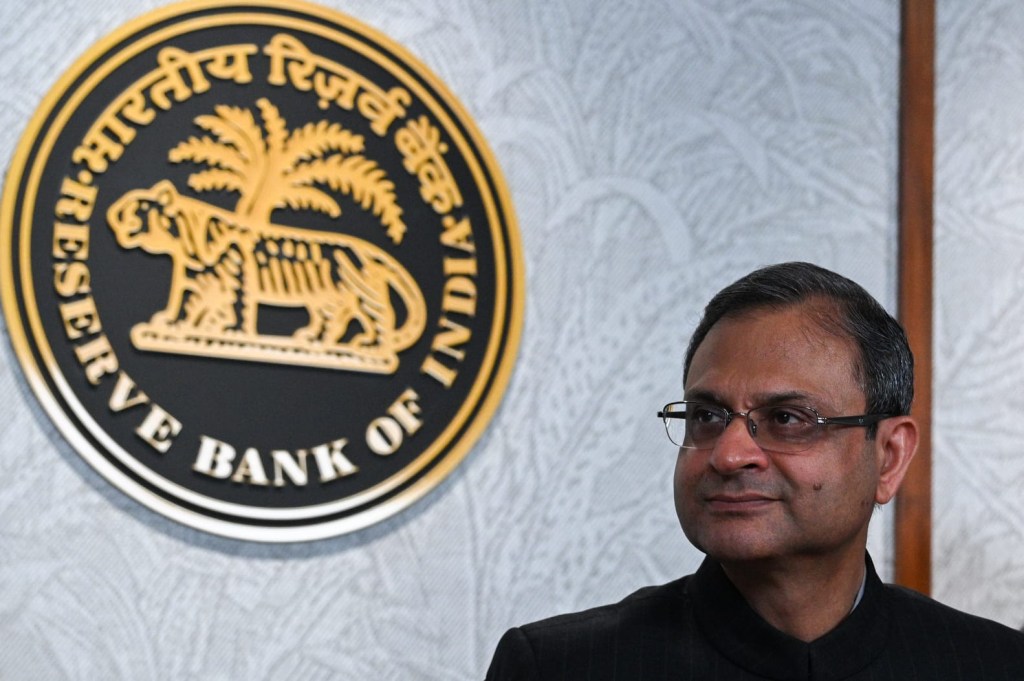
The Reserve Bank of India (RBI) announced an infusion of up to $16 billion in liquidity support to boost the banking sector. While announcing the MPC decisions on Friday, December 5, Governor Sanjay Malhotra said that the RBI has decided to conduct open market operations (OMO) of Rs 1 trillion ($11.14 billion) to buy bonds this month, and another $5 billion in forex swaps to add liquidity to the banking system and speed up the transmission of lower rates.
Commenting on the RBI decision, Gaura Sen Gupta, Chief Economist at IDFC First Bank said, “We expect further durable liquidity infusion of Rs 2 trillion in Q4FY26 which is spread over OMO and buy sell swap.”
Sarvjit Singh Samra, MD & CEO of Capital Small Finance Bank “We expect the rate cut and OMO-driven liquidity infusion to improve portfolio transmission and create greater room to deepen lending to MSMEs, retail borrowers, and the rural economy. The neutral stance also brings policy predictability, enabling us to plan asset–liability strategies with more precision.”
Yes Bank economist calls RBI move a ‘dovish cut’
The RBI’s six-member monetary policy committee voted unanimously to lower the repo rate by 25 bps to 5.25% and maintained a “neutral” stance, suggesting room for further rate cuts. The rate cut comes at a time when headline CPI inflation has hit an all-time low in October 2025 due to an unexpected fall in food prices, while core inflation remains contained.
Indranil Pan, Chief Economist at Yes Bank, said, “The RBI preferred to use the space opened by low inflation to cut the policy rate. Further, to ensure transmission, it also acted pre-emptively on the liquidity front by announcing Rs 1 trillion of OMO purchases and a $5 billion buy-sell swap for December. The confidence on growth remains strong as the RBI suggests that economic activity has held up in Q3FY26, though acknowledging that external uncertainties pose some downside risks to growth.”
“We consider this a dovish cut but maintain that the RBI will continue to remain data-driven. While we broadly think the RBI is done with its cutting cycle, any further easing of monetary policy will probably depend on how growth dynamics pan out,” he added.
RBI Lifts FY26 Growth Forecast to 7.3%; Crisil Pegs GDP at 7%
The RBI has revised the GDP forecast for FY26 to 7.3%, up from 6.8% projected in the September–October meeting.
Crisil, on the other hand, expects GDP growth at 7% this fiscal. “We forecast India’s GDP growth at 7% this fiscal, following an expected slowdown to 6.1% in the second half due to higher United States tariffs and normalisation of government capital expenditure. Next fiscal, we expect GDP to grow a healthy 6.7%,” it said.
The inflation projection, meanwhile, has been revised to 2%, down from 2.6% earlier. Crisil said it expects “inflation to remain benign at 2.5% this fiscal but rise to 5% next fiscal, largely due to a statistical low-base effect.”
RBI cites strong reserves and manageable CAD
While commenting on the weakening rupee, RBI Governor Sanjay Malhotra said, “We are in a very comfortable position.Such fluctuations and volatility do happen and can happen again,” he added.
The Indian rupee breached the 90-mark against the US dollar this week and is hovering near that level.
The Governor added that the country has sufficient reserves and a manageable current account.
The RBI also noted that it does not target any specific band for the rupee in the forex market and allows the domestic currency to find its own appropriate level.
“We don’t target any price levels or any bands. We allow the markets to determine the prices. We believe that markets, especially in the long run, are very efficient. It’s a very deep market,” he said while replying to a question on the rupee’s depreciation at the post-monetary policy press meet.