



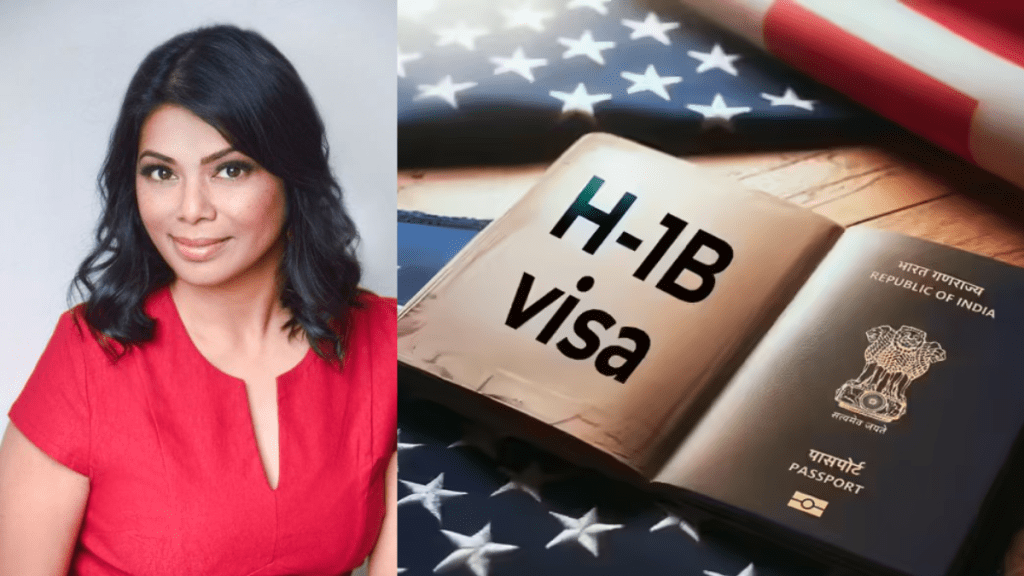
A growing number of H-1B visa holders who travelled outside the US are now facing an unsettling reality, they may not know when or if they can return. A business immigration lawyer, Tahmina Watson, founder of Watson Immigration Law, who works closely with employers and visa holders, says she is seeing immigration disruptions with immediate consequences, particularly for non-immigrant workers stuck abroad due to delayed visa appointments.
“I’m seeing immigration disruptions with immediate consequences, including H-1B visa holders who are outside the US being uncertain if they can return,” she told Business Insider. Her firm, Watson Immigration Law, helps companies to walk through employment-based visa processes. According to her, the current situation points to coordinated delays and rescheduling of immigration appointments across US embassies and consulates.
Holiday travel turns risky
Typically, non-immigrant visa applicants must attend interviews at a US embassy or consulate in their country of nationality or residence. Many employees plan this around holidays, using accumulated leave to travel and complete visa formalities at the same time.
“From my experience, many employees accrue their holiday time and schedule immigration appointments during this period because they’re already planning to leave the country,” the lawyer explained to Business Insider. But this year, those plans are backfiring. Employees who already left the US are now finding their visa appointments pushed far into the future.
“These employees are now getting stuck, having already left the US, with their appointments getting rescheduled for June, July, or August 2026, and beyond,” she told Business Insider.
Big tech issues travel warnings
The uncertainty has led major US tech companies to act. Over the past week, firms including Google, Apple, and Microsoft have reportedly sent internal memos urging visa-holding employees to avoid international travel.
“These policies are coming one after another, and they all intersect with each other,” the lawyer explained. She outlined the key challenges emerging from the new policy environment including visa-stamping delays at US embassies and consulates, expanded vetting and growing processing backlogs, increased risk that visa holders who travel may not return in time, no guarantees once appointments are rescheduled
“If somebody is outside the country, what are employers supposed to do. The answer is, return to the US as soon as possible,’ she told Business Insider. Given the uncertainty, the lawyer’s advice to clients is blunt.
“Right now, my advice to clients outside the country is that if they have a valid visa stamp, they should return to the US as soon as possible.”
For those who left the US specifically to obtain a new visa stamp, the situation is far more complicated.
“For someone who has left the country to obtain a new visa stamp, I’m not sure there’s a clear path to return.” This also affects F-1 student visa holders who travelled to visit family and planned to re-enter the US after stamping. “They will need that visa stamp from a consulate,” she said.
Job security becomes a key concern
Beyond immigration timelines, employment status has become another critical risk.
Visa holders stuck abroad are being advised to ensure their employment remains active and to explore whether remote work is possible. “If an employer decides they cannot keep someone on the books, even an appointment months from now will not help if there’s no job waiting,” she added.
New H-1B rules add to uncertainty
The lawyer said the situation is being worsened by multiple policy shifts happening simultaneously. Among them is the Department of Homeland Security’s move to replace the H-1B lottery system. The new approach will prioritise higher-paid, higher-skilled workers, ending the random selection process that previously governed the visa.
“It’s tough to know how things will unfold. What we’re seeing is a confluence of policies coming in at the same time,” she told Business Insider.
Social media scrutiny expands beyond students
Another growing concern is expanded social media vetting. What began with F-1 student visas has now extended to H-1B workers.
“These applicants are required to change all social media privacy settings to public,” she told Business Insider. The lawyer warned that the scope could increase. “It could easily expand to other visa categories. The government has not provided clear guidance on what they are reviewing.”
She cautioned that the lack of transparency is creating fear and instability. “By casting an overly broad net under the banner of national security, without clear standards or transparency, the administration is creating uncertainty that will ripple across families, employers, and the US economy.” The anxiety is spreading across the immigration ecosystem.
“It feels like a fire hose of policies. Everyone in the immigrant ecosystem is on high alert: Immigration lawyers, immigrants, employers, investors, founders, and employees,” she told Business Insider.