



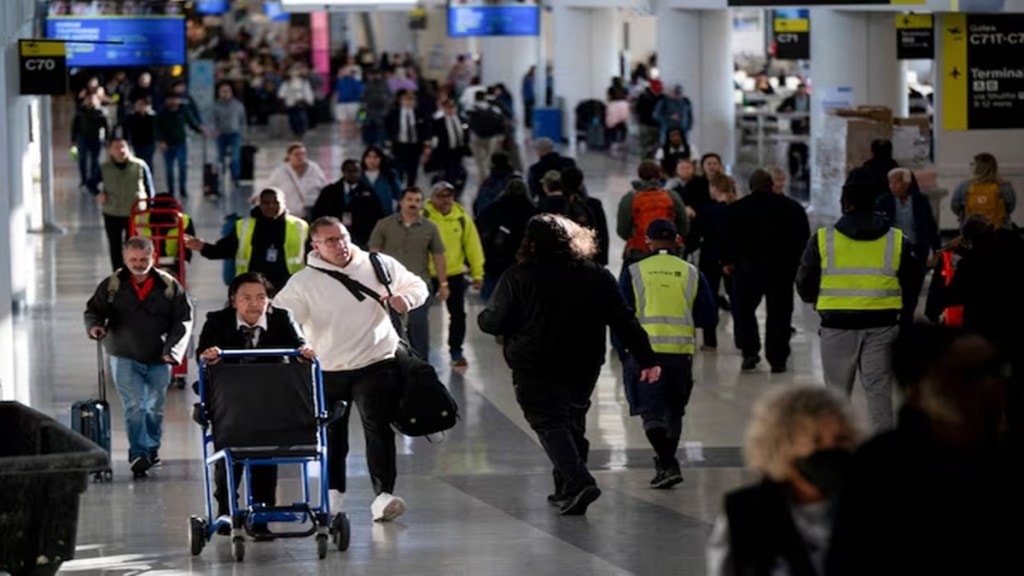
Travelers to the United States are often detained at airports for questioning and additional screening. There could be various reasons for this, resulting in not just travel-related stress but also time consumption.
If accepted, the Department of Homeland Security plans to implement more stringent biometric checks for US immigrants, extending data collection to include voiceprints, iris scans, fingerprints, DNA, and facial photos for all individuals associated with immigration benefit claims.
International students, foreign workers, and tourists to the United States will be photographed upon entry and exit, as mandated by a new plan from US officials applicable to all immigrants and non-citizens.
Some travellers are being denied or facing a delayed entry into and exit from the United States at a port of entry or border checkpoint, while some may be continuously referred to additional or secondary screening.
For all those travelers who believe they have faced screening problems at ports of entry or faced situations where they believe they have been unfairly or incorrectly delayed, denied boarding or identified for additional screening at the nation’s transportation hubs, the Department of Homeland Security’s Travel Redress Inquiry Program (DHS TRIP) is a single point of contact.
DHS TRIP is for individuals who have inquiries or seek resolution regarding difficulties they experienced during their travel screening at transportation hubs like airports and train stations or crossing U.S. borders.
What To Do
People who have been repeatedly identified for additional screening can file an inquiry to have erroneous information corrected in DHS systems. You may submit a request for redress through the DHS TRIP.
To speed the processing of your request, you should provide as much information as possible about where and when you have experienced inspections by CBP.
If you suspect your experiences result from an incident in which you were involved, and for which there are mitigating circumstances, include as much information as possible about that incident and an explanation you believe is relevant, along with your request for relief from repeated inspections.
If you have been advised that your problem is that you appear to have overstayed a previous visit, you will have to provide evidence that you did not. You will be asked to provide your full name, address, date of birth, and a clear photocopy of the photo page of your passport if you have one.
It is important to understand that some referrals for additional screening are for reasons other than information in law enforcement databases, such as the circumstances of your travel or random selection. Even if your request results in a positive outcome for you, there is no guarantee that you will not be referred for a secondary inspection for other reasons in the future.
Freedom of Information Act
Under the Freedom of Information Act (FOIA) guidelines, you may ask to receive a copy of any information CBP has on file about you. If you need the record of your entry and exit for purposes of applying for LPR or Citizenship status, this is the authority under which you make that request.
FOIA is not intended to provide a mechanism for asking questions of CBP. FOIA requests are intended to provide access to certain records under the control of the agency from which you request them.
The Department of Homeland Security safeguards the privacy of any personal information that you provide in your inquiry to DHS TRIP. The information that you provide will be used to process your request for redress.
If a third party is requesting on your behalf, they must submit a U.S. Form G-28 authorizing them to do so. Records of travel may not be complete if you had legal permanent resident status and traveled by car between the United States and Canada or Mexico.