



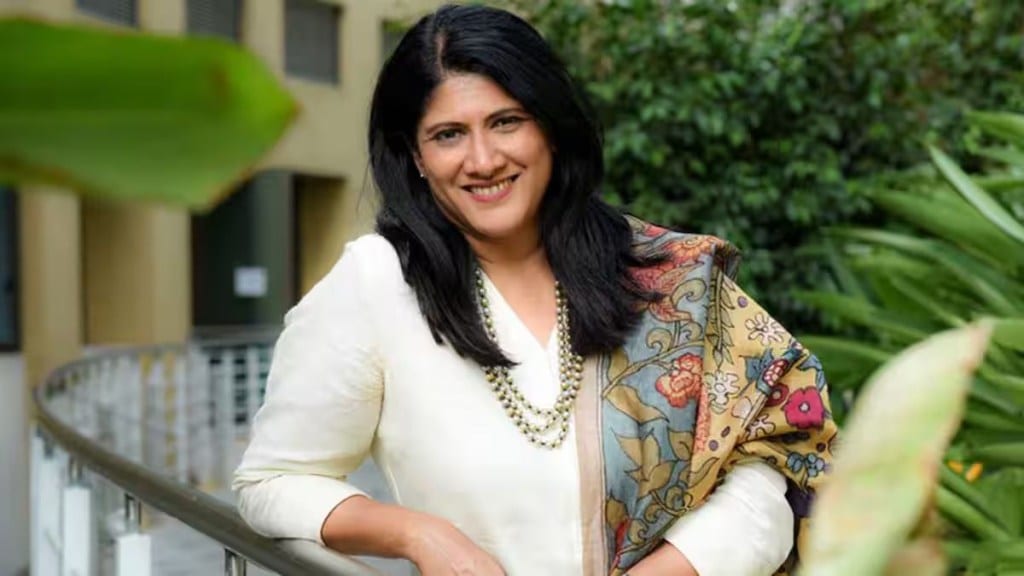
Addressing a group of IIM students a few years ago, Priya Nair offered a deceptively simple lesson: find your purpose, and you will never lose steam. “It will drive you every day and you will love what you do,” she said. In 2025, as the first woman CEO and managing director in Hindustan Unilever’s more than nine-decade history, that idea has become both her credo and her challenge.
At 53, Nair has inherited an FMCG giant at an inflection point. After two difficult years marked by sluggish volume growth, rising competition and changing consumer behaviour, HUL needs a reset. Niche digital-first brands are chipping away at its premium franchises, while agile regional and small players are squeezing it at the mass end.
The task before Nair is not incremental improvement — it is to restore growth while making a legacy behemoth behave with the agility of a start-up. She has been clear about her intent. In her first media interaction in October, Nair laid out the contours of her strategy: double down on high-growth demand spaces, bring the focus back on volumes, and invest in emerging niche categories — or “market makers” — as Indian consumers continue to premiumise.
Test window
The second half of FY26, with demand expected to stabilise, will give her the first real window to test whether this twin-track approach can deliver. Purpose, by Nair’s own account, has been her moral compass through a three-decade career in marketing and management. Her appointment in August was rightly celebrated as a milestone for gender diversity in India Inc. But symbolism will count for little unless it translates into execution. The real test will be how quickly she can reshape HUL’s operating rhythm — streamlining decisions, sharpening innovation cycles and responding faster to shifts in consumer taste.
Nair’s journey to C-suite
Nair’s journey to the corner office has been anything but conventional. Born to Malayali parents in Maharashtra’s Kolhapur, and raised and educated in Mumbai and Pune, she joined HUL as a management trainee in 1995. In earlier interactions, she has spoken candidly about how daunting the transition into a large corporate was, given her modest background. Mentors mattered. So did risk-taking and an openness to learning. Throughout, she kept herself grounded, anchored by a clear sense of where she came from and where she wanted to go.
That clarity will be critical as HUL navigates a post-GST 2.0 marketplace. Smaller but organised players are expected to gain from GST tailwinds just as large companies do, intensifying competition and fragmenting the market as unbranded consumption steadily shifts to branded products at lower price points. About 40% of HUL’s portfolio has been impacted by recent GST cuts, forcing the company to rethink pricing, packs and margins.
The demand landscape offers no easy choices. Urban recovery is expected to be gradual, even as rural growth remains relatively resilient. Nair will need to walk this tightrope carefully — ensuring sufficient marketing investment behind premium brands while protecting HUL’s formidable rural distribution muscle. The company reaches over a third of India’s nine million retail outlets directly, many in rural markets. But rivals, both large and small, are pouring resources into the hinterland, ramping up direct distribution to capture the same opportunity. HUL’s historic advantage is narrowing.
Sustaining volume growth remains another stubborn challenge. In both FY24 and FY25, volumes rose by just 2%, weighed down by inflation and intensifying competition in categories such as beauty, personal care and packaged foods. Even as fiscal and monetary measures begin to ease pressure on consumption, the reality for legacy FMCG players is stark: scale alone no longer guarantees leadership.
Consumer loyalties are increasingly fluid. Shoppers are experimenting more, discovering brands online, and filling their baskets with products that promise sharper differentiation. Big, as industry watchers note, no longer automatically means best. HUL must learn — and unlearn — at the same pace as its consumers.
Nair’s credentials suggest she understands this better than most. An alumna of the Symbiosis Institute of Business Management, Pune, she began her career in HUL’s consumer insights team before going on to manage some of the company’s most iconic brands, including Dove, Rin and Comfort. She later led the homecare and beauty and personal care portfolios in India, honing a deep understanding of both mass and premium segments.
Her career took a global turn in 2022, when she moved to London as global chief marketing officer for Unilever’s beauty and wellbeing business. By 2023, she had joined the Unilever Leadership Executive before being appointed president, beauty and wellbeing in January 2024, and then into HUL’s corner office.
Nair has defended her decision to remain dual-focused. Savings generated through margin improvements, she has said, will be reinvested to defend share and accelerate growth. Access packs of premium brands are being expanded to improve penetration, even as core brands undergo modernisation to stay relevant.
In many ways, Nair’s first year as CEO is less about dramatic moves and more about setting direction. The stakes, however, could not be higher. As India’s largest FMCG company confronts its most competitive era, the woman at the helm must prove that purpose, when matched with execution, can still move a giant.