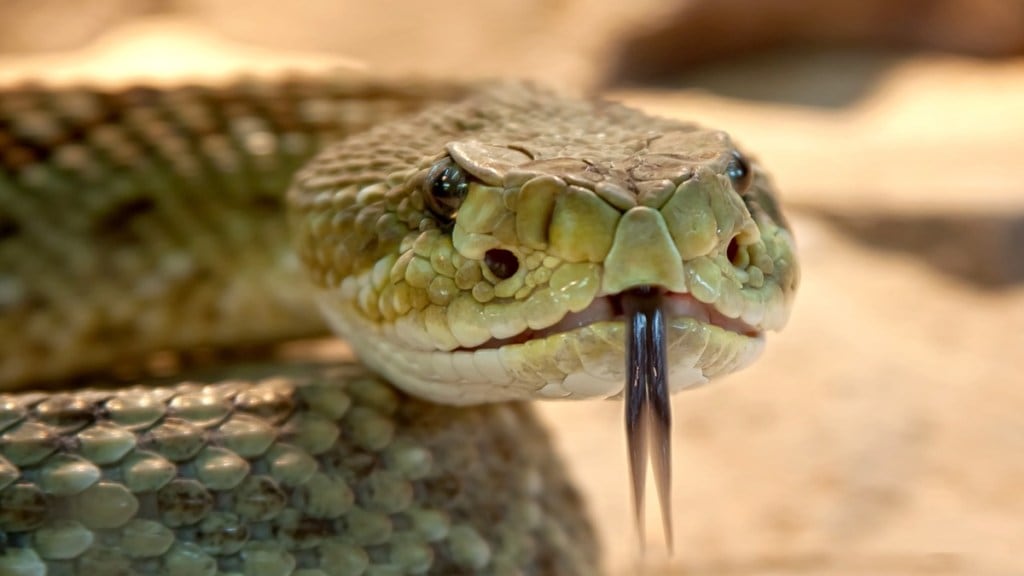
Snakebites continues to major public health challenge in India. In India, around 50,000 deaths occur of an estimated 3-4 million snakebites annually which accounts for half of all snakebite deaths globally. Only a small proportion of snake bite victims across countries report to the clinics and hospitals and actual burden of snake bite is grossly underreported, as per Health Ministry Data.
The government has now urged all states to make snakebite cases and deaths a “notifiable disease” under relevant provisions of the State Public Health Act or other applicable legislation making it mandatory for all government and private health facilities (including medical colleges) to report all suspected, probable snakebite cases and deaths.
In a letter issued on Sunday, Union Health Secretary Punya Salila Srivastava said that snakebites are an issue of public health concern and in certain cases, they cause mortality, morbidity and disability. The farmers, tribal population etc. are at higher risk getting bitten by snakes.
The Health Ministry has also launched the “National Action Plan for Prevention and Control of Snakebite Envenoming (NAPSE) from India by 2030” in consultation with relevant ministries and stakeholders, Srivastava mentioned.
The objective of the action plan is to halve the snakebite related deaths by the year 2030, she underlined. “A robust surveillance system is essential for accurately tracking snakebite incidents and deaths, which will provide valuable data to inform and evaluate the effectiveness of interventions,” Srivastava said in the letter on November 27.
Therefore, a mandatory notification of all snakebite cases and deaths is required to strengthen snakebite surveillance, she emphasised.
It will help the stakeholders gauge accurate burden, high risk areas, factors responsible for deaths of snakebite victims, etc. resulting in improved clinical management of snakebite victims.
Further, notification of snakebite cases and deaths will also improve reporting from private health facilities, she said.
“You are requested to make snakebite cases and deaths a “notifiable disease” under the relevant provisions under the State Public Health Act or other applicable legislation making it mandatory for all government and private health facilities (including medical colleges) to report all suspected, probable Snakebite Cases and deaths in the enclosed format,” she said in the letter.
In June 2017, the World Health Organization (WHO) added snakebite envenoming to its priority list of neglected tropical diseases (NTDs). In India, around 90% of snakebites are caused by the ‘big four’ among the crawlers – common krait, Indian cobra, Russell’s viper and saw scaled viper.
‘Decision will help eliminate underreporting of snakebite deaths’
Snakebite envenoming causes as many as 400,000 amputations and other permanent disabilities. Many snakebites go unreported, often because victims seek treatment from non-medical sources or do not have access to health care. As a result it is believed that many cases of snakebite go unreported.
The global health agency maintains that many people either lack access to antivenom, or cannot afford to pay for them. Many families sell possessions or go into debt in order to obtain antivenom after someone is bitten.
“We welcome the directive of Ministry of Health in announcing snakebite a notifiable disease. While this will make it mandatory for all government and private health facilities to report all suspected, probable snakebite cases and deaths, it will eliminate underreporting of snakebite deaths in the country. Snakebites are recognised as one of the world’s most important neglected tropical disease that disproportionately affects communities with large impact with one of the highest mortality and morbidity rates. Stronger surveillance system is pivotal for reducing morbidity, mortality, and its associated complications in humans due to snakebite,” Alok Khettry, COO, India Business, Bharat Serums and Vaccines Limited (BSV) told Financial Express.com.
BSV is one of key anti-snake venom manufacturers in India and it offers a wide range of anti-venom products for snake bites and scorpion stings. The company also collaborates with research institutions to develop new and improved anti-venom formulations.
“Surveillance in public health is a continuous, systematic collection, analysis and interpretation of health-related data for action. We are hopeful that this directive will put in place a centralized mechanism to oversee surveillance and data generation thereof and enforce compliance. Data generated from reporting will help to identify at-risk regions and communities, occupational and demographic profiles, distribution of venomous species, ecological and climatic factors and location of snakebite hot spots, understand usage of Anti snake venom serums (ASVS) and adoption of treatment guidelines,” Khettry said.
Anti-snake venom (ASVs) remains the only specific treatment that can potentially prevent or reverse most of the effects of snakebite envenoming when administered early in an adequate therapeutic dose.
Khettry also maintained that notifiable mandates all Government Hospitals and Private Hospitals to report the data to the Government leading to a better collection of data which can be utilised for comprehensive prevention and treatment strategies for Snake Bites across India.
“This includes comprehensive training for medical personnel to ensure they are equipped to handle snakebite cases effectively. Furthermore, facilities will be required to stock and maintain essential medications, such as antivenoms, to provide timely and effective treatment. This will bring the much-needed attention towards Snakebite victims and expected to offer services to them; hence patients will be benefitted from focussed treatment approach,” he said.
As a responsible market leader, BSV remains committed towards widening access to our treatment by continuing to partner with various State Governments/ NGOs / Medical Bodies through our SERPENT App that will assist in the reporting snakebite cases, sighting of snakes, locating nearby hospitals or healthcare facilities equipped with appropriate resources and ASVS where snakebite victims can be treated, he added.
Meanwhile, Dr Anita Mathew, Director-Internal Medicine, Fortis Hospital, Mulund told Financial Express.com that states like Tamil Nadu and Karnataka have already implemented this order.
“India accounts for half of global snake bite cases, and a majority of these cases are recorded in rural parts of the country. However, rapid urbanization has also caused man-animal conflict, and thus urban areas have also started recording an increased number of snake bite cases. The protocol for treating snake bites is based on standard textbook methods, but it varies from region to region due to the use of traditional medicine and limited access to modern healthcare services in certain areas,” Dr. Mathew informed.
The exact burden of the disease is unknown; hence, identifying the reasons, risk factors, and areas that record a high percentage of snake bites are important steps that will help us know and implement policies to mitigate it, she said.
“It is equally important to understand the treatment protocols being followed and to ensure the administration of standardized procedures with easy access to antivenom and emergency medical care, even in primary healthcare settings. All of these will require a lot of manpower and training, along with infrastructure, right from paperwork and computers to cold storage and antivenom procurement. This mandate is a step in the right direction and will help us understand the extent of the problem and make a difference by rectifying & standardizing treatment across the country, in both rural and urban areas,” she said.