



By Rajan Kumar & Satyajit Mohanty
The tiger shall roar; the eagle shall soar more so when the two tango. This message reverberated loud and clears when Prime Minister Modi and President Trump addressed the 50,000 strong American Indians in Houston, Texas. Beyond the flashes of shutterbugs and the deafening roar of the crowd, the message that Indo-U.S relations have traversed quite a distance since the turn of the century was difficult to give a miss.
This was not the first time Modi shared the stage with a powerful world leader in a public event. In November 2015, he addressed an identical diasporic congregation with his counterpart David Cameron at London’s famous Wembley Stadium. For leaders such as Cameron and Trump, this provides a no-cost opportunity to firm up ties with India, and to connect with the Indian community. At Houston, Modi heaped lavish praise on President Trump for his attempts to make America great again by reviving the economy and fighting against terrorism- a fact not noticed at Wembley. As expected, such appreciations were reciprocated in equal measure.
This event underlined the growing confidence of Indian diaspora and their penetration into Indian and American policy-making community. Sharing the stage with powerful leaders in a public event pleases the nationalist Indian audience which credits Modi for steering India towards a rightful place in the comity of nations, something which was earlier denied. Both leaders were aware that millions of eyes were glued to the Sunday morning event at the NRG stadium. They used this opportunity to present a report card of measures taken to bolster national security and economic development. Similar echoes in the campaign strategies of both Modi and Trump came flashing in mind – Modi promised “Achhe Din” (good days ahead) while Trump rode to victory on the plank of “Making America Great Again”. Thus, policies dovetailed to fight terror, safeguard borders and foster economic growth figured prominently in speeches of both the leaders. With Trump having sounded the bugle of re-election, the event provided a perfect setting to appeal to the strong Indian diaspora especially in and around Texas. Modi raised a slogan for Trump- “Abki bar Trump Sarkar” (Trump government again).
In his characteristic style, Modi endeared the audience with his spirited and jocular speech- underscoring his achievements in governance reforms and servicing poor. He specifically mentioned tax reforms, ease of doing business, and connecting poor people to gas, electricity, toilets and bank accounts. He received wide applause and a standing ovation when he commended Indian legislators for abrogating Article 370.
Indian Navy Scorpene class submarine INS Khanderi: It’s a deadly deep-sea predator
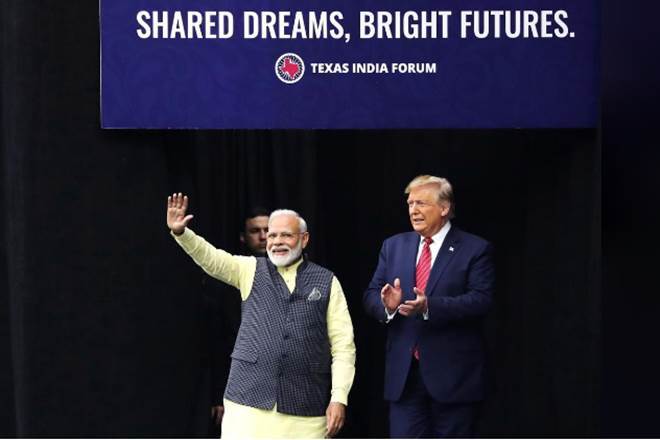
Indo-U.S relations have gone through a roller coaster ride being estranged democracies at one point in time to engaged democracies today. However, in the wake of the new century and more so, over the past few years, both nations have emerged as strong and reliable partners with a multi-dimensional cooperation agenda. Both leaders, with the backdrop beaming “Shared Dreams, Bright Futures” outlined how the world’s largest democracies have common interests and shared values drawing them naturally towards each other. To highlight the level of growing strategic cooperation, President Trump stressed on energy security, defence deals, space cooperation and joint military exercises between the two countries. He reiterated that India never had a better friend in the White House and the relationship between the two countries was strongest ever.
There definitely were significant takeaways from the mega event. First and foremost was the common resolve to clamp down on cross border radical terrorism. Modi launched a scathing attack on state sponsored terrorism and raised concerns that the roots of both the 9/11 New York and 26/11 Mumbai attacks had their origins in Pakistani soil. Coming close on the heels of the UN General Assembly meeting, the denouncement of state funded and state sponsored terrorism assumes significance. Second, Trump specifically mentioned the defence trade which amounted to nearly 18 billion in the last few years and the tri-service military exercises codenamed Tiger Triumph to be held in November 2019. India and U.S conduct more exercises, both bilateral and multilateral with each other. It was during the 2016 visit of Modi that the US had recognised India as a ‘Major Defence Partner’ and as a follow up the 2+2 talks last year (where heads of the Foreign and Defence Ministries participate) had taken several significant anti-terror and defence related decisions.
Third, Indo-U.S trade ties have had its bit of irritants and the “tariff king” jibe of President Trump did not go down well in Indian policy circles. President Trump citing the trade deficit with India had sought increased market access for ‘Made in the US’ products. The withdrawal of the Generalised System of Preferences benefits by the Trump administration and the slapping of higher customs duties on 28 products by India certainly did vitiate the atmosphere on the trade front. Both countries, however, have shown maturity in deescalating the matter and have pledged to explore mechanisms to break down barriers and further deeper integration of economies.
The US is one of the key foreign investment sources and Modi highlighted the reform measures including the recent slash in corporate taxes to woo American investments. Growing Indian investments in the U.S have added a new dimension to the bilateral relations and clout for our diaspora- a fact which Trump acknowledged while alluding to the investments of JSW and Petronet in the American steel and energy sectors respectively. Modi’s meeting with energy CEOs indicates India’s strategy to downsize its excessive dependence on OPEC countries and broad base sources of import. The salience of India’s access to low cost LNG from the US (and for that matter from other countries like Russia) gains significance when seen in the backdrop of the destabilising impact which the terror attacks on Saudi oil installations can have on India’s supply and imports bill.
To sum up, with both leaders clasping hands and matching step for step, the event was definitely an unforgettable show of camaraderie and the equation between both the leaders was something unprecedented. History is replete with instances where diplomacy driven by the personal chemistry has yielded phenomenal results. With the strings tunes to perfection, a symphony orchestra should not be far off in sight.
(Kumar teaches in the School of International Studies, Jawaharlal Nehru University and Mohanty is in the Indian Revenue Service. The views expressed are personal.)