Barin Mukherjee
In the summer of 2016, an app was made available for free to its consumers, who immediately participated in one of the largest and most successful brand campaigns of the year. There were talks on whether it could be classified as a mobile health app since it resulted in over 100 billion steps being taken by its users within the first three months. An easy one right? If you still haven’t got it, it is Pokémon GO! Launched on July 6, 2016, the app has made its permanent presence in the augmented reality and experiential marketing hall of fame, with a success story that has few antecedents. For Nintendo, it was an unparalleled money-churner with residual in-game purchases adding $7.5 billion to its market valuation. It also enhanced sales for Nintendo’s 3DS by 80%.
In effect, Pokémon GO’s success essentially reflects the transformation of advertising from an informative, sale-making or a demagogic perspective to an experiential one. From selling a product, modern advertisers are steadily moving towards selling an idea or a concept, as this is the approach that has the most effect on millennials.
Remember the classic ads of Dhara Jalebi or Action’s School Time shoes with their trademark jingles and heavy focus on relatable emotions? Along with the fact that family units and society were an integral part of people’s psyche then, the lack of information overload also allowed creatives to appeal to people through these routes. In today’s world, however, the vast amount of information through a plethora of sources does not allow a millennial the time to invest in an ad or a campaign emotionally, unless it is self-experienced.
‘Smartketing’ — marketing through smart devices
India currently has a smartphone user base of over 330 million and is expected to have the highest number of smartphone users in the world by 2022. The device, while painting a diminutive picture, provides endless amount of marketing possibilities.
The smartphone has emerged as an ideal device to help get users’ attention as they spend more time on their mobile phones compared to TV, radio and desktops combined. Increasingly, modern advertisers are focussing their efforts towards smartphones as they provide a wide range of media and tools that can be leveraged. From motion, touch, location sensors to even compass or Google maps, the smartphone has become a massive playing field for advertisers to create and provide an assortment of experiences for users.
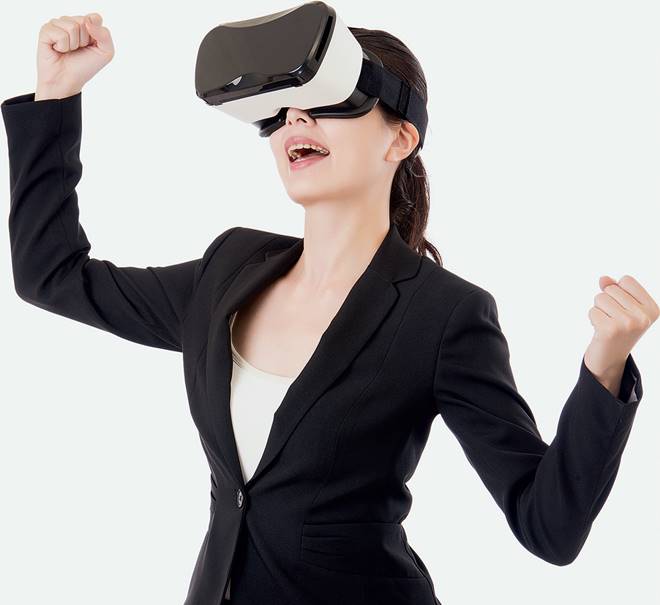
Gamification, virtual reality and interactive tools — the smartphone is a Pandora’s Box of possibilities which advertisers are tapping into with increasing frequency. The idea of integrating game mechanics and design techniques in marketing plans is to encourage customers to engage in real-time conversations with the brand in an entertaining way. For instance, various event management companies are stamping attendees of events with QR codes instead of entry tattoos, which allow them to access rooms, order drinks or book cabs, just by hovering their wrists above designated kiosks.
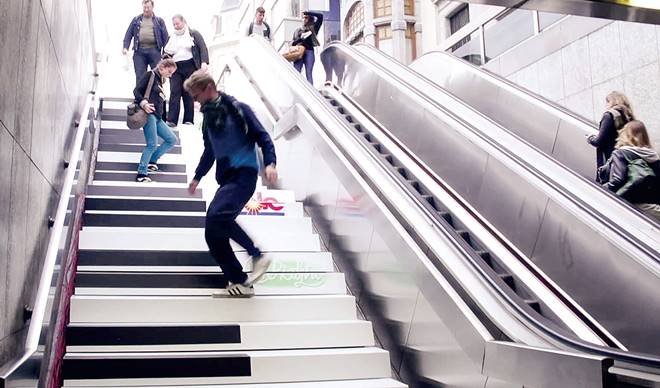
This kind of experiential interaction also helps to build a loyal consumer base, which is akin to gold dust in this day and age of finicky customers being bombarded with a plethora of products. In fact, it can even encourage people to not follow their instincts and step out of their comfort zone if they are guaranteed a unique experience and a ‘fun’ time. For instance, in Sweden, the Fun Theory project by Volkswagen created a giant piano on a flight of stairs at Odenplan metro station in Stockholm, which led to a 66% increase in people choosing stairs rather than the escalator, thus opting for a healthier choice in the process.
Going forth
The primary purpose of marketing today is to make consumers experience a brand in a tangible, offline process, such that it necessitates a reaction or a dialogue. Even eliciting a branded hashtag from a consumer fulfils the objective of a brand experience, since the internet then takes over to spiral its effect to a desirable proportion.
The essential difference of experiential marketing or gamification from traditional methods is that it has enabled the user to experience a product before purchasing it. This is currently the zenith of consumer empowerment; with brands and advertisers continuously striving to achieve more interaction with and exert greater influence on consumers, we are in for some truly exciting and experiential times in advertising ahead.
The author is co-founder, DigitalF5