



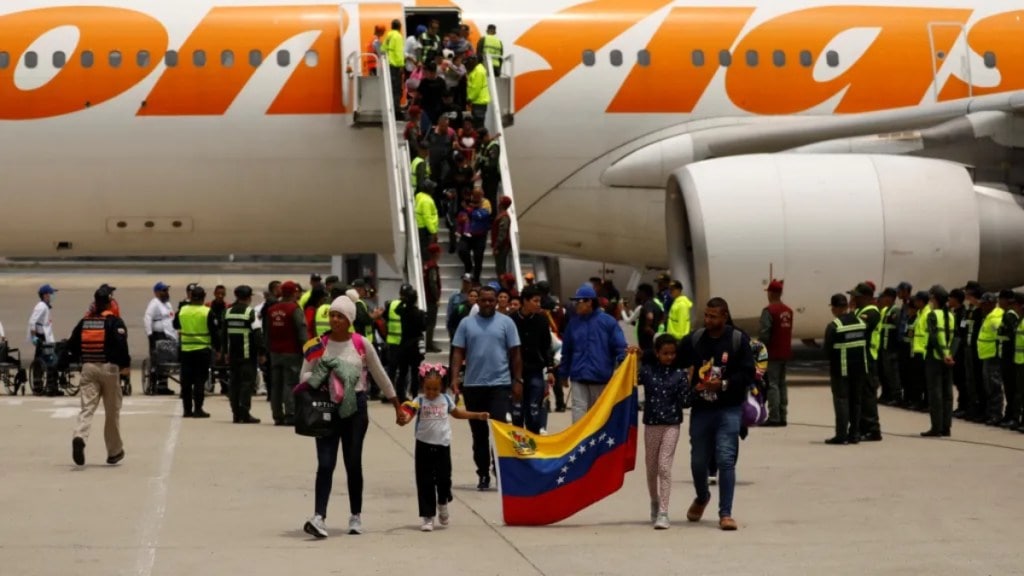
The ouster of Venezuelan leader Nicolas Maduro has had a severe impact on Venezuelan nationals. In a recent announcement, the Department of Homeland Security (DHS) said that Venezuelans living in the US under Temporary Protected Status (TPS) can now apply for refugee status.
The shift in policy comes as roughly 600,000 Venezuelans face the possibility of deportation if they do not secure an alternative legal status. An estimated 800,000 Venezuelans are currently exiled, according to several reports.
‘Venezuela more free than today’
In a recent interview with Fox News, DHS Secretary Kristi Noem, defended the Trump administration’s decision to terminate former US President Joe Biden-era TPS designation for Venezuelans.
Noem argued that the measure ensures US immigration programs “follow the law,” and said that Venezuela is “more free today than it was yesterday” after Maduro’s removal from power. She emphasised that individuals who previously had TPS “have the opportunity to apply for refugee status.”
What is the Temporary Protected Status?
Temporary Protected Status is a humanitarian immigration program that allows nationals from countries experiencing conflict, natural disasters, or other extreme conditions to live and work legally in the US without fear of deportation. TPS does not provide a path to permanent residency or citizenship, and its designation can be reviewed, extended, or terminated by DHS.
Policy change sparks controversy?
The policy change has sparked controversy, especially in areas with large Venezuelan communities. Miami Mayor Eileen Higgins criticised the revocation of protections as “reckless, dangerous, and wrong,” urging the federal government to reinstate TPS to safeguard vulnerable families.
At the same time, reactions within the Venezuelan diaspora are mixed. Some Venezuelans in the US celebrated Maduro’s ouster, with public celebratory events seen in Florida and Chicago, while others expressed fear and anxiety about immigration enforcement following the policy shift.
Legal experts have noted that while refugee status provides a potential pathway to remain in the United States, the asylum and refugee system is already backlogged, and qualifying for status does not guarantee protection, according to HIAS.