



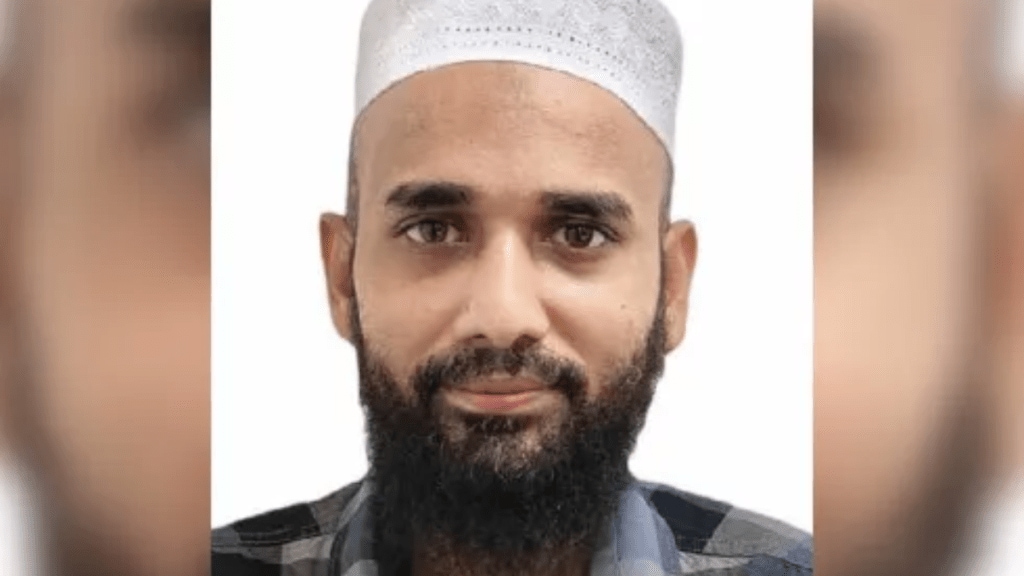
New Jersey Governor Phil Murphy has asked the Indian government to help extradite Nazeer Hameed, an Indian national accused of killing a mother and her young son in 2017. Hameed has been formally charged with murdering 38-year-old Sasikala Narra and her six-year-old son, Anish, inside their Maple Shade apartment. Both were found with fatal slash wounds to their necks, and investigators said there were clear signs the victims fought back. Anish was nearly decapitated in the attack.
Hameed lived in the same apartment complex and worked in the same IT company as Sasikala’s husband, Hanumanth Narra. Police found that Hameed had been stalking Hanumanth. Six months after the murders, Hameed left the United States and returned to India, where he has stayed ever since.
‘Heinous crime shocked our state’
Governor Murphy recently spoke with India’s Ambassador to the US, Vinay Kwatra, and also wrote to him, referring to the 1997 Extradition Treaty between the two countries and the long-standing cooperation in combating violent crime. In his letter, he said,
“This heinous crime shocked our state, and for eight years investigators pursued every available lead. The Government of New Jersey stands ready to cooperate fully with the Ministry of External Affairs of India, Ministry of Home Affairs of India, US Department of Justice, US Department of State, and the Federal Bureau of Investigation to facilitate the extradition process in accordance with both Indian law and the terms of our bilateral treaty. I wish to convey my profound gratitude to Ambassador Kwatra, with whom I spoke last week, for his prompt attention to this matter and for the continued partnership between our governments.”
Authorities say investigators never gave up in their pursuit of answers. Burlington County Prosecutor LaChia Bradshaw and Maple Shade Police Chief Christopher Fletcher credited years of hard work and federal assistance for the breakthrough in the case.
DNA evidence unlocks the case
At the crime scene, detectives collected a tiny droplet of blood that did not match either victim. Further testing showed it belonged to a male with Central Asian ancestry, consistent with Hameed. When authorities attempted to obtain his DNA through official channels, Hameed refused to provide a sample. Requests from the US to the Indian government to collect a court-ordered sample also remained incomplete for years.
Eventually, investigators approached Hameed’s employer in India, asking for his work laptop. A DNA profile taken from the keyboard matched the blood evidence found at the murder scene. This development provided strong physical evidence that confirmed what investigation team had already determined.
Detectives say they remained motivated by the memory of Sasikala and Anish. Chief Fletcher recounted that photos of the victims hung in the detective bureau throughout the investigation, reminding officers daily of the need to bring justice.
FBI reward and extradition request
Hameed is now wanted on the FBI’s Most Wanted website. A state warrant has been issued for his arrest, and the FBI is offering a reward of up to USD 50,000 for information leading to his arrest or conviction. Law enforcement authorities in the U.S. stress that the next step must be to bring Hameed back to face trial.
Prosecutor Bradshaw urged both governments to act on the case, saying, “No border, no distance, and no delay should stand in the way of justice. We urge full cooperation between our nations to demonstrate that those who commit violent crimes cannot flee accountability by crossing oceans.”