



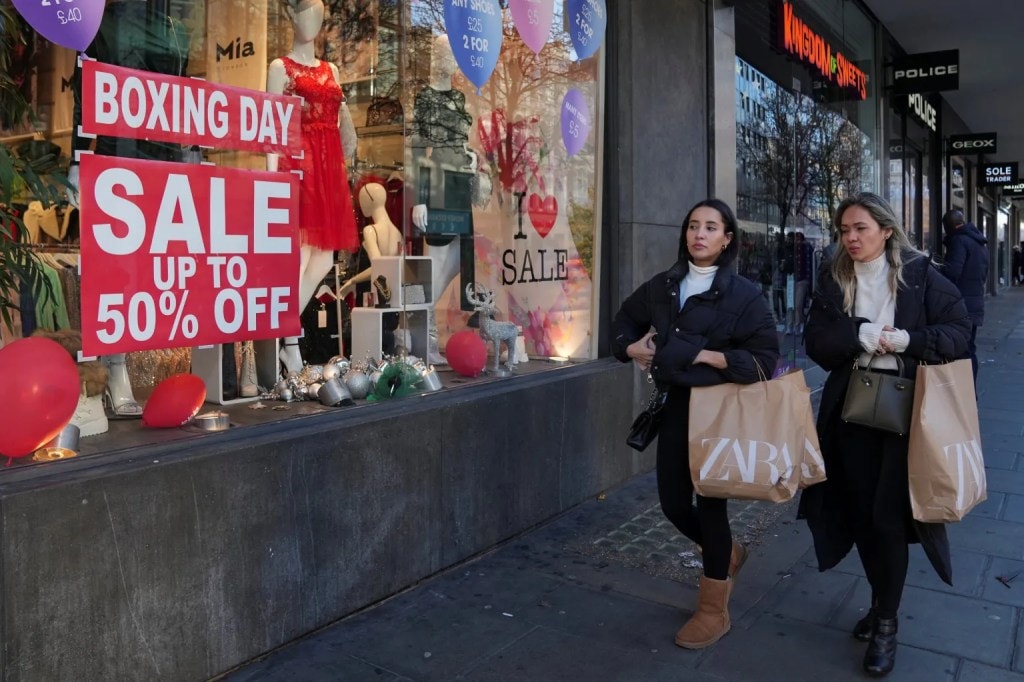
The holiday season brings a flurry of excitement, but after the gifts are unwrapped and Christmas dinner is done, many wonder: What is Boxing Day?
In the United Kingdom, Canada, Australia, and other Commonwealth countries, December 26 is no ordinary post-Christmas day. This distinctive secular holiday extends the celebrations, offering a full day for relaxation, fun, and blockbuster shopping sprees.
What exactly is ‘Boxing Day’?
Boxing Day is a holiday celebrated after Christmas Day, on December 26. It is usually marked by gift-giving, celebrations and sporting events. When December 26 falls on a Saturday or Sunday, the bank holiday is officially celebrated the following Monday, according to USA Today.
Origins of ‘Boxing Day’
The origins of the holiday are a bit muddled, though the generally accepted theory is rooted in Victorian England. During the reign of Queen Victoria, servants, tradespeople, and the poor typically were given presents. The servants worked on Christmas Day and would have the next day off to go visit their own families.
So, according to the Old Farmer’s Almanac, the upper class would take leftover food, goods, or money and put them in boxes to give out to the poor.
How did the holiday get its name?
While the holiday had its roots in giving back to the poor, like many modern celebrations, it’s shifted and become more associated with shopping and sports. The “boxing” refers to Christmas boxes, which are containers filled with money, leftover food, or other gifts that were traditionally given to servants, tradespeople, and those in need.
Boxing Day: Is it celebrated in the US?
Boxing Day is an official bank holiday in UK, Canada, New Zealand and most of Australia. While boxes aren’t typically given to the poor anymore, it’s not unusual for service employees to get bonuses around this time of year, says Britannica.
In the US, however, and much of Europe, Boxing Day is not an official holiday, some people still mark December 26 informally.
It’s typical for families to invite others over to enjoy a casual lunch made from Christmas Day leftovers. Many may also head out to stores to shop post-Christmas sales or make exchanges and returns.