



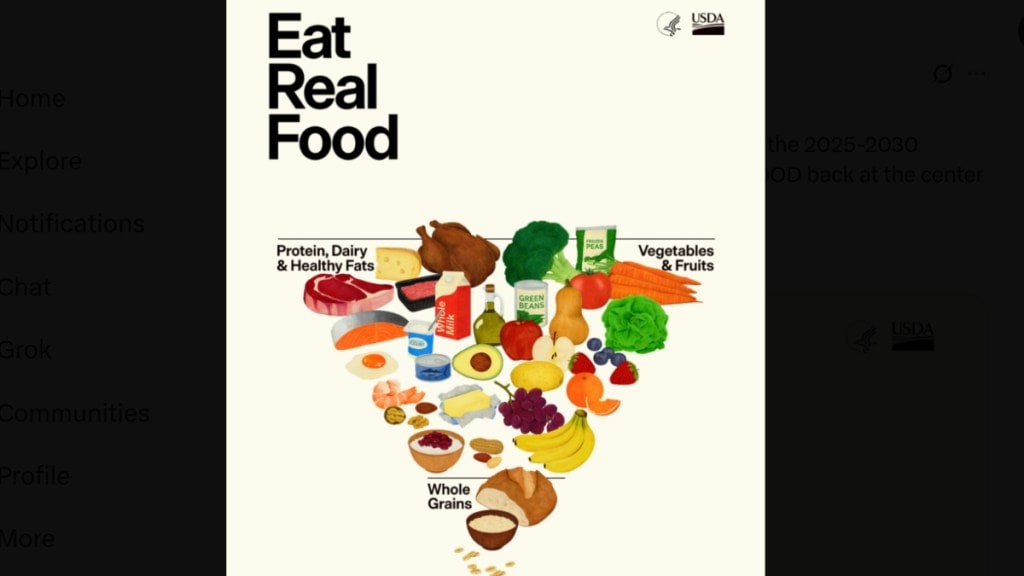
US President Donald Trump’s administration released the updated US dietary guidelines on Wednesday, encouraging Americans to eat more protein and full-fat dairy, while cutting back on ultra-processed foods and added sugars.
The guidelines, which are updated every five years by the Agriculture and Health and Human Services departments, largely align with Health Secretary Robert F Kennedy Jr’s ‘Make America Healthy Again’ movement, but stop short of the sweeping changes some nutrition experts had expected, according to NBC News.
BREAKING: The Trump Administration announces the 2025-2030 Dietary Guidelines for Americans, putting REAL FOOD back at the center of health. 🇺🇸https://t.co/tkGF01onpm pic.twitter.com/1zTLSKdE7R
— The White House (@WhiteHouse) January 7, 2026
How much protein is too much protein?
The new guidance has emphasised protein intake in every meal and encouraged people to eat as much as twice the recommended daily allowance of 0.8 grams of protein per kilogram of body weight, instead recommending 1.2 to 1.6 grams per kilogram of body weight.
“We’re going to be working very hard to ensure government procurement programs go to whole foods, and we’re going to ensure Americans have transparency about what they’re eating,” Politico reported a senior administration official as saying.
‘End the war on healthy fats’
The guidelines recommended “ending the war on healthy fats,” specifically suggesting consumption of “the bulk of fat from whole food sources” such as animal proteins, seeds, avocados and full-fat dairy products.
The new document loosely outlined ultra-processed foods as “highly processed packaged, prepared, ready-to-eat” and foods that have added sugars and salt. When asked why the guidelines don’t go further to offer a definition, a senior administration official said, “a four-year-old can determine the difference between a potato and potato chips.”
American Medical Association praises new guidelines
American Medical Association (AMA) President Bobby Mukkamala lauded the new guidelines and said that the AMA intends to provide more education on nutrition for clinicians.
He said the association will also work with Congress on legislation that supports Americans eating more nutrient dense-food and increases funding for nutrition research.
“The guidelines affirm that food is medicine and offer clear direction patients and physicians can use to improve health,” Mukkamala said in a statement.