



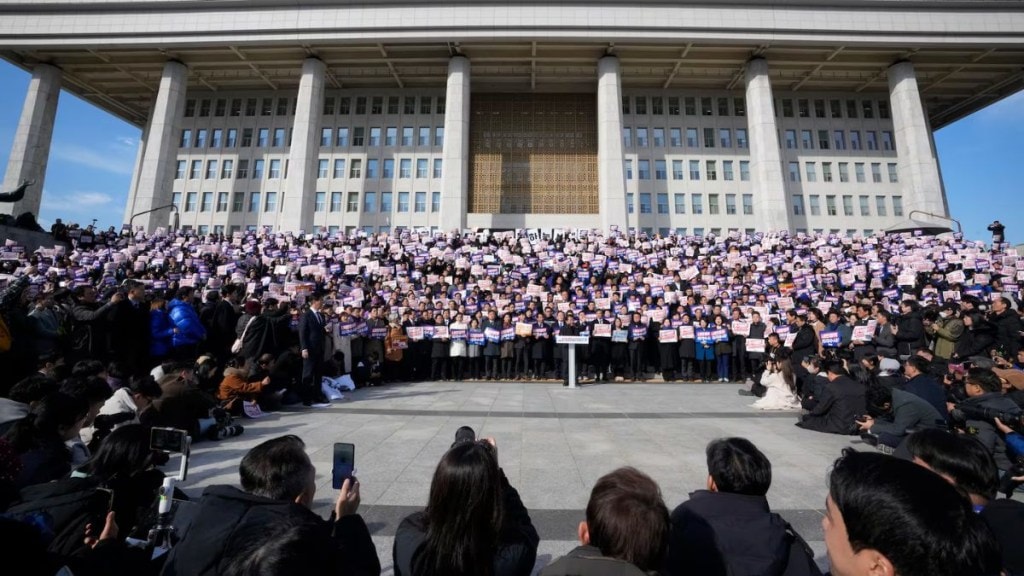
South Korea’s opposition parties on Wednesday (December 4) filed a motion to impeach President Yoon Suk Yeol, who is under mounting pressure to resign after abruptly imposing and then quickly lifting a brief martial law. The declaration had sent troops to surround parliament, triggering a vote by lawmakers to rescind it.
The motion, submitted by the Democratic Party and five smaller opposition groups, accuses Yoon of violating the constitution by declaring martial law without legal grounds, citing the decree as an attempt to suppress opposition and control parliament.
What will happen if opposition parties’ motion to impeach the President is accepted?
If passed, the impeachment motion would require the support of two-thirds of parliament, or 200 out of 300 lawmakers, to move forward. The opposition currently controls 192 seats, with the remaining votes needed to reach the threshold potentially within reach after 18 members of Yoon’s own ruling People Power Party sided against his martial law.
How the late-night ‘K-drama’ unfolded
Yoon’s decision to impose martial law, which briefly brought military troops to surround the National Assembly and halt parliamentary operations, has sparked widespread criticism. The declaration, the first in over 40 years, was seen by many as an unconstitutional overreach, particularly as it sought to restrict parliament’s functioning and limit political freedoms.
The law was quickly overturned after a dramatic standoff, during which some lawmakers even had to climb walls to enter the parliamentary hall. With calls for his resignation mounting, Yoon’s government faces significant backlash, with many questioning the legality of his actions.
Although the president enjoys immunity while in office, opposition leaders are pushing for his immediate investigation, citing the military’s involvement in blocking legislative activities. Political experts warn that this incident marks a concerning shift away from democratic principles in South Korea.
What’s next?
The impeachment process now hinges on the support of the Constitutional Court, which would need at least six of its nine justices to back the motion for Yoon’s removal. However, with three justices recently retired, the court’s ability to rule on the matter could be delayed.
This crisis follows ongoing tensions between Yoon’s administration and the opposition, which has been critical of his policies and his handling of national affairs. The situation has drawn international attention, with the United States expressing concern, while the streets of Seoul remained relatively calm on Wednesday despite the political turmoil.