



Cricket in South Asia, India-Pakistan relationship barring, has long thrived on continuity: regular tours, predictable calendars and the assurance that the game would find a way forward even when circumstances were less than ideal. Recent developments, however, suggest that this stability can no longer be taken for granted.
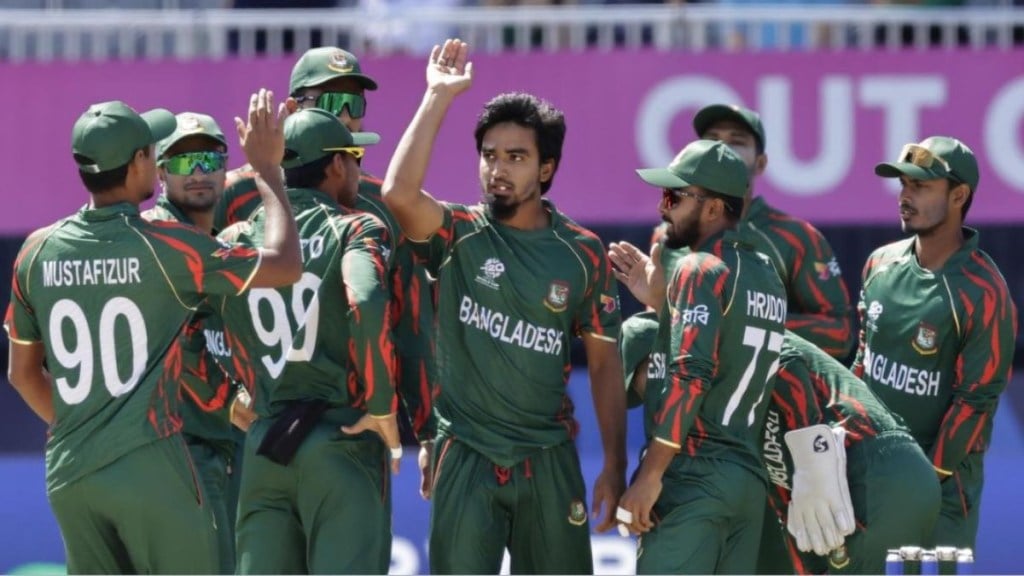
What should have been a routine franchise signing in the Indian Premier League (IPL) has instead exposed how fragile regional cricketing arrangements have become. Kolkata Knight Riders’ release of Mustafizur Rahman, shortly after acquiring him for ₹9.20 crore, was not merely a squad adjustment. It has set off a chain reaction that has since affected international scheduling, bilateral planning and tournament participation with the latest development being Bangladesh government banning the IPL telecast in their country until further notice.
Bangladesh refuse to travel to India after Mustafizur Rahman controversy
Bangladesh’s subsequent reluctance to travel to India for the 2026 T20 World Cup, followed by uncertainty over India’s tour of Bangladesh, has pushed another major cricketing relationship into limbo. Coming on the back of already-limited engagement between India and Pakistan, the region now faces the possibility of further reduced on-field interaction among its biggest teams.
This matters because South Asian cricket is built on volume and frequency. Matches between India, Pakistan, Sri Lanka and Bangladesh have historically sustained broadcasters, boards and players alike. When those fixtures disappear or are indefinitely postponed, the impact is felt across the ecosystem, from scheduling windows and revenue projections to player workload management and fan engagement.
Unlike earlier eras, when administrators found ways to compartmentalise cricketing commitments, the margin for flexibility now appears narrower. Global calendars are crowded, franchise leagues dominate prime windows and international boards have fewer opportunities to reschedule abandoned tours without financial consequences.
India vs Bangladesh on neutral venues?
For regional institutions like the Asian Cricket Council, the strain is becoming increasingly visible. The ACC’s mandate rests on cooperation and shared calendars. Prolonged uncertainty among key members threatens the long-term relevance of regional tournaments and limits opportunities for emerging teams that rely on consistent competition against stronger sides.
If Bangladesh to refuse to come to India and India do not travel to Bangladesh either, it could mean that the India-Bangladesh cricketing relationship will be similar to the relation between India and Pakistan, with the two teams meeting in ICC and ACC events and even then meeting at a third country if either of them is a host.
South Asia remains the sport’s most influential market, but influence alone cannot sustain the game. Cricket here depends on trust between boards, between teams, and between organisers and fans. If uncertainty becomes the norm, the region risks drifting towards a future defined by neutral venues, truncated engagements and fewer meaningful contests.
The game has survived many transitions in the subcontinent. Whether it can adapt to this new phase of unpredictability may well shape the next decade of South Asian cricket.