



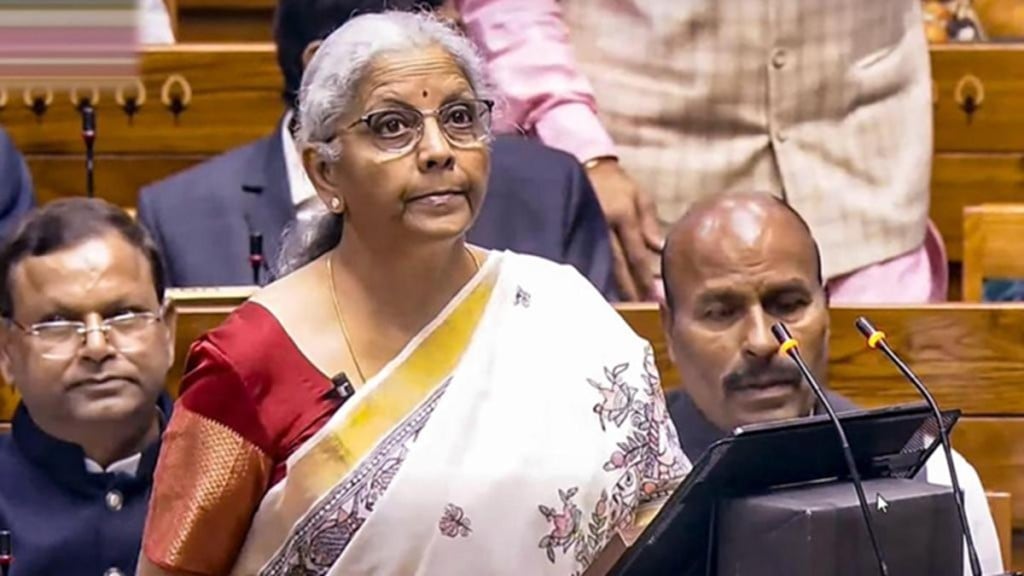
Finance Minister Nirmala Sitharaman on Wednesday said that excise duty collected on tobacco and related products will be part of the divisible pool, with 41% shared with states, ensuring that states also benefit following the expiry of the GST compensation cess.
Responding to the debate on the Central Excise (Amendment) Bill in the Lok Sabha, she emphasised that the measure does not introduce any additional tax burden and merely maintains the current tax incidence applicable under the GST regime. The Bill, which was passed by the House, seeks to reintroduce excise duty on tobacco products to replace the GST compensation cess.
Sitharaman on the proceeds of the excise duty
Sitharaman clarified that the move is not a new levy but a reinstatement of the pre-GST excise mechanism. “This is not an additional tax. This is not something which the Centre is taking away. This is not a cess. This is excise duty… It is coming back to the Centre, to be collected as excise duty, which will go to the divisible pool,” she said, adding that 41% of the revenue will continue to flow to states under the Finance Commission’s devolution formula.
Introducing the Bill, the minister said the excise duty was necessary to ensure that the total tax burden on tobacco—considered a demerit good—does not drop once the compensation cess expires. The GST law caps the maximum tax rate at 40%, meaning that without an excise levy, the tax incidence on cigarettes and other tobacco products would sharply decline. “Cigarettes should not become affordable now because the incidence has become less,” she said.
What does the tobacco cess bill propose?
The Bill proposes an excise duty of 60–70% on unmanufactured tobacco. For cigars and cheroots, the duty will be 25% or Rs 5,000 per 1,000 sticks, whichever is higher. Cigarettes without filters, up to 65 mm in length, will attract Rs 2,700 per 1,000 sticks, while those between 65 mm and 70 mm will attract Rs 4,500 per 1,000 sticks. These rates will effectively replace the varied compensation cess currently levied alongside the 28% GST on all tobacco categories.
Sitharaman noted that the move is timed with the near-completion of repayment of the Rs 2.69 lakh crore loan taken to compensate states for GST-related revenue losses during the Covid period. The loan will be fully repaid in “a couple of weeks”, after which the compensation cess will cease.
On the IMF’s recent ‘C’ grade for India’s national accounts data, she clarified that the issue relates only to the outdated base year. The government will update the base year to 2022–23, with changes coming into effect from February 27.