



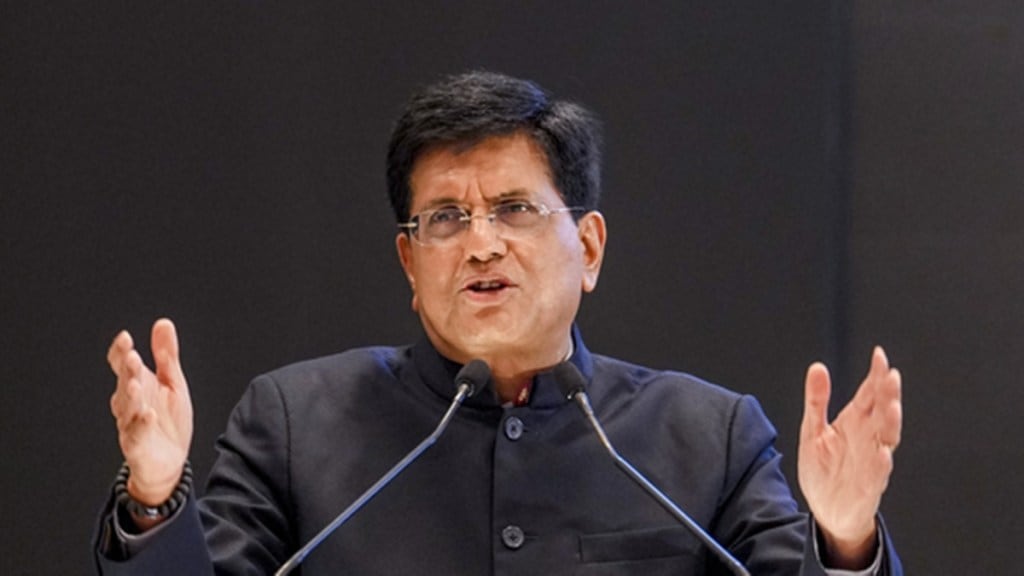
With India-EU free trade agreement negotiations in final stages, Commerce and Industry minister Piyush Goyal will visit Brussels this week for what could be the last set of meetings between the trade leadership of both sides on the talks before the India-EU Summit later this month.
In his visit to Brussels from January 8 to January 9, Goyal will be meeting EU Trade Commissioner Maros Sefcovic and other leaders as they push the conclusion of the negotiations by the Summit scheduled for January 27.
Republic Day Diplomacy
Before the summit the top leadership of the EU – European Commission President Ursula von der Leyen and European Council President Antonio Costa – will be the chief guests at India’s Republic Day celebrations.
Goyal will first visit Liechtenstein on January 7 before he lands in Brussels. Liechtenstein is one of the four members of European Free Trade Association (EFTA) with whom India’s FTA came into force on October 1.
Goyal’s visit to Brussels comes just a month after the visit of EU Trade Commissioner Maros Sefcovic and other senior officials related to trade to advance the FTA talks. Goyal and Sefcovic held two days of extensive negotiations in December to move the FTA towards conclusion. Sefcovic also met External Affairs Minister S Jaishankar and Finance Minister Nirmala Sitharaman during his India visit.
Before Goyal-Sefcovic met, India and EU officials held technical discussions on 3-9 December. Between the physical meetings, both sides are constantly engaged virtually too. Goyal will be accompanied by a team of officials. In Brussels Commerce Secretary Rajesh Agrawal will join the team.
Both sides had set a deadline of December-end to wrap up the discussions on the FTA and officials now say the deal would definitely be doable by the first quarter of calendar year 2026.
India and the EU started negotiations on FTA in July 2022. Since then they have held 16 rounds of negotiations. The proposed FTA deals with 23 policy areas, including trade in goods, services, investment, trade remedies, rules of origin, customs and trade facilitation, competition, government procurement, dispute settlement, intellectual property rights, geographical indications, and sustainable development.
Addressing CBAM and Technical Hurdles
Most of these chapters have already been closed. India has also taken up the issue of imposition of carbon tax through Carbon Border Adjustment Mechanism (CBAM) by the EU that is expected to put Indian exporters of steel and aluminium at a serious disadvantage.
In addition to the main agreement, both sides are also negotiating deals on Geographical Indications and Investment Protection.