



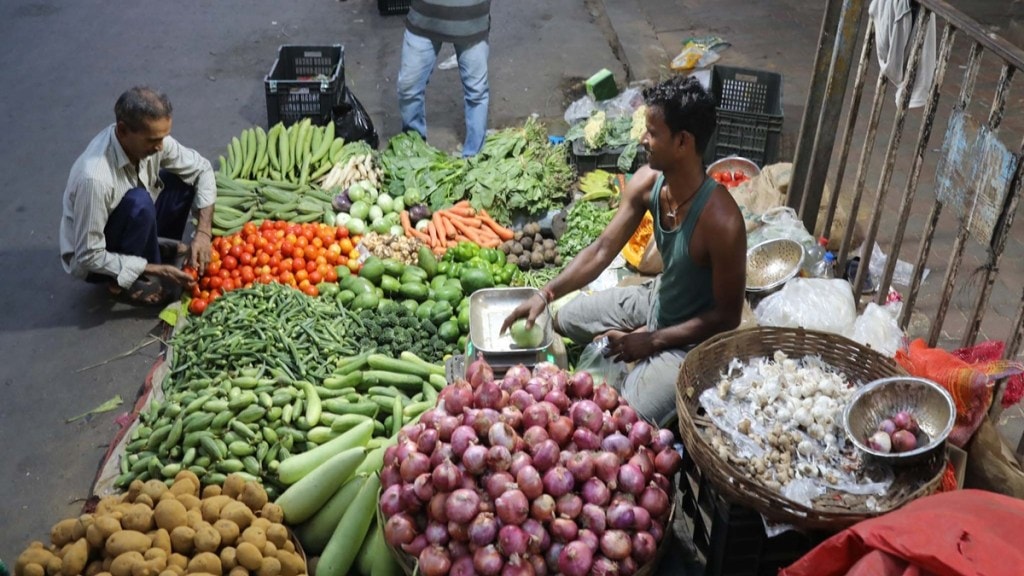
Retail prices of tomatoes in Delhi-NCR have risen between Rs 70-80 per kg due to decreased supply caused by recent heatwave conditions.
Mother Dairy’s ‘Safal’ stores in Delhi-NCR are selling tomatoes at Rs 75 per kg. Local vendors are pricing them at Rs 70-80 per kg.
Online platforms Blinkit and Bigbasket are offering tomatoes at Rs 80 per kg. Meanwhile, prices of tomatoes in online platform Zepto have surged to Rs 102 per kg. Local vendors attribute the high prices to a significant rise in wholesale rates, currently at Rs 50-60 per kg.
According to the Price Monitoring Division Department of Consumer Affairs, the retail prices of tomatoes in Delhi are reported at Rs 55 per kg. Nationally, the average tomato price is Rs 57.03 per kg, with the modal rate at Rs 50 per kg. Maximum and minimum prices are Rs 107 per kg and Rs 22 per kg, respectively.
On Saturday, the all-India average retail price for tomatoes was Rs 57.03 per kg, marking a 59.07% rise from Rs 35.85 per kg last month. In comparison, on July 3 last year, tomatoes were priced at Rs 96.46 per kg. During July and early August 2023, prices had peaked at Rs 250 per kg in various locations.
Retail prices of other essential vegetables like onion and potato have risen significantly.
The average onion price nationally is Rs 43.73 per kg, with the modal rate at Rs 40 per kg. Maximum and minimum prices are Rs 57 per kg and Rs 30 per kg, respectively.
For potatoes, the national average price stands at Rs 32.78 per kg. It was Rs 23.16 per kg on the same day last July, which marks a 41% increase.
The wholesale prices in Delhi of the three vegetables on Saturday stood at Rs 2,050 per quintal (potato), Rs 2,825 per quintal (onion) and Rs 3,600 per quintal (tomato).
Veg thali costs more than chicken thali
Interestingly, the average cost of home-cooked chicken thali continued to decline while the vegetarian thali price rose in the month of June.
According to CRISIL MI&A Research estimates, the cost of home-cooked non-vegetarian thali decreased by 4% in June, while the cost of vegetarian thali increased by 10% compared to the previous year.
The decline in the cost of the non-vegetarian thali was attributed to a roughly 14% decrease in broiler prices year-on-year, influenced by a high base from the previous fiscal year, an oversupply situation, and lower feed costs compared to the previous year. Broiler poultry expenses constitute 50% of the total cost of the non-vegetarian thali.
Meanwhile, the cost of home-cooked vegetarian thali increased significantly, driven by substantial year-on-year increases: tomato prices surged by 30%, onion prices by 46%, and potato prices by 59%. These price hikes were largely influenced by the lower base of the previous fiscal year, contributing to the overall rise in the cost of the vegetarian thali.