



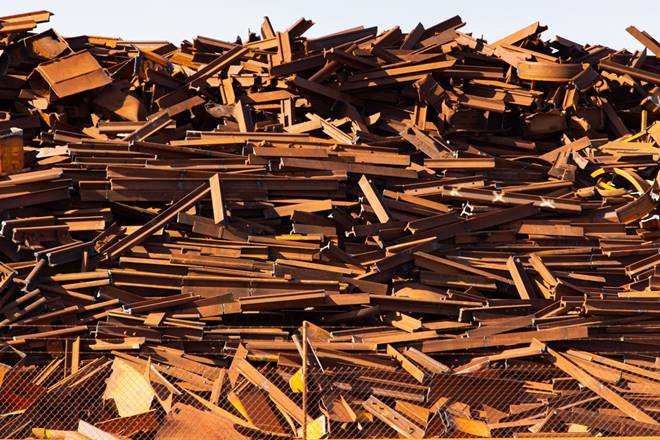
Lakhs of crores of rupees are lost every year due to rust, corrosion, wear and tear, accidental damages and other such factors. The Ministry of Statistics and Programme Implementation (MOSPI) prepares the estimates of consumption of fixed capital (CFC) which also includes the effect of wear and tear, on capital goods. The CFC loss in the last fiscal was more than 10 per cent of India’s GDP, according to the data provided by Rao Inderjit Singh, MoS (IC), MOSPI, in a reply to a question in Lok Sabha today. These losses lead to economic depreciation every year and are mostly seen in the manufacturing and real estate industries.
In both industries, the yearly loss due to CFC was more than Rs 4.2 lakh crores respectively in the last fiscal. Transport, agriculture, electricity are other industries that suffer the most due to such losses. In the transport and agriculture sector, such losses are up to Rs 2 lakh crores every year. It is important to compute such losses as it helps to calculate depreciation and thus affect tax assessment and business accounts.
Also Read: Unsold homes, other factors push HFCs NPAs; credit grows only this much, recording worst hit in FY20
India’s GDP is also calculated by taking into account the consumption of fixed capital. The gross domestic product is the CFC subtracted from the net domestic product. This cost makes a dent in the respective industries every year, generating a need for new capital investments. As the capital goods get older, the CFC is expected to further increase. However, a higher CFC also benefits the company in some cases. The larger the depreciation write-off, the larger the gross income of a business. This is one of the reasons why businesses consider this accounting entry as very important.