



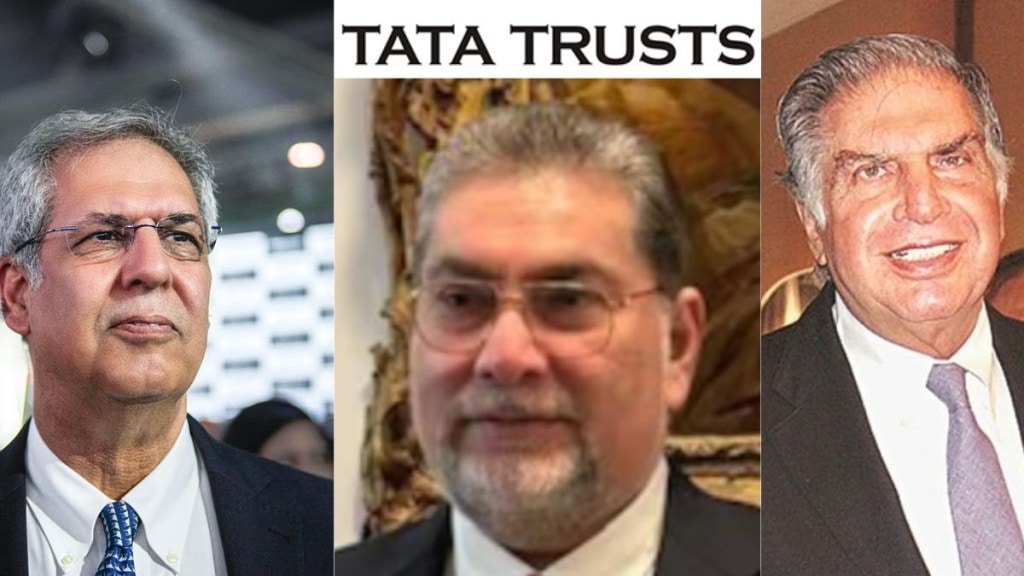
The public discord inside Tata Trusts, the controlling shareholder of Tata Sons, was bad enough. What’s worse is that it now appears to have become a full-blown war, with a majority of the trustees voting against Mehli Mistry’s continuation as a governing board member on Tuesday, the last day of his three-year term.
There is every possibility that the matter is headed to the courts. The protracted battle threatens to dent the one asset that has powered the Tata story for more than a century: institutional credibility. When the body that owns a decisive 66% of Tata Sons is split, the risk is not abstract. A deep schism within Tata Trusts also has implications for Tata Sons and the broader Tata Group, as the conglomerate encompasses 26 publicly listed companies with aggregate revenues exceeding $180 billion. Reports of the government being drawn in to calm tempers should worry anyone who cares about independent corporate governance in India.
Corporate structures exist precisely to prevent such tensions from paralysing operating companies. Yet the Trusts’ influence is unique: they select and oversee nominees who sit on Tata Sons—the fulcrum for capital raising, M&A, and leadership appointments across the group. A deadlock or revolving-door approach to nominations can slow decisions when speed is essential. When trustees are preoccupied with internal votes and vetoes, the opportunity cost shows up as delayed approvals and managerial distraction at Tata Sons.
A second, subtler damage is reputational. The Tata name is shorthand for probity. The Trusts, as philanthropic stewards, anchor that reputation. Visible factionalism at the Trusts blurs the line between charitable governance and corporate power plays, inviting more scrutiny from New Delhi and regulators—and, in time, from donors and beneficiaries of the Trusts’ work. The longer this lasts, the higher the chance of personality contests casting their long shadow on public perception about the group. The third risk is cultural. Ratan Tata insisted on consensus inside the Trusts.
The recent bout of majoritarian decision-making marks a shift from that operating philosophy. Regardless of which “camp” prevails, governing by narrow margins breeds permanent opposition, leaks, and brittle coalitions. That is a poor foundation for an owner-entity expected to think in decades, not news cycles.
Irrespective of the outcome of the rift among trustees, Tata Trusts must do several things to prevent a recurrence of the ugly battle at the top. First, return to clear ground rules. The Trusts should codify a nominations protocol that separates who is eligible to be a trustee, who may be nominated to Tata Sons, and how conflicts of interest are managed—especially when trustees could be considered for operating-company boards.
Second, institutionalise consensus-seeking. Consensus doesn’t mean unanimity forever, but it does require process: independent briefings, formal mediation, and time-bound decision windows before any vote. A small, external governance council could be asked to advise on contentious appointments and succession.
This saga is now moving markets and drawing the state into a private trust’s affairs. The Trusts must issue a concise note laying out the nominations framework, the transition timeline, and an assurance that Tata Sons’ board remains fully staffed and functional. Finally, recommit to the core idea of trusteeship. The Tata model works because the owners’ horizon is longer than a promoter-family’s and broader than a quarter’s earnings. Trusteeship is a compact with the public. The present conflict makes that compact look contingent. It should not be.