



By-Vidya Hattangadi
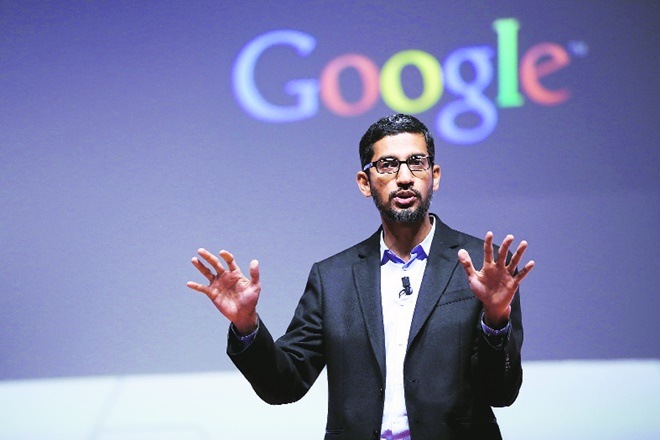
What has made Indira Nooyi, Sundar Pichai, Satya Nadella, Ajay Banga, Shantanu Narayen and few other Indian-origin CEOs rule the business world successfully? I think the answer is simple. They lead their businesses from their gut; they have good instincts about market and global competition because of lot of inputs. They have good negotiation skills — be it with their competitors, or employees, they are good in reading the mood of their organisation and capable to recognise business patterns. Most important of all, these people are grounded.
People who can self regulate their emotions are in high demand. The world, these days, cares a lot for SQ (social quotient), which is also called social intelligence (SI) — largely developed from our experience, from what we learn. All the good and bad experiences of life prepare us to face the world. SI is more commonly referred to as tact, common sense, sometimes even street smartness. Socially intelligent people come across as frank, without inhibitions. They easily talk about themselves and are non-defensive. Therefore, they are appreciated by co-workers, peers, their bosses and everybody around them. Social character is our ability to understand and interpret others.
On the contrast, a continued pattern of toxic behaviour indicates a low level of social intelligence. We all have feelings which drive us to take decisions; our ability to tackle our decisions make us either successful or unsuccessful in life. Our self-regulation to manage our emotions and actions matters. We all are driven by our moods, sentiment on which our actions are based.
Warren Buffett has been Coca-Cola’s largest single shareholder since the 1980s. A few years back, when the beverage company launched a special edition of its Cherry Coca-Cola in China, he became the face of the beverage. The drink is said to be his favourite. He helped Coke to use his picture on cans to promote the launch. When asked during the Berkshire Hathaway’s 2017 annual shareholders meeting about the key factor he looks for before investing, he said he looks out for businesses that would last for 10 or 20 years, and whether these businesses are capable of retaining their competitive advantage over that period. He looks at their long-term strategies, whether they are capable of generating sustainable profits, which they can re-invest in their growth, and offer their investors more dividends. Warren Buffett evaluates his key mantras before investing in companies. He is one of the champions with high SI.
SI as a notion was coined by EL Thorndike (1920). He divided intelligence into three facets: The ability to understand and manage ideas (abstract intelligence), concrete objects (mechanical intelligence), and people (SI). He defined SI as the ability to understand and manage men and women, boys and girls — to act wisely in human relations. Similarly, Moss and Hunt (1927) defined SI as the “ability to get along with others.” Vernon (1933) provided the most wide-ranging definition of SI as the person’s ability to get along with people in general, social technique or ease in society, knowledge of social matters, and susceptibility to stimuli from other members of a group, as well as insight into the temporary moods or underlying personality traits of strangers.
Some of the important elements of social intelligence are:
Confidence in talking: In a party, or gathering, you can easily spot a person with high score of SI, talking to others with ease. Such people have verbal fluency and command on their conversation because of their composed state of mind. They are expressive and can carry discussions without boring others. Such people carry on their social roles easily. Socially intelligent individuals learn to play various social roles with ease. A manager with good SI, conducts interviews very well — without making the candidate nervous, he/she makes the candidate comfortable. If it’s a doctor, he makes his patients comfortable, if it’s a judge, he keeps his courtroom a good-humoured place. If it’s a teacher, his classroom has full attendance. So, the people with high SI know how to play their roles. As a result, they are seen as socially sophisticated people.
Good listeners: Socially intelligent people are great listeners. People who interact with them feel more ‘connected’ with them. They are good observers, too. They have a perfect reading of other’s behaviours. Understanding emotions is a key element of SI.
Good management skills: People with high SI are good managers and implementers. They have the risk-taking ability and are fast decision makers. They easily manage and control things. Even as they control things, they don’t make it obvious; they allow others to give ideas, to express views and work creatively. This is the most complex element of SI.
Man is a social animal. Most of us go through highs and lows from our childhood. Our experience in life develops the size of our brain. As we develop in life, our brain provides ability to interact with others in social circumstances. By and large, people develop themselves by observing others.
Each one of us has role models, and we develop by replicating them. The SI quotient is a statistical notion, similar to the ‘standard score’ approach used in IQ test, with a mean of 100. Scores of 140 or above are considered to be high. SI has, until recently, been measured by techniques such as question and answer sessions. These sessions assess the person’s rational abilities.