



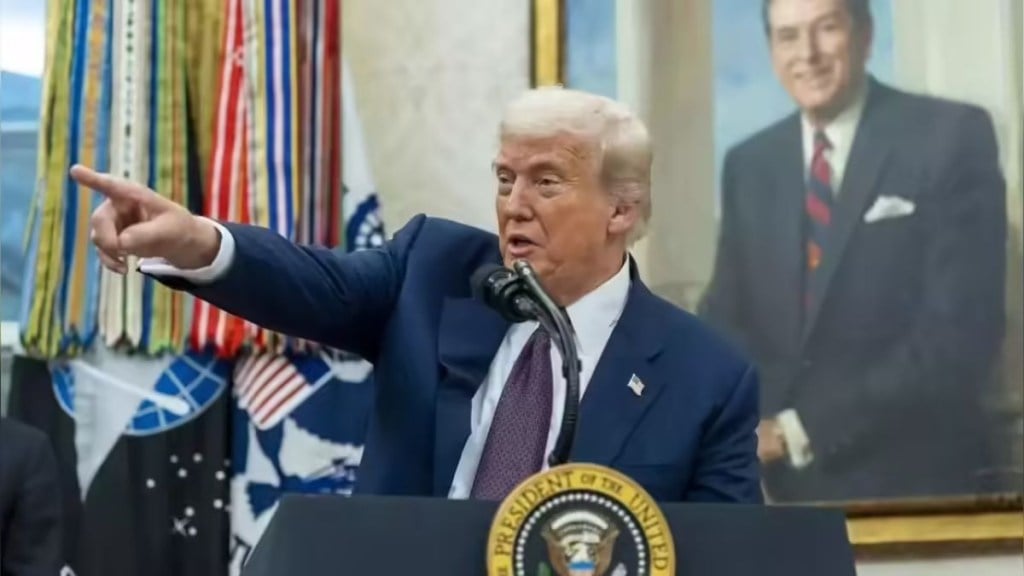
Donald Trump has done it again. At a moment when negotiations on an India-US trade agreement are already moving at a crawl, the maverick US president, on Monday, threatened additional tariffs on the country if it continues to buy oil from Russia. The message is familiar, the timing deliberate, and the method unmistakable. For Trump, trade diplomacy has never been about quiet bargaining or rule-bound processes.
It is about public pressure, brinkmanship, and the constant raising of the stakes. This is not an India-specific tactic. Trump has turned tariff threats into a global calling card, wielded against allies and rivals alike. The latest reminder came with his capture of Venezuela President Nicolás Maduro—expressions of unbridled power don’t come blunter. Trump showed that he can act suddenly and recklessly in pursuit of his varied and varying foreign policy goals, with little regard for precedent, consequence, or, it seems, international law.
Decoding Trump’s economic policy
In Trump’s universe, economic coercion is not an exception to policy; it is the policy. What is striking is how alien the idea of a rules-based global order appears to be in this approach. Multilateral frameworks, negotiated compromises, and predictable norms have little appeal when bilateral pressure can deliver quick political wins.
Tariffs are announced first; justifications follow later. Allies and partners are treated no differently from adversaries, and bilateral pressure routinely trumps multilateral norms. The message is simple: comply, or pay a price. Thus, trade becomes a theatre of threats rather than a forum for settlement. That may play well to domestic galleries, but it leaves partners navigating uncertainty rather than partnership. India should recognise this pattern for what it is.
What drove New Delhi’s purchase of Russian oil?
New Delhi’s purchases of Russian oil have been driven by price stability and energy security in a volatile global market, not by geopolitical alignment. These decisions sit well within India’s sovereign rights and its long-standing position of strategic autonomy.
Reacting sharply to every provocation would only validate the tactic. This is where patience matters. Narendra Modi’s government has so far avoided megaphone diplomacy, and that instinct is sound. A provoked response—rhetorical or retaliatory—will not accelerate a trade deal with the United States, nor will it change Trump’s negotiating style.
It may, instead, harden positions and narrow room for manoeuvre. India’s task is to stay steady: continue engagement on trade, clearly articulate its energy and strategic compulsions, and resist being pushed into reactive postures.
Trump’s threats thrive on escalation and threats are designed to elicit visible pushback, which can then be folded into domestic political narratives. Calm, consistency, and an insistence on dialogue deprive them of oxygen. In a world where rules are increasingly tested, restraint may be India’s most effective response as a sharp one may satisfy momentary sentiment, but it will not advance India’s strategic or commercial interests.
If anything, it risks hardening positions and shrinking the already limited space for negotiation. After all, the US is India’s largest trading partner, whereas India is only the tenth-largest partner for the US—well behind Mexico, Canada, China, and Germany. So, the more prudent course is patience and clarity.
The Indian government should continue to engage the United States on trade, reiterate India’s energy and development compulsions, and avoid being drawn into megaphone diplomacy. India’s leverage lies in its market size, long-term growth prospects, and its record as a reliable economic partner—not in retaliatory rhetoric.