



By Mrugank Paranjape
As the government presents its last annual Budget before the next general elections, there are a few areas we hope the finance minister to consider. Foremost among them is a long-due tax reform by restoring benefit under section 88E of the Income-tax Act. This was introduced in 2004 as a set-off benefit on the tax paid on business income, equivalent to the Securities Transaction Tax (STT) paid. This set-off, which helped mitigate the negative impact of STT, was withdrawn three years later and is now available only as a rebate on business income. Restoration of benefits of section 88E is necessary to avoid double taxation as business income is already taxed at the transaction level.
India’s commodity market is undergoing reforms; these need to be strengthened. For instance, institutional participation in this market. After Budget 2017 provided for broad-basing participation in India’s commodity derivatives market, SEBI has been taking steps to allow its regulated financial institutions to participate. Likewise, other institutions—pension funds, insurance companies and, importantly, banks—also need to be allowed. Their presence is important for sustaining their long-term healthy growth while adding value to the market with their research-backed investment strategies.
Besides, to promote hedging of commodity price risks among multiple stakeholder groups, the government can encourage hedging by statal/parastatal bodies such as agriculture marketing boards, commodity boards, etc, which are exposed to commodity price volatility. Hedging will not only de-risk their own finances, but also provide demonstration effect to many others to manage risks through hedging.
The government has been taking steps to address farmers’ distress. A useful (and proven) tool to link farmers to assured output and input markets is by promoting farmer producer organisations (FPOs). Farmers have been able to lock-in prices and sell output on commodity derivatives platform too, through FPOs, but in a limited manner due to their low capital base. The government can provide capital support to FPOs, which they can leverage for raising finance, getting better terms in purchase of inputs or sale of output, etc. FPOs can provide a host of services to farmers across the value chain, enabling them access markets for inputs, output, finance or risk management. The farming community can also be supported by providing timely and reliable information about prices—current and future. State support, using public resources, for timely dissemination of prices will help farmers make use of such information in sowing and marketing decisions.
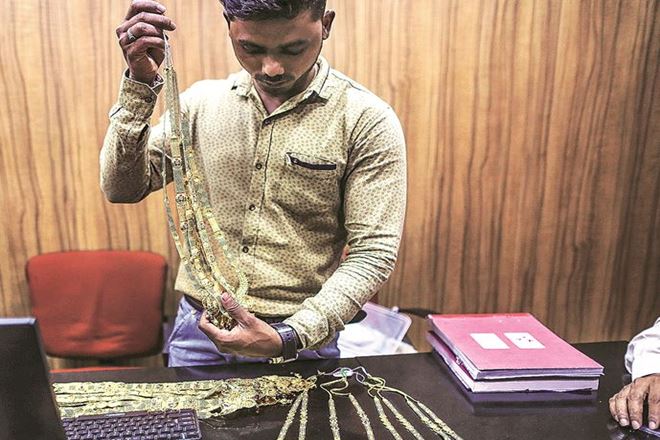
In the previous Budget, the government had announced it would come up with a comprehensive ‘gold policy’ to develop gold as an asset class. The policy announcement on this is awaited. Financialisation of the estimated 20,000 tonnes of gold held by Indian households would help finance economic activities, essentially converting a non-productive wealth into a productive asset. Gold market stakeholders are also keenly awaiting detailed guidelines and regulatory architecture for an electronic ‘gold spot exchange’. As in countries like Turkey and China, a gold spot exchange can help mobilise and recycle existing stock of gold in the country, provide a transparent medium for transactions, promote standardisation in the metal, ultimately leading to emergence of a globally-acceptable ‘India Standard’ for gold.
Continuing reforms in the energy sector would be welcome. Progressive deregulation has led to freeing of prices of petrol and diesel. This has been an important step in making the energy market market-determined, paving the way for introduction of financial (including hedging) products on these commodities, releasing fiscal resources and incentivising innovation in the energy market. The trend needs to continue and we wish for complete deregulation of prices of all hydrocarbon products eventually, so that the real strength of the Indian energy market—one of the largest in the world—is realised. Reflection of real economic value in energy prices will encourage efficiency in use by consumers and spurt R&D in production by producers.
Policy changes, backed by appropriate actions, in the above-mentioned areas can bring in transformational changes in the specific sectors they pertain to, and the Indian economy in general.
-The author is MD & CEO, MCX