



By Nirvikar Singh
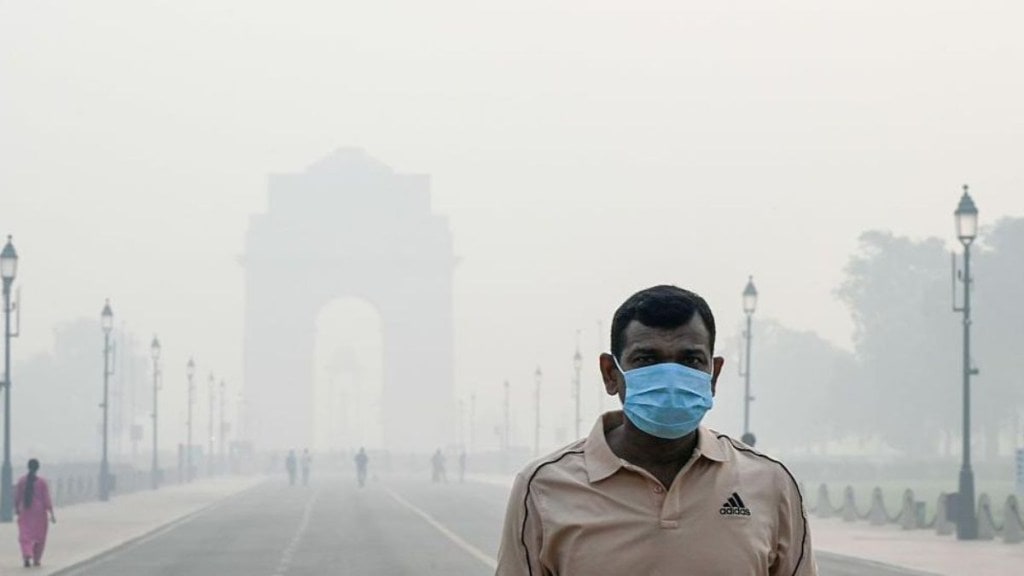
Why has Delhi’s air pollution problem persisted? Is there a way to fix it? For at least a decade, Delhi’s air has been hazardous for several months each winter. The problem is visible, palpable, and pervasive. It has led to multiple government reports, many research papers, and global news stories. But this winter, the conditions faced by Delhi’s residents were no better than in previous years. And this is in a place which includes all the institutions of the world’s largest democracy.
Why has progress been so difficult?
Some years ago, Amartya Sen suggested that democracies are better at some forms of accountability than others—they will not tolerate famines, but will allow widespread, chronic malnutrition. Delhi’s problem is acute for a period, but then it goes away. So, while it is more visible than something like malnutrition, that visibility is temporary.
Flooded roads in the monsoon season suffer from the same lack of persistence as a continuous problem. In the case of air pollution, like malnutrition, the health impacts are hidden and cumulative, which reduces the salience of the problem for politicians trying to manage accountability to voters to their own benefit.
Another factor that works against a solution is that there are multiple sources for the problem—vehicular and industrial emissions, burning of agricultural waste, and all kinds of combustion for heat, fuel, and entertainment. This makes it difficult to quantify the contributions of individual sources to overall pollution, especially when the impacts may not be additive and separable, as in a proverbial witch’s brew. Meteorological conditions, which can vary greatly, add to the problem of targeting solutions. All those reports and research papers have seemingly not yet given clear answers.
Problems with the ‘learn from China’ perspective
Of course, one answer to this problem is to tackle all the sources at once. China did something like this in its winning battle against air pollution in its capital, Beijing, and the surrounding region. “Learn from China” is a theme that has been cropping up in media assessments of Delhi’s pollution problem. But China’s government is very different than India’s—its ruling structure makes coordination across levels of government easier, and command and control policies much more feasible.
More broadly, China’s government has shown strategic intent in ways that India’s government has mostly lacked—how electric vehicles (EVs) have grown in China is something India has barely begun to emulate. It must also be recognised that China began its successful push to reduce air pollution just over a decade ago, when it was already significantly richer and more developed than India is even now. But that cannot be a reason for not solving the problem. In fact, technological progress in the last decade, and a major example of successful problem-solving should make it easier for India.
Air pollution is a regional problem, not confined to a particular political boundary. China recognised this and worked accordingly. A peculiar feature of Indian federalism has been its inability to develop regional structures. Long-established river basin authorities and water tribunals have not done too well in India. There has been little effort and imagination employed for air pollution, but that may be about to change.
The World Bank has recently announced $300 million each for Haryana and Uttar Pradesh, money that will go to a range of initiatives to reduce local (and ultimately) regional air pollution, including incentives for EVs, reduced agricultural waste burning, and so on. Hopefully, these efforts can be compared and coordinated, even though the money will go to individual state governments. For some reason, Punjab is missing from this plan.
This would have been an opportunity to make investments in a state which is in a dire situation on several fronts, and which contributes to Delhi’s air pollution woes. Nevertheless, the World Bank project, if implemented well, may mark a turning point in dealing with the issue of Delhi’s toxic air. It will bring in expertise as well as money. By contrast, recent efforts such as cloud seeding have seemed to be implemented in desperation and without adequate expertise being employed.
The Delhi Pollution Control Committe’s (DPCC) announcement of prizes for practical and sustainable solutions to the capital territory’s pollution problem also seems like grasping at straws, though it has the potential of engaging bright minds across a spectrum of institutions, especially universities. It may turn out to be something that evolves into a new model for problem-solving in India’s public policy arena, where politicians and bureaucrats sometimes struggle with cross-cutting policy challenges.
Openness to diverse sources of expertise and rigorous testing of ideas before scaling up may be validated by the DPCC contest if done well. These principles have already been successful in Gujarat, where four economists (all based outside India, but two of Indian origin) worked with the Gujarat Pollution Control Board to design and experimentally evaluate a market mechanism to control industrial air pollution, which worked much better than “command and control” regulations alone. This 2025 study found that the reduction in mortality from reduced pollution was 25 times the cost of running the market, or a 2,400% rate of return. Put this together with the World Bank effort and the DPCC contest, and perhaps the air will clear in Delhi and beyond its borders.
The writer is a professor of Economics, University of California, Santa Cruz
Disclaimer: Views expressed are personal and do not reflect the official position or policy of FinancialExpress.com. Reproducing this content without permission is prohibited.