



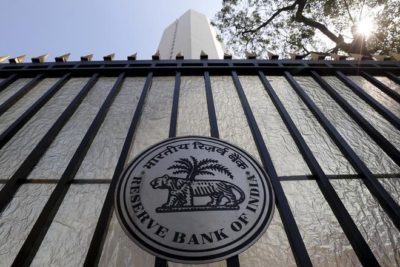
In a surprise move, RBI governor Urjit Patel preferred to keep the key policy rate unchanged at 6.25 per cent in his third policy review, although bankers, market analysts and financial experts were hoping for at least a 25 bps rate cut today. Their expectations were backed by benign inflation, stable global environment, supportive budget as well as demonetisation hurting growth.
The RBI had kept the repo rate unchanged even in the fifth bi-monthly monetary policy statement for 2016-17 on December 7, while it had cut the repo rate by 25 bps in the October 4 policy review in 2016, which was the first rate cut by Patel as the Governor.
Some experts, however, were expecting the RBI not to cut rates on Wednesday as banks are already flush with funds post the demonetisation of high-value currency notes and any rate cut is unlikely to deliver the desired results.
“The RBI has so far received Rs 15 lakh crore back in deposit post demonetization which has resulted in banks cutting the lending rates by 0.9 per cent. But the RBI must have decided to wait for the re-monetization exercise to be completed and withdrawal of cash limits to be removed, to get a clarity around the uncertainty of the liquidity situation and go for a repo rate cut. Also, with the spike in global crude oil prices and keeping in mind its effect on inflation, and with the change in US policy and the fed rate hikes, the RBI must have decided to play cautious and deferred the rate cut,” says Rishi Mehra, Co-Founder and Director of Wishfin.
[jwplayer lv0lENYo-DE6UeepY]
Whatever be the case, experts say that the apex bank has already reduced the key policy rate by 1.75 per cent since January 2015, which makes a strong case for banks and housing finance companies (HFCs) to reduce their lending rates further, which will result in lower EMIs.
You may also watch:
[jwplayer zR0znqjE]
“Banks have already cut their MCLR rates recently. Still, easing consumer pricing inflation, an increased bank deposit base and easy liquidity should also help in bringing down bond yields, which may result in lowering the interest rates further and hence lowering the EMIs. However, it may not happen soon,” says Mehra.
It may, however, be noted that while new home loan borrowers benefit from a cut in lending rates immediately, that is not the case for the existing borrowers. For new borrowers, for instance, a 25-50 bps rate cut would mean a significant amount of savings.
You may also watch:
[jwplayer vffub1XP]
Assume a loan of Rs.50 lakh borrowed for a period of 20 years currently at 8.50% interest. This would imply an EMI of Rs.43,391. Over 20 years, the borrower would be paying Rs.54,13,879 as interest. A 25 bps fall in interest rate would bring down the EMI to Rs.42,603 and the total interest paid to Rs.52,24,788. A 50 bps rate cut would bring down the EMI to Rs.41,822 and the total interest payable to Rs.50,37,281. That’s Rs.1,89,091 saved in case of a 25 bps cut and Rs.3,76,598 saved in case of a 50 bps cut.

So far as the existing loan borrowers are concerned, “they may not gain anything this month if not linked to MCLR since banks review MCLR every month. The new loan borrowers can expect a good competitive rate due to stiff competition between the lenders. Also, investors who rely a lot on FD can breathe a shy of relief since there will be no impact on FD rates due to unchanged repo rate,” says Mehra.