



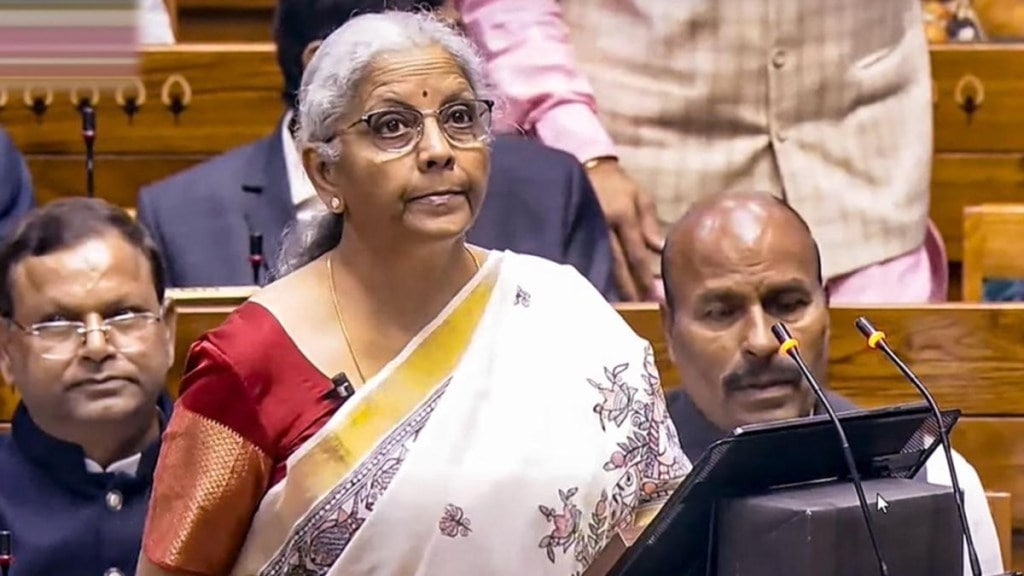
Finance Minister Nirmala Sitharaman on Tuesday tabled the Insurance Amendment Bill, 2025 in the Lok Sabha, marking a major step toward reshaping India’s insurance sector.
The biggest proposal in the ‘The Sabka Bima Sabki Raksha (Amendment of Insurance Laws) Bill, 2025’ is to raise the foreign direct investment (FDI) limit in insurance companies to 100%, up from the current 74%.
The government believes this move will help attract long-term global capital, increase competition, and improve services for policyholders.
India’s insurance coverage vs global standards
India’s insurance coverage remains low by global standards. Life insurance penetration is around 3%, while general insurance is close to 1%. By allowing full foreign ownership, the government hopes insurers will expand coverage, launch new products, and raise service quality across the sector.
Part of broader financial sector reforms
The proposal to raise the FDI cap was first announced by Sitharaman in the Union Budget as part of the government’s new-generation financial sector reforms.
So far, India’s insurance sector has received around Rs 82,000 crore in FDI. Officials expect the higher cap to unlock much larger investments in the coming years.
The Bill seeks to amend three key laws — the Insurance Act, 1938, the LIC Act, 1956, and the IRDAI Act, 1999 — with a focus on modernisation, ease of doing business, and stronger protection for policyholders.
More autonomy for LIC, stronger regulator
The proposed changes also aim to give the Life Insurance Corporation of India (LIC) greater operational freedom. This would allow LIC’s board to take quicker decisions on expansion and administrative matters.
At the same time, the Bill seeks to strengthen the powers of the insurance regulator, IRDAI, to improve oversight and ensure better consumer protection.
Industry sees growth opportunity
Industry leaders believe the Bill lays a strong foundation for the next decade of insurance sector growth. Rishi Mehra, CEO of Aon India, called the 100% FDI proposal a key step toward building a more competitive and resilient insurance ecosystem.
As the Bill comes up for discussion in Parliament, it is expected to face detailed debate. Some long-standing industry demands — such as composite licences and lower capital requirements for new insurers — are either missing or diluted in the final draft.
If passed, the Insurance Laws (Amendment) Bill, 2025 could become one of the most important reforms in India’s insurance sector in recent years, opening the door to higher investment while balancing growth, regulation and consumer protection.
On the introduction of the bill in the Lok Sabha, Hanut Mehta, CEO and Co-Founder at BimaPay Finsure, says, “The introduction of the Insurance Amendment Bill in the Lok Sabha, proposing to allow up to 100% FDI in the insurance sector, is a structural step that can meaningfully reshape India’s insurance ecosystem. Higher foreign participation is likely to bring in long-term capital, global underwriting expertise, and improved product innovation, all of which can support deeper insurance penetration across segments.”
“From the standpoint of an insurance premium financing company, this move has important downstream implications. As insurers gain access to larger balance sheets and global best practices, we can expect greater product diversification, higher ticket-size policies, and increased focus on corporate and MSME insurance,” he adds.
This naturally raises the need for flexible premium payment solutions, especially for businesses that may want comprehensive coverage without facing upfront cash flow pressure, according to him.