



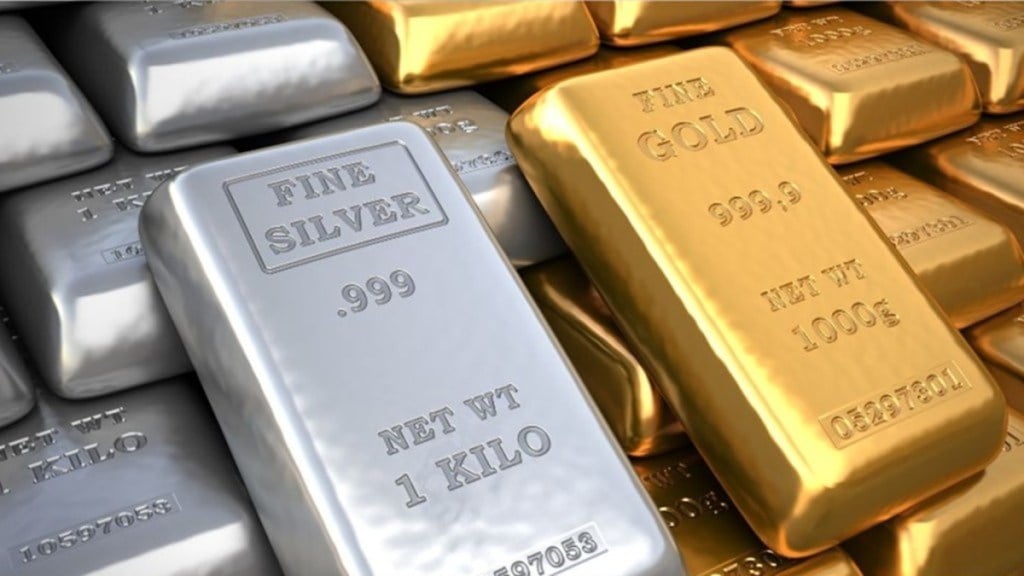
For Indian families, gold and silver are not just metals — they are savings, security and tradition rolled into one. But over the past decade, something interesting has happened – Indians have cut down on gold and silver by volume, even as the import bill has risen sharply, but that is due to rising prices of precious metals.
Government data tabled in Parliament this week explains why.
Gold imports: Lower volumes, much higher cost
In 2014-15, India imported 9.15 lakh kg of gold worth $34.4 billion. By 2024-25, gold imports had fallen to 7.57 lakh kg, a 17.3% drop in volume over ten years.
But despite buying less gold, India ended up paying far more for it. The gold import bill jumped nearly 69%, rising to $58 billion in 2024-25.
The reason is simple: global gold prices have surged.
As the finance ministry explained in Parliament, domestic gold prices are driven largely by international prices, the rupee-dollar exchange rate and taxes. “The recent surge in prices is largely attributable to heightened geopolitical tensions and uncertainty over global growth,” the minister said, adding that safe-haven demand and aggressive central bank buying have pushed prices higher worldwide.
In the Lok Sabha, the government was asked by a member whether it has taken or proposes to take any policy measures to stabilise prices and reduce volatility in gold and silver so as to ease the financial burden on households, including steps such as reduction in import duties, rationalisation of taxes or other relief measures to make these precious metals more affordable during cultural and religious occasions.
In a related question, the government was asked whether it proposes to intervene or regulate retail prices of gold and silver, and if so, whether the existing gold reserves with the Reserve Bank of India play any role in strengthening price stability and confidence in the Indian Rupee, and the details thereof?
Replying to these queries, Minister of State in the Ministry of Finance said that the prices of precious metals are determined by the market. …the government is not involved in the price fixation.
“Nevertheless, as a relief measure to consumers, the government lowered customs duty on gold imports from 15 to 6% in July 2024. The government introduced measures such as Gold Monetization Scheme (GMS), Gold exchange‑traded funds (ETFs) and Sovereign Gold Bond Scheme to reduce the demand for physical gold and to mobilise idle domestic gold, so that part of demand is met from local stocks rather than fresh imports, thereby reducing external vulnerability and price pressures,” the finance ministry said.
The RBI and government regulation of bullion imports through nominated agencies, banks and refineries improves traceability, reduces grey‑market channels and helps domestic prices more smoothly track global benchmarks rather than react to shortages or speculative spikes, it added.
Silver tells a similar story — sharper fall in volumes
Silver imports show an even steeper decline in physical buying.
India imported 77.1 lakh kg of silver in 2014-15. By 2024-25, this had dropped to 51.6 lakh kg, a sharp 33% fall in volume.
Yet, the value of silver imports edged up slightly — from $4.52 billion to $4.83 billion — a 6.7% increase, again reflecting higher global prices rather than higher demand.
Prices soften slightly, but remain near multi-year highs
Over the past few months, gold and silver prices cooled marginally from their peaks. However, now they continue to trade close to their fresh highs, supported by geopolitical risks, expectations of global interest-rate cuts and steady central-bank purchases.
For Indian buyers, this means that even small price movements matter — especially during wedding and festive seasons, when gold buying typically spikes.
Big relief for buyers: Import duty cut from 15% to 6%
Recognising the strain on households, the government made a key move last year.
As a relief measure, the Centre cut customs duty on gold imports from 15% to 6% in July 2024. This decision has helped lower the landed cost of gold, allowing domestic prices to track global rates more closely rather than shooting up due to high taxes.
“The government lowered customs duty on gold imports from 15 to 6 per cent as a relief measure to consumers,” the finance ministry said in its Lok Sabha reply.
Lower import duty has also reduced incentives for smuggling and improved transparency in bullion trade, making gold purchases more orderly and predictable for buyers.
Less physical gold, more financial alternatives
The government has also tried to reduce the country’s dependence on fresh gold imports. Schemes such as Gold ETFs, Sovereign Gold Bonds and the Gold Monetisation Scheme aim to channel savings away from physical gold and mobilise idle gold already lying in households.
By regulating bullion imports through nominated agencies, banks and refineries, authorities say domestic prices are now less prone to sudden shortages or speculative spikes.
FY2025-26 (April–September): Early trends
In the first six months of FY2025-26, India imported:
Gold:
2,99,768 kg worth $26.51 billion
Silver:
28.2 lakh kg worth $3.22 billion
These figures show that while volumes remain moderate, the value of imports is still elevated, underscoring the impact of high global prices even after the duty cut.
RBI’s gold stock adds stability
Beyond household buying, gold continues to play a strategic role for the economy. As of March 31, 2025, the RBI held 879.58 tonnes of gold, up by 57.48 tonnes in a year. These holdings, the government said, help strengthen confidence in the rupee and improve external stability.
Summing up…
India is buying less gold and silver in quantity, but paying much more in value. High global prices remain the biggest driver. However, the sharp cut in import duty has made gold meaningfully cheaper for Indian buyers than it would otherwise have been — an important relief at a time when precious metals remain expensive worldwide.