




8th Pay Commission fitment factor has been among the most searched phrases on Google Trends over the past 24 hours. This highlights the growing curiosity among central government employees and pensioners regarding their pay hike once the pay panel’s recommendations are implemented. As the newly announced 8th Pay Commission begins its work, people are searching online for one key answer — how much salaries and pensions for government staff could actually rise.
For most central government employees, interest around the 8th Pay Commission broadly revolves around two things: the timeline for implementation and the extent of the salary and pension hike. And at the centre of both these questions sits a single number — the 8th Pay Commission fitment factor, which will ultimately decide how big the revision in basic pay and pension turns out to be.
The 8th Pay Commission was announced on January 16, 2025, and its Terms of Reference (ToR) were notified in the first week of November. The panel is headed by former Supreme Court judge Ranjana Desai, with Pankaj Jain as Member-Secretary and Professor Pulak Ghosh of IIM Bangalore as a member.
The commission has been given 18 months to submit its report, which means recommendations are likely by April–May 2027. After that, the government may take another six to seven months to implement them — pointing to a possible rollout in late 2027 or early 2028.
Why ‘8th Pay Commission fitment factor’ is trending on Google
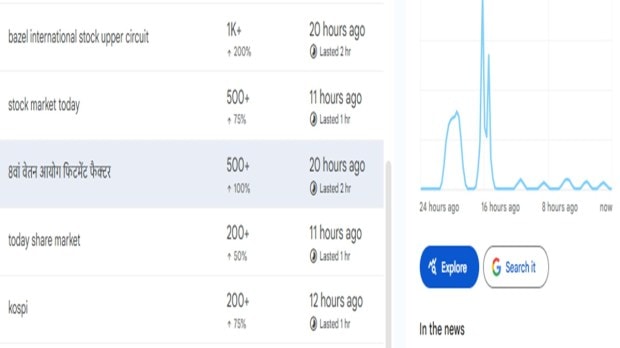
Interestingly, ‘8th Pay Commission fitment factor’ has been among the most searched terms by government employees for quite some time. Over the past 24 hours, it has surged on Google Trends.
The fitment factor is the multiplier used to revise basic pay and pension. Even a small change in this number can lead to a big difference in monthly salary, DA-linked hikes and retirement benefits. That’s why it has become the single biggest talking point in the run-up to the 8th Pay Commission.
What could be the fitment factor under the 8th Pay Commission?
Reports and market estimates currently suggest a wide range. Some projections place the fitment factor anywhere between 1.83 and 3.0, with many estimates clustering around 2.28 to 2.86. This has naturally fuelled hopes of a sharper jump compared to the 7th Pay Commission’s fitment factor of 2.57.
Employee unions, including the Staff Side of the National Council-Joint Consultative Machinery (NC JCM), have been vocal in their demands. They are pushing for a fitment factor of 2.57 or higher, with some even arguing for 2.86 or 3.0, citing rising living costs, new-age expenses like technology, and the need for a uniform factor across all pay levels.
A more cautious view from policymakers and experts
Not everyone is convinced that such high numbers are realistic. Former Finance Secretary S.C. Garg has suggested that, given economic and fiscal constraints, the 8th Pay Commission’s fitment factor may actually settle in a more modest 1.92 to 2.08 range. This view tempers expectations but also highlights the balancing act the commission must perform between employee welfare and government finances.
Meanwhile, brokerage firm Ambit Capital has struck a more optimistic note. According to its analysis, the 8th Pay Commission could deliver a 30–34% increase in effective take-home pay, more than double the 14.3% effective hike seen under the 7th Pay Commission.
How this compares with past pay commissions
To put things in perspective, under the 6th Pay Commission, a basic pay of Rs 7,000 translated into a take-home salary of around Rs 15,750. The 7th Pay Commission raised the minimum basic pay to Rs 18,000, but due to a DA reset, the effective hike was only about 14.3%. Including allowances, the total increase worked out to roughly 23%.
This time, expectations are clearly higher. If projections of a 30% or more overall increase hold true, the 8th Pay Commission could mark one of the most meaningful pay revisions for central government employees and pensioners in decades.
Summing up…
For now, everything around the 8th Pay Commission fitment factor remains speculative. The final number will only be known once the commission submits its report and the government takes a call. Still, the sharp rise in online searches and public debate shows just how closely millions of employees and pensioners are tracking every development.