



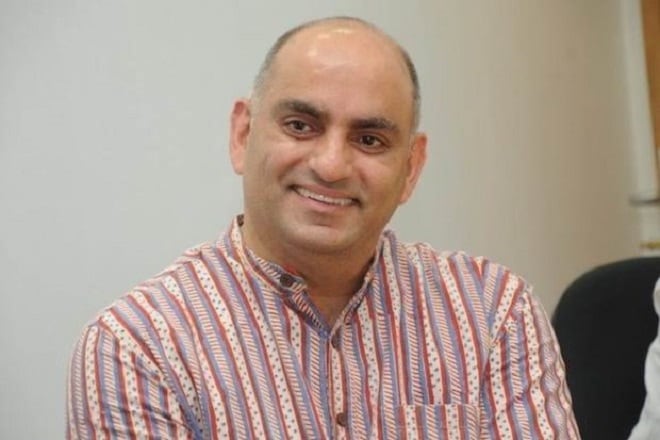
Even as investors mull various strategies to create long-term wealth, value investor Mohnish Pabrai has a simple advice–invest in a long-term index fund, and spend less than you earn. Explaining his strategy for long-term wealth creation, Mohnish Pabrai told in an interview to ET Now, “A large portion of the investing public in India is in their 20s and 30s, maybe early 40s. They have decades before they would retire and want to dip into their savings and so on. The best thing that they can do is two very simple things – one is invest in a well diversified index fund and the second is spend less than you earn.”
Explaining this strategy, Mohnish Pabrai said that in 30 to 40 years, market volatility will balance out and the returns will not be impacted. “Just keep putting something away every month, ignore the market levels, they will go up and down but if you are 30 something and you do this for 30 years or 40 years, you are going to wake up and be enormously wealthy without really having ever made a lot of money in any given year,” he told the channel.
Also read: These six PSU stocks are among biggest wealth destroyers in last 5 years; check list
In the same interview, Mohnish Pabrai noted that value investing is a timeless strategy. According to Pabrai, it will be there 50 years hence too. Taking the example to Warren Buffett’s firm, Pabrai noted that Berkshire Hathaway stock too has fallen by more than 50%, and investors should not get panicky.
Sharing his insights about the recent NBFC liquidity crisis, Pabrai said that these institutions have forgotten to read Hamlet and Buffett. Quoting the famous line from Shakespeare’s Hamlet, “Neither a borrower or lender be,” Pabrai said that one of the problems that the NBFCs and in fact all lenders have is there is a strong temptation to borrow short and lend long because you just get a fatter spread. “Levered financial institutions have been a major loser for me. I have lost more than $120 million, on levered financial institutions. Thankfully, that was in the distant past, but the scars are still there,” Mohnish Pabrai said.