



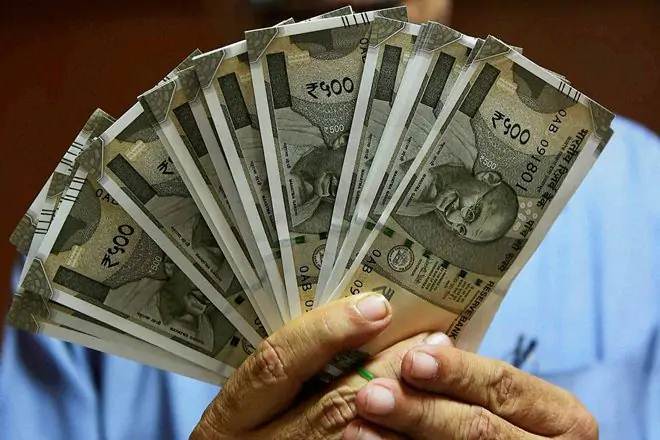
The Indian rupee opened flat at 69.74 per dollar on Tuesday morning against the previous close of 69.73. Yesterday, it opened higher after the exit polls predicted victory for Modi-led Bharatiya Janata Party (BJP) in Lok Sabha elections 2019 with a vast majority. The final results will be announced this week on Thursday. According to market experts, the market gains would be kept in check ahead of election results on Thursday. The global tensions between the US and China, geopolitical tensions in the Middle East and foreign investment flows will also steer the rupee apart from election results.
“Spot INR is likely to trade in a range between 69.50-69.90 as the gains from a rally in stock markets is likely to be offset by rise in global crude oil prices,” Amit Sajeja, Associate Vice President, Motilal Oswal, told Financial Express Online.
The global crude oil prices rose on Tuesday following reports that producer club OPEC will continue restraining supply this year. Geopolitical tensions between the US and Iran also drove the oil prices. The international benchmark for oil prices, Brent crude futures, were last seen at $72.19 per barrel, 0.31 percent, from their last close, while the US West Texas Intermediate (WTI) crude futures were up 0.35 percent, at $63.32 per barrel from their previous settlement.
Yesterday, after the exit polls results which indicated towards BJP win in Lok Sabha elections, the foreign institutional investors (FIIs) bought shares worth Rs 1,734 crore on a net basis, whereas the domestic institutional investors (DIIs) sold shares worth Rs 543 crore on the same day.
Today, the headline indices- Sensex and Nifty opened higher ahead of vote counting on Thursday. Yesterday, the Sensex and Nifty scaled new heights in the last ten years. Today, while the Sensex touched a new record high of 39,512.59, Nifty also surged to a new high of 11,866.90. Currently, the Sensex is trading at 39,561.23 level, up 208.56 points from their previous close, while the Nifty is at 11,860.30 level, 32.05 points higher than the last settlement.