



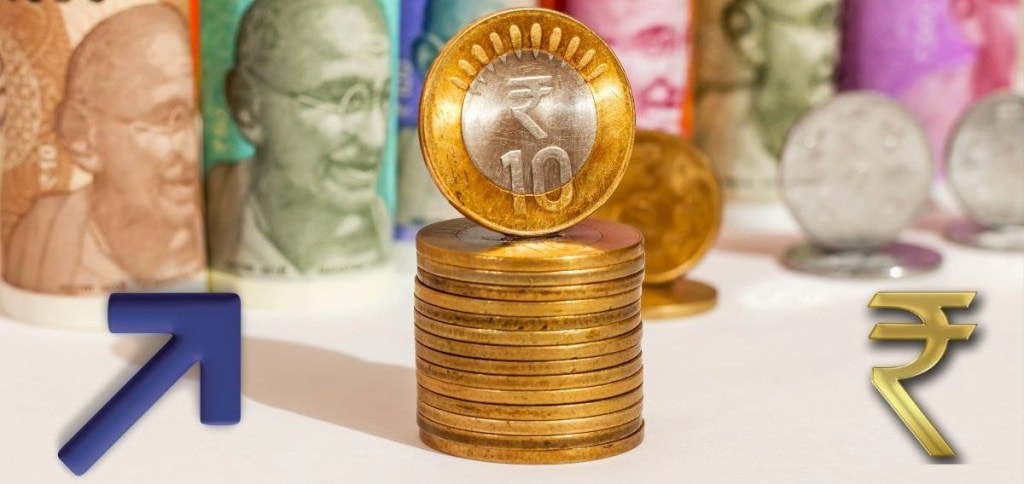
The Indian rupee on Monday closed at 89.65 against the US dollar, down 0.4% from Friday’s close of 89.27. The currency started steady at 89.54 and hovered around the same levels during the afternoon session before stepping down slightly.
Rupee remains below the 90 level
Traders said the currency was trading below the 90-level mark throughout the day owing to a weak dollar index and purchases of Indian equities by domestic investors.
“The rupee traded flat near 89.65, holding in a narrow 89.45–89.65 range as a weaker dollar index around 98.45 and positive sentiment in domestic capital markets offered support. The currency has shown a technical reversal after recent intervention-led buying from last week’s lows near 91, stabilizing the currency for now and improving short-term stability,” said Jateen Trivedi, VP Research Analyst – Commodity and Currency, LKP Securities.
Last week, traders had reported heavy intervention by the central bank, as state-run banks sold dollars aggressively on behalf of the RBI to prevent the rupee from sliding past the 92 mark.
Optimism over trade deal
The Indian rupee, which has weakened amid concerns over a stalled trade deal with the US, may see support if talks advance
On Monday, Commerce Minister Piyush Goyal, while speaking to the media about the India–New Zealand free trade agreement, addressed the issue and said, “We are already at an advanced stage in our discussions with the US.”
Analysts have said that the materialisation of a trade deal with the US could offer significant support to the Indian rupee.
Goyal also added that India has finalised trade deals with New Zealand, has signed deals with Oman and the UK, and will soon start negotiating a trade deal with Canada as well.
These FTAs could help provide long-term support to the Indian rupee by helping improve India’s trade balance and attracting foreign investments, although their impact is unlikely to be immediate.
What will drive the Indian rupee?
Over the past three trading sessions, foreign investors had been net buyers of Indian equities. However, on Monday, trading activity turned negative, with foreign investors emerging as net sellers. As per the provisional data available on the NSE for December 22, FIIs sold equities worth Rs 11,170 crore, while they purchased equities worth Rs 10,713 crore.
The sudden outflow of foreign funds has raised concerns for the rupee, which had been on a winning streak over the past three sessions.
The focus for the rupee also remains on whether the US Federal Reserve will cut rates at its January meeting. While the market remains divided, with soft US inflation data reinforcing the possibility of a rate cut, other Fed policymakers have indicated that a rate cut may not be necessary. A key US Federal Reserve official on Friday said that some of the data collected in October may be distorted due to the US government shutdown.
Under ideal circumstances, a rate cut by the Fed could help strengthen the Indian rupee as it encourages capital inflows into emerging markets like India.
Indian policymakers have also said that the RBI is likely to cut rates at its monetary policy meeting in February due to inflation remaining under control. However, RBI MPC external member Ram Singh has cautioned that a rate cut could put additional pressure on the local currency.
“Market focus now shifts to key US data, including the PCE price index, new home sales, and weekly jobless claims, which could drive fresh volatility. Technically, support is seen near 90.00, while resistance is placed around 89.25,” Trivedi added.