



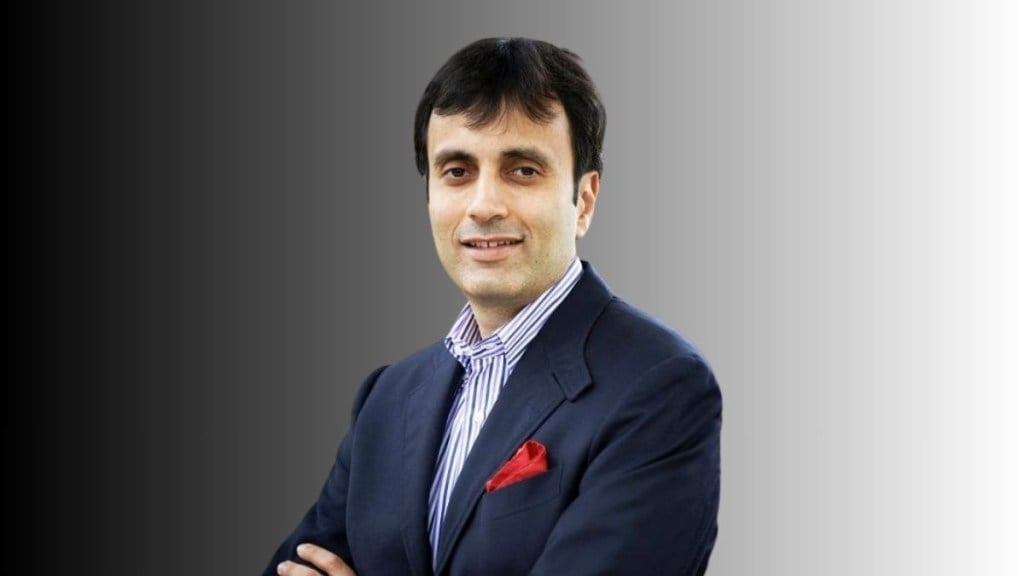
2025 has been a rather interesting year for the global markets. Many markets across the world, from the US to India, tested lifetime highs. As the countdown for the new year begins, the 2026 forecast is what investors are focussing on. Celebrated market guru, Chairman of Rockefeller International and acclaimed author, Ruchir Sharma, in a very candid conversation with Nicolai Tangen, CEO of Norges Bank Investment Management, reiterated his prediction about the AI bubble bursting in 2026. He also expects the next year to be the ‘year of quality stocks’ and predicts other markets outperforming US in 2026.
Ruchir Sharma’s big forecast for 2026
Elaborating on his forecast for 2026, Sharma highlighted that there are three key aspects to watch out for. “I do feel that at some point in time next year the AI bubble will end in some way, possibly because of higher interest rates, though the exact timing I don’t know. Buying quality stocks is coming back in favour. I think this is the other big thing that I can think about, and the third thing I do feel is the trend of international markets outperforming the US.”
The ‘Four Os’ Checklist: Is AI Flashing Red?
Sharma has often referred to the AI bubble bursting in the course of several conversations during this year. He elaborated on the main reasons why. According to the market guru, one needs to follow a checklist of four ‘O’s to call out a bubble. “One O is overinvestment. If you look at the amount of investment going into AI today as a share of GDP – the tech investment – it is comparable to what we saw in past bubbles, including in 2000. Tech investment as a share of GDP is about 5% or so today. That’s roughly what we saw back in 2000,” he added.
Referring to the other factors, he pointed out that “the other sign of a bubble typically tends to be that you get overvaluation. Now by any stretch the US stock market in particular, and of course the AI plays are overvalued. Some argue that the valuation is not yet as expensive as it was in 2000 or so. By some measures it’s not – such as the PE ratios, but if you look at things like price to free cash flow or at very long-term earnings, by those measures we are getting there.”
He goes on to elaborate on the other two important Os as well – overownership and overleverage. “The third tends to be one of overownership when everyone just crowds into the same trade. Americans today have about 52% of their financial wealth in equities. That is higher than what it was in 2000. The fourth often has to do with overleverage. There the evidence is a bit more mixed because these companies which have been building out the AI have broadly been flush with cash. But that’s changing very quickly,” he added.
‘Big Tech’s Debt Binge: The Overleverage Signal’
Giving some examples of overleverage, he outlined how in the last few months, companies like Amazon, Meta and Microsoft have been the biggest issuers of debt as the “arms race for AI has really taken off.” He quoted Sundar Pichai saying that the “big risk for us is not that we invest too much but we invest too little,” to highlight the fear of missing out that’s been at the forefront of this AI wave.
AI: The big fear of being left out
One of the factors that has led to over-ownership and over-leverage, Ruchir Sharma pointed out, is because of the “fear of being left out”. Comparing the current dynamics with the tech bubble in the late 1990s, Sharma explained that the “there’s a big distinction. In the 1990s there was a gradual buildup in the tech investment cycle. It started building in the early to mid-90s, and then it kept ramping up. This time it has been the fastest buildup we have seen in the investment cycle. We’ve gone from AI and tech capex virtually contributing nothing to GDP growth 2 years ago to now contributing 40% or so. So this is a huge buildup which is happening, and it’s happening very rapidly.”
Presenting the other side, he said that though one could argue that even the pace of adoption is faster compared to the past bubble phases, he pointed out a key difference. According to him, the “buildup in investment and how much now is being financed by debt that’s changing very quickly.”
However, he conceded that “this is a good bubble, as this has the promise of improving productivity and improving technology.”
But a big worry, according to him, is that “in America, there’s so much faith in AI and that this is going to work, and people are willing to put all sorts of capital behind it.”
US equity markets – What lies ahead
The big question then is, has it impacted the overall US equity market dynamics? After all, the American markets, on a relative basis, have been among the worst-performing regions in the world. This, he pointed out, is surprising compared to how the year started off.
Charting the course of the equity market movement since January, Sharma explained that at the beginning of the year, one saw that “money was piled into one region and one country in a way it never was. America’s weight in the MSCI equity indices was hitting nearly 70% by the beginning of the year. The dollar also got very overvalued, so I think that some of this is just corrective, but two, I think it is also because some of these countries are doing stuff to finally carry out some reforms.”
He was comparing US market performance with that of Europe, China and other emerging markets.
The US Problem: High Debt and ‘Sticky’ Optimism
Touching upon the challenges and concerns in US, Ruchir Sharma was quick to note that “Because of the faith in AI, there’s so much money still flowing into America. There is an implicit bet that because America is at the leading edge of AI, there’ll be big productivity improvements in America and those high productivity improvements will help stabilise the debt-to-GDP burden. And the third thing, I think, which has been the big surprise to most of us, is that actually this year in America the deficit as a share of GDP, while very high, still has actually come down.”
According to him, this is partly because of the tariffs.
The big tariff conundrum
No discussion about the US markets and the economy is complete without a reference to the tariff issue. According to Ruchir Sharma, the “tariff revenues have helped bring the deficit down by 1% of GDP.”
But he highlighted that the tariff policy is subjective. “there’s no objectivity and science behind it. Even if you like tariffs as a policy as a revenue earner, the way the implementation is done is very arbitrary. So these are all signs of increased state interventionism.”
The 2026 Verdict: Why ‘Quality’ Will Be King
That said, he ended the conversation on an optimistic note, predicting more focus on quality and expecting renewed buying in the space – “I found that the last 12 months have been one of the worst runs that quality stocks have had in recorded history. So, this could be a great time.”