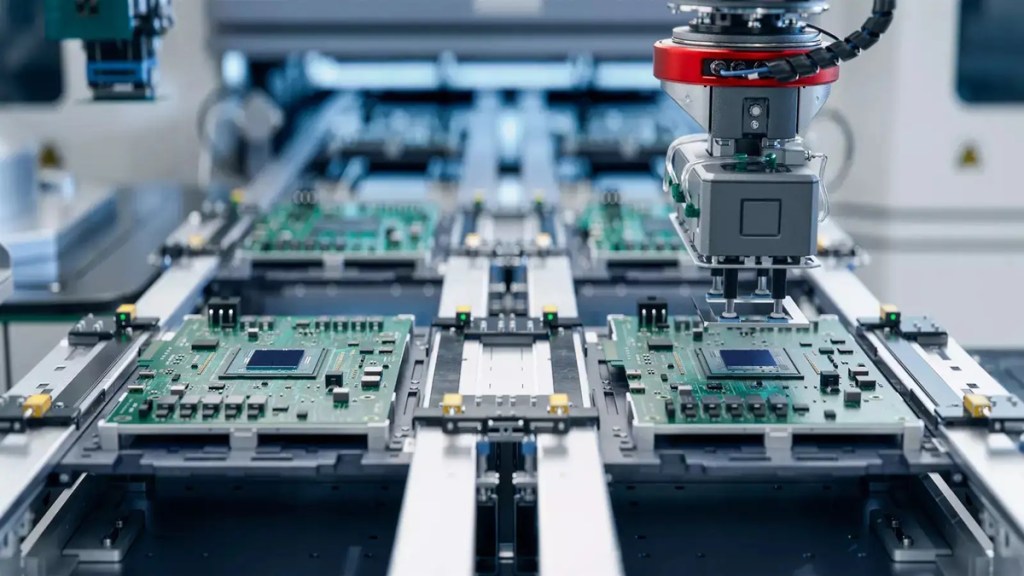
Tata Electronics is all set to take a major jump in India’s technology manufacturing scene. Since there are plans to produce Intel chips and AI-powered laptops at two massive semiconductor plants. The combined investment, of which is close to $14 billion, and it marks one of the most significant tech manufacturing expansions India has ever seen.
It also indicates a new era where India aims to become a meaningful player in the global chip ecosystem.
Manufacturing at Two Plants, under an Ambitious Vision
The company is developing two large facilities that are a semiconductor fabrication plant in Gujarat and an assembly-testing unit in Assam.
The Gujarat fabrication plant will be the heart of the operation, responsible for manufacturing the actual silicon chips. Meanwhile, the Assam plant will handle packaging, testing, and preparing the chips for final use in electronic devices.
Together, these two units are designed to offer a full end-to-end chip-making ecosystem within India. This is a significant step for the country, which has long depended on global suppliers for most of its semiconductor needs.
Intel Becomes the First Major Customer
One of the biggest highlights of this development is that Intel has formally signed on as Tata Electronics’ first major customer. Under the partnership, Tata will manufacture and package Intel’s advanced PC and AI-focused chips within the new facilities.
This collaboration between intel and Tata will be beyond chips. Since Intel and Tata aim to jointly produce AI-powered laptops in India, expanding the country’s presence in the computing and consumer electronics space.
These devices are expected to cater to the rapidly growing demand for AI-ready PCs among Indian consumers and enterprises.
A Milestone for India’s Semiconductor goals
For years, India has been working to reduce its heavy dependence on imported electronics. The semiconductor sector, in particular, has been one of the weakest links in the domestic manufacturing chain. Tata’s entry into chip fabrication, supported by a global giant like Intel, marks a breakthrough moment for the country’s long-term technology roadmap.
The project is also expected to generate thousands of direct and indirect jobs, boost local supply chains, and strengthen India’s strategic position in global electronics manufacturing.
The Road Ahead
The Assam assembly plant is expected to begin operations ahead of the Gujarat fabrication plant which requires more complex infrastructure and technology.
Once both units are running at full scale, India may begin producing chips designed for personal computers, AI applications, and future-generation devices.
If successful, Tata’s semiconductor expansion could be the way for India to emerge as a significant player in the global chip ecosystem which is something that has been a long-standing aspiration for the country’s tech sector.