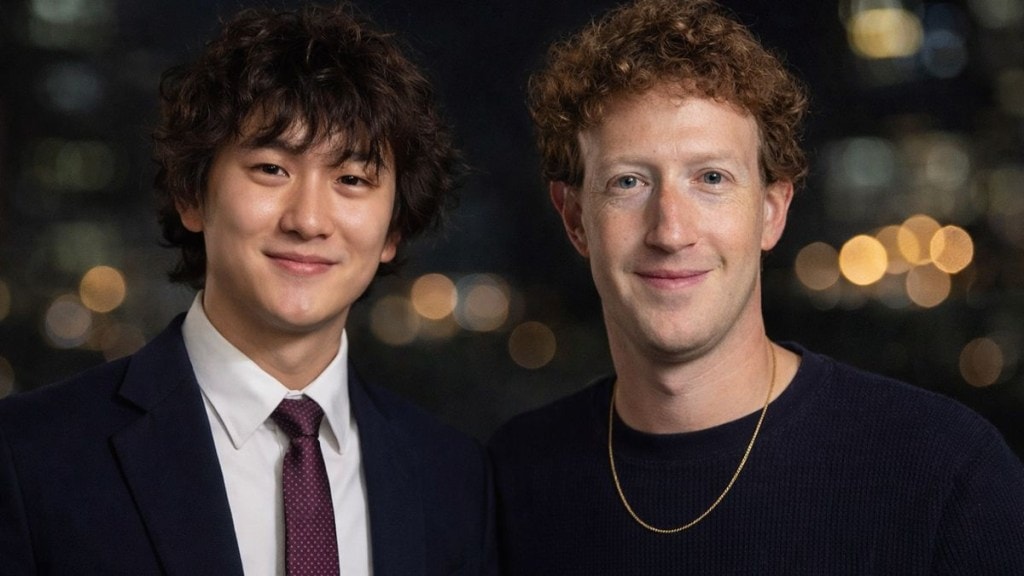
Meta CEO Mark Zuckerberg has shaken up the AI industry by hiring Alexander Wang a 28-year old to head Meta’s newly created AI unit called Meta Superintelligence Labs. This hiring is a major development since Meta has also invested 14 Billion dollars in Alexander Wang’s data focussed AI firm Scale AI.
This hiring and the growing influence of Alexander Wang in the AI sector is also reflected by his inclusion in the Forbes 40 Under 40: The Richest Self Made Billionaires List. Forbes lists his net worth at about $3.2 billion USD as of early 2026.
Early Life and Education
Alexander Wang was born in the United States (US) who worked as physicists. Growing up in a science-driven environment, he developed a strong interest in mathematics and computer science at an early age. His academic abilities led him to the Massachusetts Institute of Technology (MIT). However, Wang chose an unconventional path. He dropped out of MIT before completing his degree to focus on building a company.
Founding Scale AI
Then at the age of just 19, Alexander Wang founded Scale AI. Scale AI quickly became important for major technology companies since it supplied labeled data to clients such as NVIDIA, Amazon, and even Meta itself. By 2024, the startup had reached a valuation of nearly US$ 14 billion, establishing Wang as one of the youngest self-made billionaires in the AI industry.
With Meta’s massive investment in Scale AI, Alexander Wang didn’t just join the company, he became the leading man behind a newly formed division that is Meta Superintelligence Labs (MSL). Under this umbrella, Alexander Wang oversees all of Meta’s AI research, infrastructure, and product development.
Why Meta’s Investing in Scale AI matters?
Meta’s investment in Scale AI isn’t just about acquiring another company. The core value lies in Scale’s expertise in data-annotation pipelines and scalable training systems crucial building blocks for next-generation AI models. With these in hand, Meta gains a major advantage as it competes with other leading AI players such as OpenAI and Google DeepMind.
At the same time, this shift reflects Meta’s ambition to reach “superintelligence,” the next frontier in artificial intelligence. With Wang at the helm and the company’s resources behind him, Meta is betting big. But the outcome remains uncertain by balancing rapid AI innovation with ethical responsibility, safety, and regulatory scrutiny will be a significant challenge.