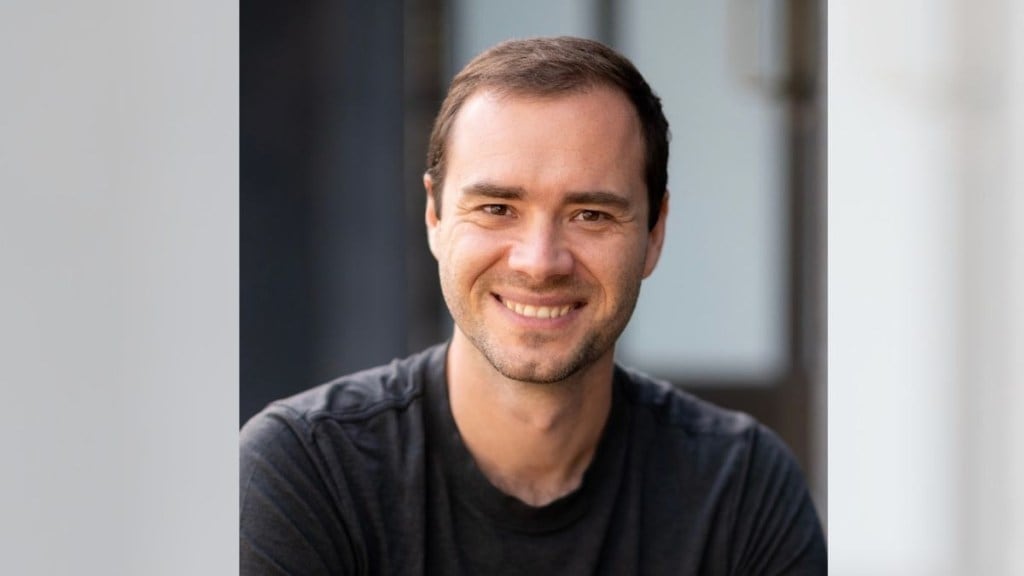
Artificial intelligence is changing the world faster than ever, and even top experts are feeling the speed of it. Andrej Karpathy, Open AI co-founder, recently shared his thoughts on how quickly AI is evolving. He says, “I’ve never felt this much behind as a programmer.”
In a post on X, Karpathy noted that the tech industry is undergoing a “dramatic refactoring,” with individual programmers contributing progressively fewer lines of code.
“I have a sense that I could be 10X more powerful if I just properly string together what has become available over the last ~year,” he wrote. “A failure to claim the boost feels decidedly like skill issue.”
I've never felt this much behind as a programmer. The profession is being dramatically refactored as the bits contributed by the programmer are increasingly sparse and between. I have a sense that I could be 10X more powerful if I just properly string together what has become…
— Andrej Karpathy (@karpathy) December 26, 2025
According to him, AI today feels like a strange and unfamiliar technology that people are using without proper guidance.
Andrej Karpathy has admitted that the transformation has left even experts struggling to keep up. In a strikingly another post on X, Karpathy said he has “never felt this much behind as a programmer,” comparing modern AI tools to alien technology that has “no manual.” He warned that engineers must quickly adapt to a profession that’s being “dramatically refactored” by artificial intelligence, or risk falling behind entirely.
Karpathy admitted that, for the first time in his career, he feels behind as a programmer. He believes this feeling is common among engineers because AI tools are growing more powerful every day, while clear instructions on how to use them are still missing.
Software Development Is No Longer the Same
In the past, programming mainly involved writing code step by step. Today, things are very different. Developers now work with AI systems that can write code, fix errors, and even suggest ideas. Instead of controlling every detail, engineers often guide AI tools and adjust their outputs.
He explained that modern software work involves managing prompts, AI agents, tools, and systems that do not always behave in predictable ways. This makes the job more complex and requires a new mindset from programmers.
Why AI Feels So Confusing?
One major reason AI feels difficult to handle is that it does not always give the same result for the same input. Unlike traditional software, AI systems can behave differently each time. This makes them harder to understand and control.
He compared AI to a powerful machine from another world useful, but confusing. Without a clear manual, developers are learning through trial and error. This uncertainty is what makes many professionals feel uncomfortable or unprepared.
Adapting Is No Longer Optional
Despite the challenges, he believes that those who learn how to work with AI properly can become much more productive. AI can help developers do more work in less time, but only if they are willing to adapt and experiment.
He warned that ignoring these changes could leave professionals behind. Instead of fearing AI, engineers should focus on understanding how it works and how to use it responsibly.
AI Will Change Jobs, Not Remove Them
He made it clear that AI is not here to replace programmers. Instead, it is changing what programming means. Future developers will spend more time guiding AI and checking its output rather than writing everything from scratch.
In short, AI is reshaping the tech world. Those who accept the change and learn new skills will grow with it, while those who resist may struggle.
About Andrej Karpathy:
Karpathy co-founded OpenAI in 2015 as a research scientist, working on generative models and reinforcement learning until 2017. He then joined Tesla as Director of AI, leading the computer vision team for Autopilot and briefly Optimus from 2017 to 2022. In 2023-2024, he returned to OpenAI to build a team on midtraining and synthetic data.