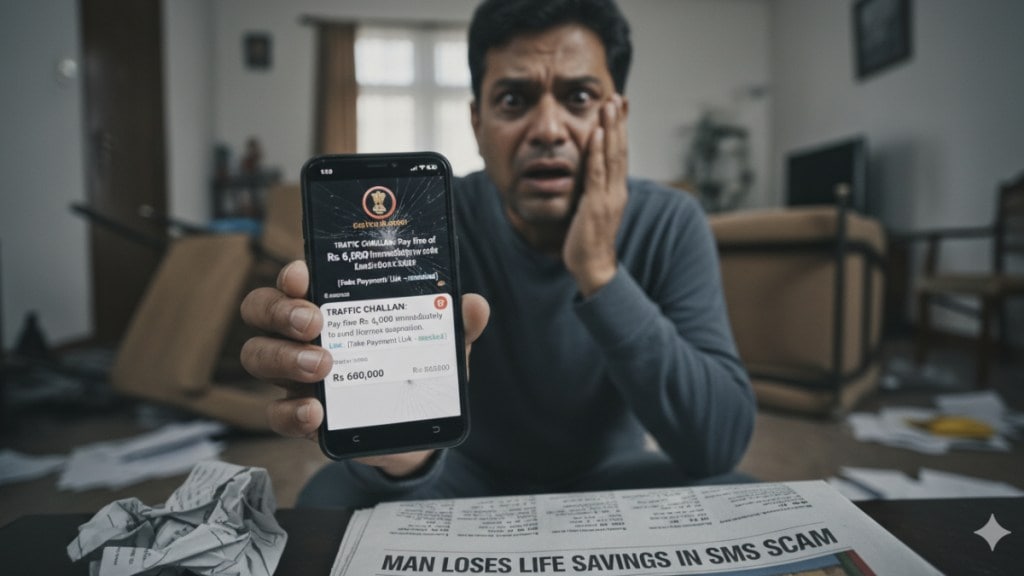
Cases of digital fraud keep emerging, and a fresh one made a man lose almost Rs 6 lakh! The person fell victim to a sophisticated scam after receiving an SMS about a supposed traffic fine on his vehicle. The fraudsters managed to cheat around 6,900 Euros, equivalent to nearly Rs 6 lakh, from his account through unauthorised transactions. Cybercrime police have registered a case and launched an investigation, highlighting the growing menace of fake challan messages targeting vehicle owners.
The case, which was first reported by Telengana Today, brings back emphasis on how cyberscammers find new ways to dupe innocent people of their hard-earned money.
How the scam unfolded
The scam unfolded when the victim received a text message claiming a traffic violation fine had been imposed on his vehicle, complete with a payment link. Believing it to be legitimate, he clicked the link, which directed him to a fraudulent webpage mimicking an official challan payment portal. Upon attempting to enter payment details, the scammers gained remote access to his phone and banking information, enabling them to carry out the unauthorised transfers.
Cybercrime authorities noted that such frauds often involve fake websites designed to resemble genuine government portals. These malicious links can also install harmful software, allowing criminals to control the victim’s device and access sensitive financial apps.
Police share what to do to stay safe from traffic challan scams
In the wake of the incident, police have issued detailed guidelines to protect citizens from falling prey to these increasingly common cyber traps:
Avoid clicking links:
Authorities urged people to never trust or click on links received via text messages, emails, or WhatsApp for paying traffic fines. “Traffic departments do not send direct payment links for challans,” officials emphasised.
Verify on official portals:
Vehicle owners should check for any pending challans only on authorised government websites, such as the Parivahan portal (parivahan.gov.in) or respective state traffic police sites. Always manually enter your vehicle registration number rather than using provided links.
Scrutinise messages:
Check the sender’s details carefully and ignore alerts from unknown numbers. Be wary of messages containing spelling mistakes or vague information, as these are red flags.
Protect financial details:
Never enter card details, PINs, or OTPs on unfamiliar websites. Avoid downloading apps through unknown links—only use official app stores for traffic-related applications.
Report suspicious activity:
If you receive a dubious message, report it immediately on the national cybercrime reporting portal (cybercrime.gov.in) or by calling the helpline 1930.
Enhance device security:
Keep your phone’s software updated and enable two-step verification on all accounts.
Cybercrime officers reiterated a key warning, stating, “No police or transport department demands instant payment through text messages. Always verify information first and act only through official channels.”