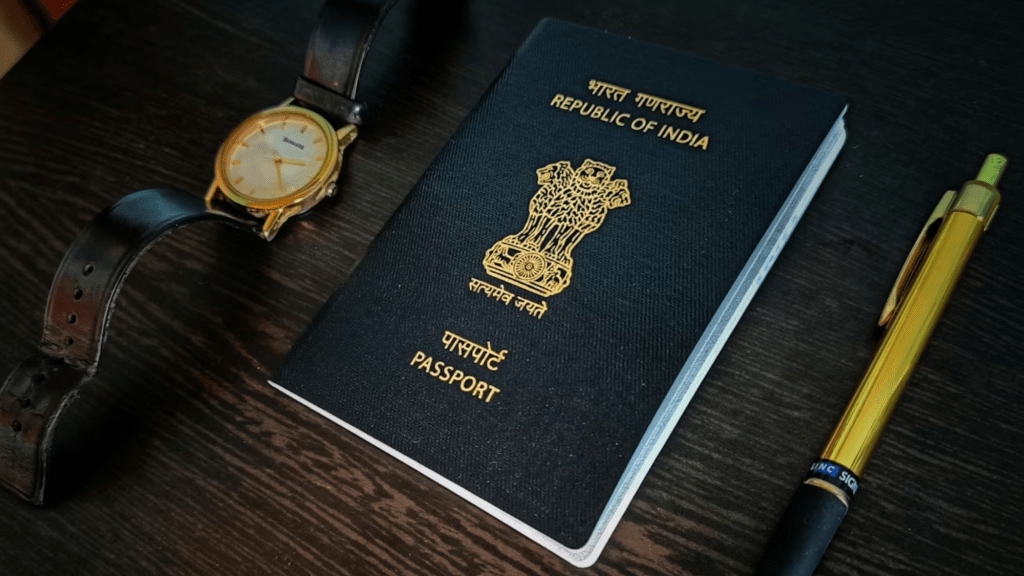
The Government of India recently introduced the e-Passport, a modern version of the traditional passport that uses digital technology to make passports more secure and travel easier. This updated passport includes a tiny electronic chip that holds encrypted personal and biometric data. The new system is part of India’s effort to upgrade travel documents in line with global standards.
What Is an e-Passport?
An e-Passport looks like a regular Indian passport, but it has an embedded electronic chip inside the back cover. This chip securely stores important details such as your photograph, fingerprints, facial recognition data and other personal information. The chip follows strict international standards, making it difficult for unauthorized people to copy or tamper with the data.
The main aim of this upgrade is to reduce identity theft and passport fraud, and to enable smoother and faster checks at immigration counters around the world.
Who Can Apply for an e-Passport?
Any Indian citizen who is eligible for a regular passport can now apply for an e-Passport. This means new applicants and people renewing their passports are both eligible. At present, the service is being offered at select Passport Seva Kendras (PSKs) and Post Office Passport Seva Kendras (POPSKs) across India, so applicants should check if their nearest centre supports e-Passports before applying.
How to Apply?
The application process for an e-Passport is almost the same as a normal passport:
Register or log in on the official Passport Seva portal.
Fill out the online form for a new passport or renewal.
Pay the required fee and book an appointment at a PSK/POPSK.
Visit your appointment centre with the necessary documents and give biometric data like fingerprints and photos.
Once processed, the e-Passport with the embedded chip will be sent to your address.
Application Fees
For a regular e-Passport, the fees are similar to regular passports:
Rs.1,500 for a 36-page booklet
Rs. 2,000 for a 60-page booklet
Additional charges may apply under Tatkal or expedited services.
Key Benefits
The e-Passport brings several advantages for Indian travellers:
Stronger Security: The chip and encryption make it harder to forge or misuse passports.
Faster Immigration Checks: Automated systems can read biometric data quickly, speeding up entry and exit processes.
Global Compliance: It meets world standards, making Indian passports more widely accepted.
This launch marks a major shift in how India manages travel documentation and boosts the safety and convenience of international travel.