



By Charu Sabnavis
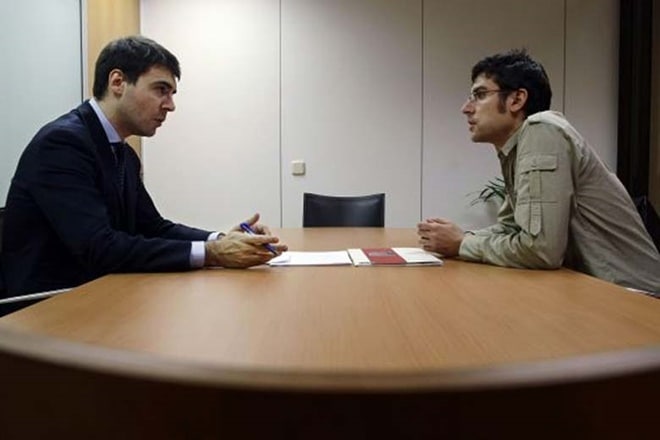
How quickly do interviewers make a decision on a candidate? Roughly 5% decide within the first minute, 30% within five minutes, and 52% in 5-15 minutes of an interview, according to a study published in the Journal of Occupational and Organizational Psychology. Evidently, first impressions based on your attire, punctuality, body language, and the design and presentation of the CV play a crucial role in your success in an interview. Equally important is the way you engage the interviewer in establishing your suitability for the role at hand. Here are some pointers for responding to typical interview questions.
Tell me something about yourself?
This is by far the most favourite opening question of an interview that opens the doors for almost anything you might want to say to establish your suitability. “I did my engineering from Nagpur in 2016, after which I worked with ABC Inc for two years, post which I enrolled for an MBA. I’m from Baroda, my father is a CA, my mother works for a bank, and my brother is studying in class 11.” This is not a good way to start as the statement hasn’t taken you an inch forward towards establishing your suitability. Moreover, it is just a statement of facts already present on your CV, and, therefore, not engaging. Engage the interviewers by wrapping your facts in stories. “My interest in the stock market was evoked as a child when saw my parents trading in stocks. This interest developed slowly and my parents’ gift of `5,000 for my 15th birthday was the beginning of my engagement with stocks… I worked with a stock broker, ABC, alongside my graduation, to hone my skills, before enrolling myself for a PG in financial markets. At the stock broking firm, I was responsible for reading annual reports of companies and preparing data points to help my seniors prepare reports. This helped me enhance my analytical skills and gave me an opportunity to work under stringent timelines and learn the nuances of team work. All these skills will hold me in good stead in the role I am being interviewed for… Other than this, I focus a lot on fitness. I walk, swim and am a basketball player.” This answer tells a story as to how your interest in financial markets came about and offers the interviewer data points to establish your suitability for the role.
What are your strengths?
“I can adapt to different situations or people,” may not be credible response. Taking this further by stating where you have demonstrated it will add more weight. “In the last one year I moved two departments and worked with three bosses. While there was a period of adjustment, I adapted quickly to new roles and varied styles of new bosses,” is a more convincing response.
What are your weaknesses?
“I have a bad temper,” or “I prefer working alone as I am uncomfortable working in teams,” point towards serious flaws that can adversely impact your chances of getting through the interview. Instead, talk of weaknesses that are less serious, like: “I find it difficult to say ‘no’ to people” or “I am a perfectionist” or “I lose track of time when I am involved in an activity.” Again, don’t stop at citing a weakness; relate a story around it. Talk about a situation where this weakness was demonstrated, how it impacted you, and the actions you are taking to overcome it. For example: “I am a perfectionist. I find it difficult to send out a report without dotting the i’s and crossing the t’s, which sometimes impacts my ability to meet timelines. But I am making a conscious effort to hold my natural instinct to be overly fastidious, and strike a fine balance between quality and time to suit the situation at hand.”
Why do you want to join us?
Talk about your suitability for the role and its relevance from a long-term career perspective, coupled with your enthusiasm about joining the company. For example: “I have always wanted to work for a startup as it is likely to offer a wider exposure through opportunities for wearing multiple hats. This, coupled with the fact that my skills and qualification align with the requirement of the role, and the reputation of the company as being employee-friendly and offering a range of opportunities, makes the proposition of joining your company very attractive.” Or: “I am excited about this role since it is likely to give me an opportunity to leverage and further hone my skills. Moreover, there appears to be a good fit between the requirements of the job and my knowledge and skills, and the strong brand of the organisation is, of course, an added attraction.” Needless to say that for doing justice to this response, you need to research the company and the industry thoroughly by going through the website, tracking news, talking to alumni or friends working there.
Do you have any questions?
“No, ma’am,” is not a good answer. You should go armed with a couple of questions for every interview. These could be:
Do you have a policy of job rotation?
What developmental opportunities do you provide employees?
What is the culture like in your firm?
Will this role involve travel?
Why should we hire you?
The response to this question is very similar to that for the question “why do you want to join us?” You want to join the organisation because you have the required knowledge and skills for the role and can, therefore, add value. Besides, you are excited about the role and the organisation, and will give it your best shot towards both yours and the organisation’s success.
Where do you see yourself three years from now?
While it is not a strict no-no, it is best to steer clear of titles and positions, and focus on enhancing your business and technical learning. For example: “I see myself as gathering a broader perspective of the business, being recognised as an expert and a go-to person in my field and growing with the organisation in the next three years.” Evidently, a serious introspection, along with a lot of preparation and practice, hold the key to a successful interview.
The author is a coach, an organisational development facilitator, and founder-director of Delta Learning