



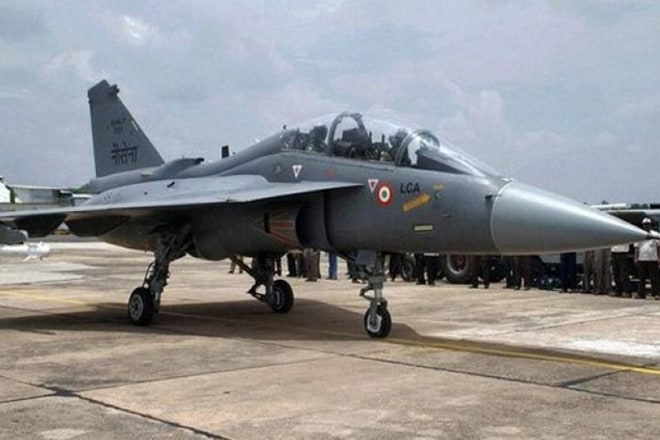
With its increased thrust towards technology development, Hindustan Aeronautics Ltd (HAL) has ensured that the Indian Air Force (IAF) will now be able to fly the indigenously developed Light Combat Aircraft (LCA) Tejas with hot refuelling capacity. LCA Tejas will be the first aircraft to fly with capability of hot refuelling in India. The technology has been jointly developed by HAL and the Aeronautical Development Agency (ADA). ADA has also developed and manufactured carbon-fibre composite (CFC) structures and skins, and a modern glass cockpit. ADA has a profitable commercial spin-off in its Autolay integrated automated software for designing 3-D laminated composite elements (which has been licensed to both Airbus and Infosys). The idea of an indigenous fighter aircraft was conceptualised in the 1970s, the work started only in 1983. To get final operational clearance (FOC), the state-owned HAL has carried out a hot refuelling trial on LCA `Tejas’ LSP8 aircraft followed by a sortie at HAL airport on Tuesday. According to an official statement released by HAL, “The system performance during the refuelling session was in-line with design requirements and was satisfactory.”
Hot refuelling is single point pressure refuelling of the aircraft with the engine in operation. It is a process by which a fighter aircraft is refuelled (in between sorties) while its engine is in operation, thereby cutting down the refuelling time by half and turn-around time significantly. The Tejas LSP8 aircraft is integrated with Fixed Air-to-Air (AAR) refuelling probe. As part of the system certification and clearance, extensive ground tests were carried out to validate the compatibility of physical interfaces between probe and drogue / adapter and system functionality at different refuelling conditions (flow rate, inlet pressure and aircraft pitch attitudes). Failure modes were also simulated during the tests and the control, monitoring and warning generation logics were evaluated. Hot refuelling represents the actual conditions during AAR. The system parameters were in-line with the design requirements. The aerial refuelling probe for the LCA Tejas- LSP-8 is being supplied by UK based Cobham. As a spin-off, the hot refuelling capability can also be utilised to increase the sortie-rate for developmental flight testing. Earlier in 2016, this feature was comprehensively demonstrated on LCA Naval variant by HAL. This capability is highly desired in combat situations as it basically puts aside the need for the pilot to park the aircraft, power down and exit the cockpit for refuelling to begin. With this success, a major requirement of LCA Air Force Mk.1A has been achieved.
The indigenous LCA is considered superior to Pakistan’s JF-17 built jointly with China, according to the IAF. Since the plane is made of composite it is light and very agile; it also comes with smart ammunition and bombs which help it to hit targets in a precise manner. Earlier last month, S Christopher, chairman, Defence Research & Development Organisation (DRDO), had announced that the Tejas has rules-based Artificial Intelligence incorporated into its Flight Control System (FCS). The FCS provides the pilot ‘carefree handling’. There are 358 line-replaceable units (LRU/ components) in the Tejas aircraft, out of which 53% have been indigenously developed in India. It is equipped with helmet-mounted display and fly-by-wire, a semi-automatic and computer-regulated system for controlling the flight of an aircraft or spacecraft which makes it a 4.5-generation plane. The cockpit has two 76mm×76mm colour liquid crystal multifunction displays developed by Bharat Electronics, a head-up display developed by the government-owned Central Scientific Instruments Organisation (CSIO) in Chandigarh and a liquid crystal return-to-home-base panel and keyboard.
IAF plans to acquire 120 Tejas aircraft, with 100 of these having major modifications.