



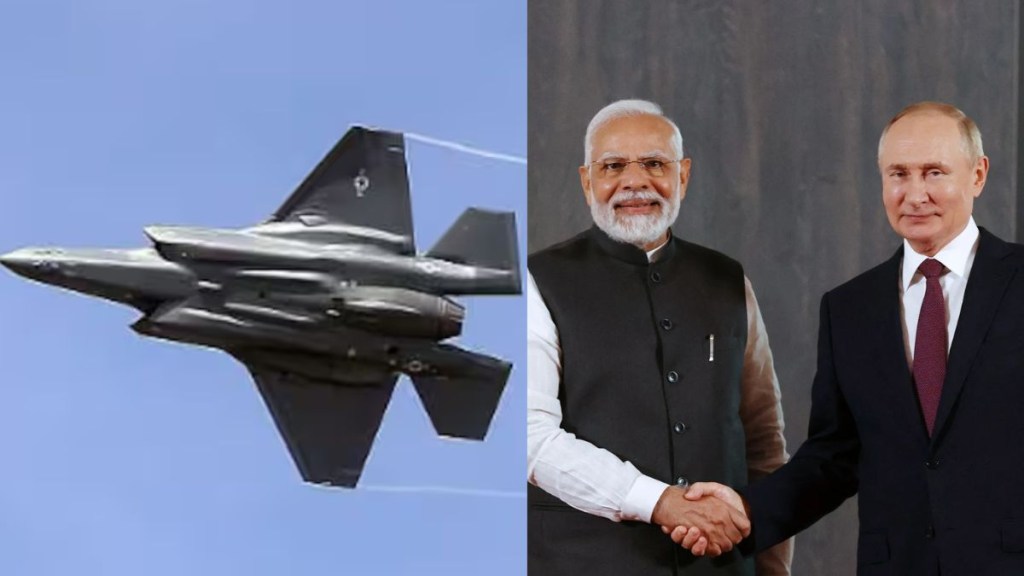
India is getting ready for a high-profile visit. Russian President Vladimir Putin will land in New Delhi for a 30-hour trip between December 4 and 5. Defence will be the biggest talking point, and right at the centre of it is India’s air defence power upgrade, S-400 deal and discussions on the Su-57 stealth fighter jets.
The visit comes at a time when India is balancing its decades-old defence ties with Russia and a fast-growing partnership with the West.
Why India wants more S-400 systems
In 2015, India assessed that threats from both China and Pakistan demanded a much stronger long-range air defence shield. That is when negotiations with Moscow began in earnest. By 2016, an intergovernmental agreement was signed, fast-tracked by then Defence Minister Manohar Parrikar even as the US warned India of possible CAATSA sanctions.
In October 2018, India finally inked a $5.43-billion government-to-government deal for five S-400 regiments each consisting of command posts, radars, and missiles with ranges expanding up to around 400 km. Three of those regiments are already deployed. Two more are expected by 2025–27, but India now wants to go further.
The S-400 has already shown its value on the ground. During Operation Sindoor in May 2025, the system enabled a 300+ km strike on Pakistani assets, demonstrating deterrence that India says no Western system offered without strings attached.
More missiles and five new squadrons
Indian defence planners are preparing a request for 300 additional missiles for the existing S-400 systems. New Delhi is also considering five more S-400 squadrons, strengthening its shield against enemy aircraft, drones, and ballistic threats. This added firepower is likely to be a strong agenda item when Putin meets Prime Minister Narendra Modi.
Su-57 stealth fighters on the table
Another big headline ahead of the summit comes from the Kremlin. Spokesperson Dmitry Peskov has confirmed that India and Russia will discuss the Su-57, Russia’s most advanced stealth fighter jet. “I have no doubt it will be discussed during the visit. The issue of Su-57s certainly will be on the agenda during the coming Putin visit to India,” Peskov told in a video message.
He also stressed that Moscow wants a relationship free from external pressure. The Su-57 would give India a fifth-generation fighter capability, something it currently lacks, even with the upcoming indigenous AMCA project.
S-500 air defence system
Alongside the S-400, India is now also studying Russia’s S-500 air defence system, a more advanced shield capable of Intercepting hypersonic glide vehicles, neutralising advanced ballistic missiles, tackling cruise missiles, shooting down low-orbit satellites.
A joint team from the Indian Air Force and DRDO has already visited Russia to examine the system. Moscow has shown willingness for full technology transfer and joint production, which is a big attraction for India’s “Make in India” defence push. If this happens, India may manufacture launch vehicles, command posts and even engagement radars
India continues to import large volumes of Russian oil and maintain a neutral stance on the Russia-Ukraine conflict, calling for dialogue instead of taking sides.
At the same time, India has stepped up partnerships with the US, France, and other nations to avoid overdependence on any one supplier.
Western sanctions on Moscow have already slowed defence supply chains, including the S-400 deliveries. Still, Russia remains one of India’s biggest military partners, especially in areas where the West hesitates to share technology.