



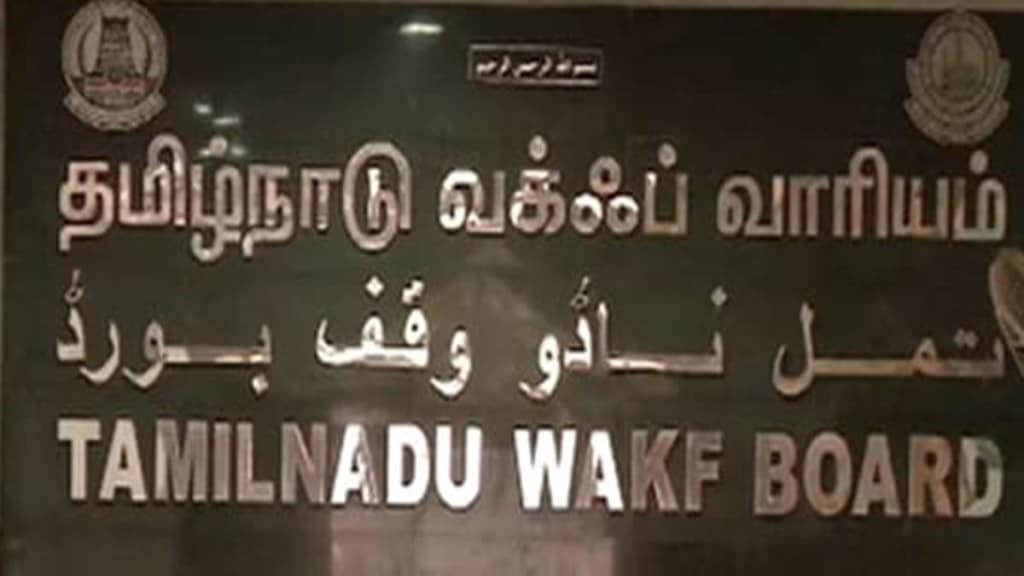
A controversy erupted after a communication sent to a Sub-Registrar in Tiruchi recently claimed that an entire piece of land measuring about 480 acre in Thiruchendurai village belonged to the Tamil Nadu Waqf Board and those wanting to register a deed for any land in the village must obtain a No-Objection certificate from it, The Hindu reported, quoting sources.
The communication places the entire Chandrasekhara Swamy Temple in Thiruchendurai on the southern banks of the Cauvery and its lands under the authority of the Board.
The Tamil Nadu Waqf board is a statutory board established under the Waqf Act 1954 that supervises and manages Waqf institutions and properties in the state.
Also Read: Kerala High Court stays transfer of judge who made ‘provocative dress’ remark
The matter came to notice when a person, who reportedly owns a piece of agricultural land in the village, was asked to obtain an NOC by the Joint III Sub-Registrar of Tiruchi from the Waqf Board when he approached the office for registration of deed.
However, as the news spread that the village is owned by the Waqf Board, villagers brought it to the notice of the District Collector, and threatened to launch protests and questioned the Waqf Board’s ownership claims.
Following this, a revenue official had conducted a preliminary inquiry on Wednesday and held a peace meeting, where representatives of the Waqf board also took part. It was decided that registration of title deeds pertaining to the village could be carried as usual until further orders.
Meanwhile, Waqf Board chairperson M Abdul Rahman told India Today that the land is properly registered.
“In our Waqf Board records from 1954, government surveyed land information is properly registered. As per the information, we have sent details to the sub-registrar’s office with survey numbers or village names. That village is a vast area. Any details for a limited property can be easily provided but this is a vast property and has several details that need to be sent. We don’t want to prolong confusion till we provide full records from the archive,” Rahman said.
Also Read: After year-long hiatus, Supreme Court likely to hear electoral bonds case on September 19
The board holds 389 acres of land that was measured by government recognised surveyors and registered as Waqf property in 1954, they said.
Refuting claims of taking over temple land, Rahman claimed that the Waqf had given 300 acres to a Hindu farmer.