



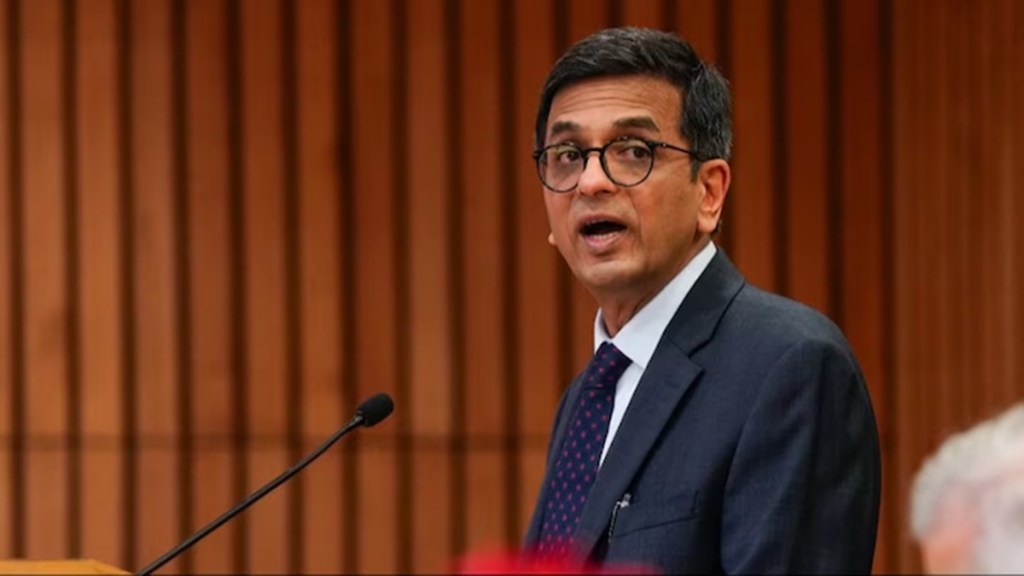
Chief Justice of India (CJI) DY Chandrachud on Monday said the premier investigative agencies should “pick their battles” as they have been “spread too thin”. He also said they should focus more on cases that threaten the national security and economic health of the country and public order.
“I think we have spread out our premier investigative agencies too thin. They must only focus on those crimes that concern national security and crimes of economic offences against the nation,” DY Chandrachud said.
The CJI made the comments during his keynote address at the 20th DP Kohli Memorial lecture in memory of the first director of the Central Bureau of Investigation (CBI).
Underlining the “pressing need to strike a balance”, CJI said that unwarranted confiscation of personal devices by investigative agencies raises concerns of an individual’s right to privacy.
“In the realm of criminal justice, the delicate balance between search and seizure powers and individual privacy rights stands and this is at the cornerstone of a fair and just society,” he said.
Referring to Section 94 of the newly enacted Bharatiya Nagarik Suraksha Sanhita (BNSS), 2023 and Section 185 of the Bharatiya Sakshya Adhiniyam (BAS) 2023, the CJI said these grant the courts and law enforcement agencies “the authority to summon documents and materials, including digital evidence deemed necessary for investigation”.
Also Read: ‘Vested interest group putting pressure on judiciary’: Harish Salve, 600 lawyers write to CJI
“Instances of raids conducted and incidents of unwarranted confiscation of personal devices highlight the pressing need to strike a balance between investigative imperatives and individual privacy rights,” CJI said.
The CJI flagged delays as an “impediment” to justice delivery and called for a multi-pronged strategy to dispose of CBI cases.
CJI’s lecture was held on CBI Day, marking the day when the Central Bureau of Investigation was established in 1963. CBI Director Praveen Sood, Union Home Secretary Ajay Bhalla and Attorney General for India R Venkataramani were present at the event.
The BNSS and the BAS replaced the Code of Criminal Procedure and the Evidence Act respectively.
While underlining the complexities involved in the investigation and trial of a corruption charge, the CJI called for a “swift” delivery of justice.
Also Read: Don’t want Supreme Court to become ‘tarikh-pe-tarikh’ court: CJI Chandrachud
“To prosecute or defend in a CBI case is no easy task. Because of the nature of the investigation undertaken by the CBI, the record and documentary evidence is bulky and complicated. Many scientific and field specific expert witnesses require scrutiny. The number of oral witnesses cited by the prosecution may run into triple digits. The nature of crime may also require close scrutiny of the functioning of a government department or the specialised field,” the CJI said.
“The justice delivery mechanism must be swift. The life of the accused is altered and their reputation is significantly hurt when they are accused of an offence. Delays in the disposal of cases therefore become a significant impediment in the process of justice delivery,” he said.
The CJI also lauded the newly enacted criminal laws as a “significant step towards modernising the justice system.”
“The new criminal laws enacted by Parliament encompass substantive crime, procedure and evidence. These laws aim at digitising various aspects of criminal procedure. This is a significant step towards modernising the justice system. From the initial registration of a First Information Report to the final delivery of judgment, every stage of a criminal investigation is slated to be recorded digitally under the purview of the proposed legislation,” he said.