



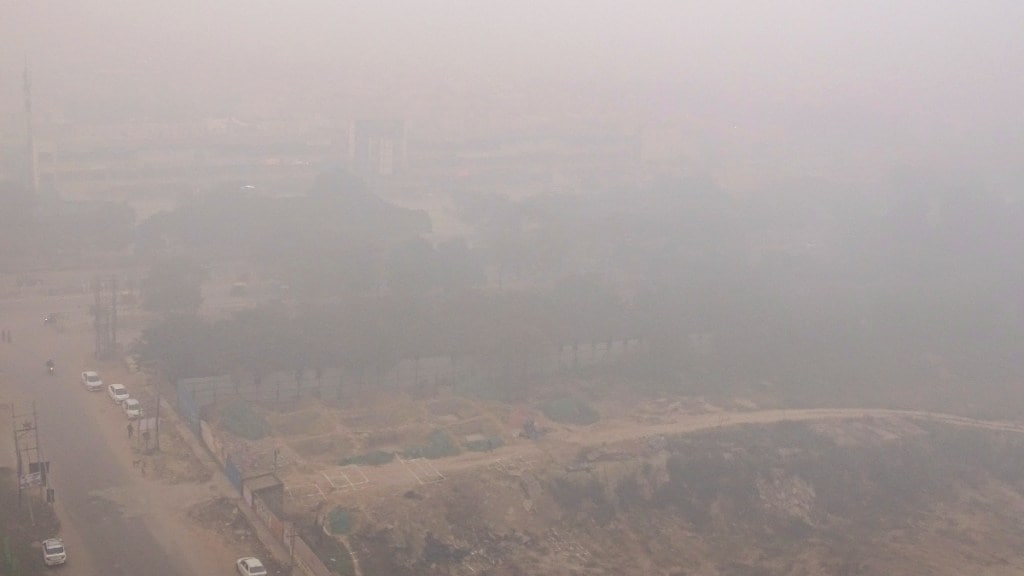
Noida’s air quality stayed in the “severe” category for the third day in a row on Tuesday. The city recorded an Air Quality Index (AQI) of 433, making it once again the most polluted city in the country, according to Central Pollution Control Board real-time data recorded at 11 am.
Air pollution levels also worsened across nearby NCR cities. Greater Noida recorded an AQI of 322, while Ghaziabad stood at 391, both falling in the “very poor” category, as CPCB data recorded at 11 am on Tuesday.
Severe readings across Noida monitoring stations
Within Noida, all four air quality monitoring stations showed pollution levels ranging from “very poor” to “severe”. Sector 1 recorded the highest AQI of 433. Sector 116 followed with a reading of 392, while Sector 125 and Sector 62 reported AQI levels of 389 and 377 respectively.
Pollution has remained high throughout December, with AQI levels regularly crossing the severe mark in Noida, Greater Noida and Ghaziabad.
Delhi air quality in ‘very poor’ category
Delhi also woke up to thick fog on Tuesday morning, adding to air quality concerns. The city’s AQI stood at 390, placing it in the “very poor” category, according to CPCB data. Dense fog reduced visibility across several areas, disrupting road traffic and making the morning commute difficult. Weather officials said moderate to dense fog is likely to continue till Wednesday, affecting daily travel and routines.
The Capital had seen some relief last week when air quality improved and the AQI dropped below 300 after staying in the “very poor” to “severe” range for weeks. Before Monday, the last time Delhi recorded “severe” air quality was on December 23.
According to data from the Indian Institute of Tropical Meteorology, vehicles are the biggest contributor to PM2.5 pollution, accounting for 16.22%. Industries contribute around 8.4%, while household emissions add about 4%. Waste burning, construction activity and road dust together make up nearly 5% of the pollution load.
Unfavourable weather conditions have made the situation worse. Wind speeds remain low at just 4–5 kmph, preventing the dispersion of pollutants.
Children are the worst affected by rising pollution levels. Around 43% of pollution-related health insurance claims came from children aged 0 to 10 years, showing that they are nearly five times more impacted than any other age group, according to a report by Policybazaar.