



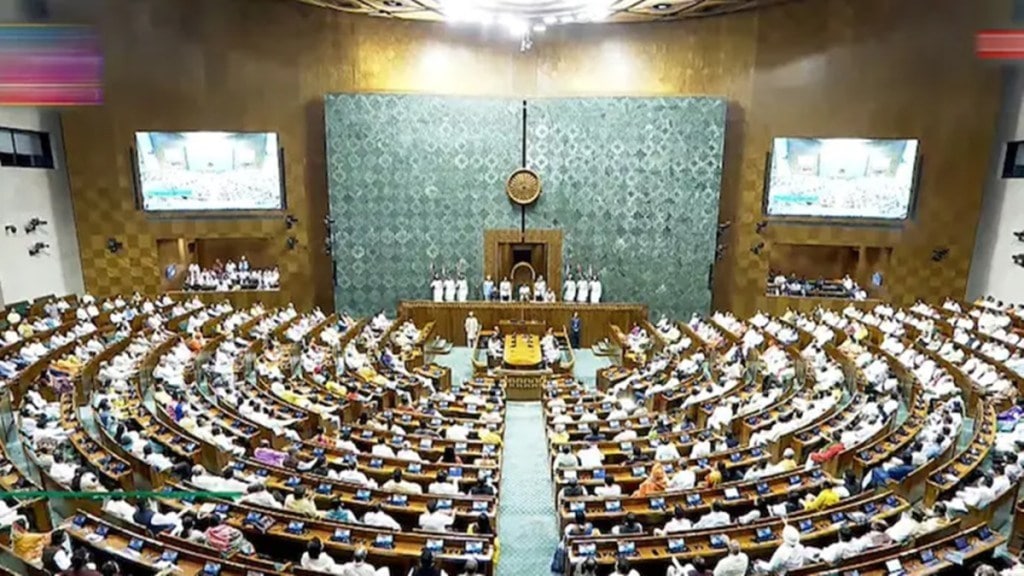
The Lok Sabha on Thursday passed a bill to replace the 20-year-old Mahatma Gandhi National Rural Employment Guarantee Act (MGNREGA), amid slogan-shouting and uproar by Opposition members.
Replying to an eight-hour-long debate on the Viksit Bharat Guarantee for Rozgar and Ajeevika Mission–Gramin (G RAM G) Bill, Rural Development Minister Shivraj Singh Chouhan alleged large-scale corruption and inefficiencies in the implementation of MGNREGA, arguing that the scheme had “outlived its utility”. He said the government’s focus had shifted from merely paying wages to creating permanent assets, developing model villages and strengthening rural infrastructure.
Chouhan said the new law was the outcome of extensive deliberations and would enable expenditure of ₹10–11 lakh crore on water conservation, core rural infrastructure, livelihood creation and special works to mitigate extreme weather events. Under the G RAM G Act, every rural household will be statutorily guaranteed 125 days of wage employment in a financial year, with states required to frame compatible schemes within six months of the law’s commencement.
From Demand-Driven to Asset-Focused
The Opposition strongly objected, accusing the government of attempting to dismantle the world’s largest employment guarantee programme. Congress leader K C Venugopal sought referral of the bill to a parliamentary panel, a request rejected by Speaker Om Birla, who said the House had already debated the legislation in detail during a sitting that stretched past midnight.
The G RAM G Bill was finally passed by a voice vote amid continuing uproar, after which the Lok Sabha was adjourned for the day.
G RAM-G seeks to correct this imbalance by actually converting the programme into a centrally sponsored scheme (which it already is but never enforced) with a standard 6:4 Centre–State funding ratio for non-hilly states and 9:1 for north-eastern and hilly states, bringing it in line with other major central schemes.
Balancing Agriculture and Wage Work
Despite moving away from an open-ended demand model, the Centre has proposed to increase the statutory employment guarantee from 100 to 125 days per rural household. The objective is to ensure income support during agricultural lean seasons while addressing unintended distortions caused by public works during peak farm activity.
The Bill allows states to notify up to 60 days of no-work periods in aggregate during peak sowing and harvesting seasons, ensuring labour availability for agriculture and preventing artificial wage inflation. At the same time, states will be legally bound to pay unemployment allowance if work is not provided during the eligible periods.
A major shift under the new framework is the reorientation of works away from fragmented, low-impact activities towards strategic rural infrastructure creation. Priority will be given to four categories: water security, core rural connectivity, livelihood-supporting infrastructure, and climate-resilience projects. The aim is to ensure that public expenditure under the scheme results in durable assets that raise agricultural productivity, improve market access and strengthen rural resilience to climate shocks.
The proposed law also mandates Viksit Gram Panchayat Plans, prepared at the local level and integrated with national spatial platforms, to improve planning coherence and asset quality. This will be complemented by a much tighter digital governance framework, including AI-based fraud detection, real-time monitoring systems, GPS-enabled verification and stronger, more frequent social audits.