



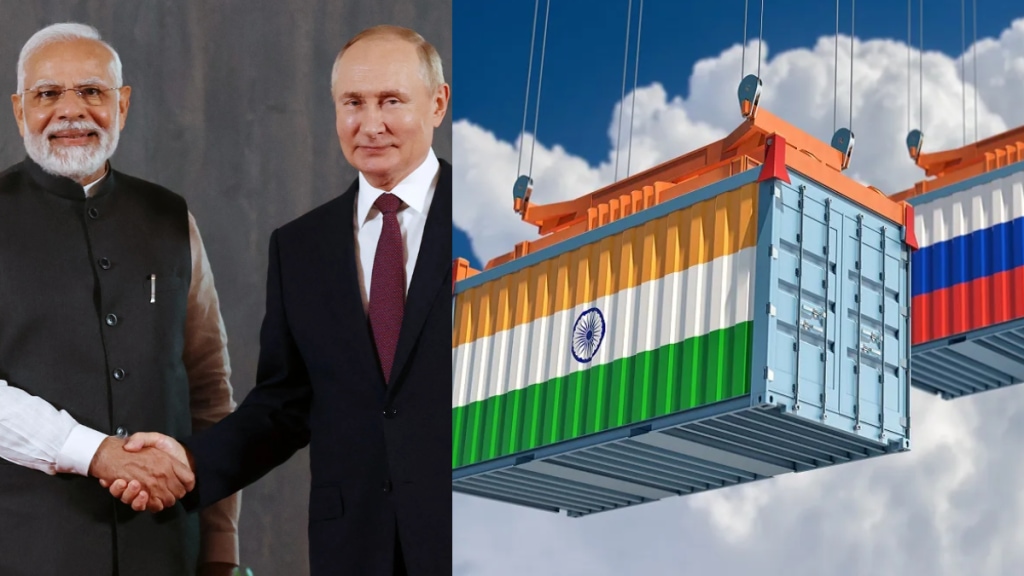
When Vladimir Putin touches down in New Delhi on Thursday for a two-day official visit, the spotlight will be on one issue above all: the persistent trade imbalance between India and the Russian Federation.
The talks between him and Narendra Modi are expected to explore ways to lower duties, reduce non-tariff barriers, ease movement of skilled and semi-skilled workers, and strengthen cooperation in sectors such as energy, defence, health care and civil nuclear power.
According to the Ministry of External Affairs (MEA), the mobility agreement for Indian workers headed to Russia, to be signed during the visit, is the “single most important development” since the last annual summit in 2024.
At a press conference ahead of the visit, Russian spokesperson Dmitry Peskov spoke candidly about the “real imbalance” in bilateral trade: “We are aware of that. We are selling much more than we buy from India.” He added that Moscow is open to jointly working on ways to “increase imports from India,” suggesting that Russia might raise its purchases of Indian goods and services to ease the imbalance.
How big is the gap? The reality of the India-Russia trade deficit
The numbers leave little room for doubt. According to the Indian embassy in Moscow, in the financial year 2024–25, total bilateral trade reached $68.7 billion, but Indian exports to Russia were only about $4.88 billion, while imports from Russia stood at about $63.84 billion.
This gap of nearly $59–60 billion has long been a concern for Indian officials. Most of what India imports from Russia is energy: crude oil, petroleum products, fertilizers and other raw materials. Meanwhile, India’s exports to Russia remain much smaller and more concentrated in items such as machinery, pharmaceuticals, chemicals and other industrial goods.
Indian exporters also face more than 65 non-tariff barriers in the Russian market, especially on agricultural and marine products, making it harder to compete. Because of this structural imbalance, many experts and Indian policymakers view the deficit as deep and lasting, unless major changes are made in trade composition and export outreach.
Why Russia now wants to close the gap
So why is Russia suddenly keen on buying more from India? There are several reasons and for Moscow, it makes a lot of sense. Diversifying Russia’s export basket to India: After years of supplying oil, fuel and raw materials to India, Moscow now seems ready to import more Indian goods — from pharmaceuticals, machinery and chemicals to perhaps agro-products. This would help rebalance trade and boost Indian exports. As Peskov put it, “We want to buy more from India.”
Easing sanctions pressure and payment risk: Given sanctions on Russian energy exports by Western powers, Russia is increasingly looking to build a trade architecture with India that relies less on third-country currencies. Peskov explained the importance of using national currencies in bilateral trade.
Moscow sees India not just as a buyer of crude, but as a long-term strategic partner. Expanding trade in diverse sectors, energy, defence, civil nuclear, skilled labour mobility, helps deepen the relationship beyond a simple oil-for-rupees exchange
Mutual benefit and long-term target: Both countries reportedly aim to bring bilateral trade and associated investment to much higher levels in the years ahead. Russia views increased Indian imports as a way to help reach those targets while maintaining long-term strategic ties.
What the visit could deliver
If the visit goes well, it could deliver important steps toward rebalancing trade: lowering tariffs, removing non-tariff barriers, easing movement of skilled workers to Russia, and perhaps signing trade or economic cooperation agreements.
On the flip side, the task is far from easy. India’s export base to Russia is still narrow and heavily skewed toward industrial and chemical goods; Russia’s import appetite from India will have to shift substantially for the deficit to shrink meaningfully. Plus, non-tariff barriers, especially on Indian agricultural and marine goods are deep-rooted and require time and sustained diplomacy to dismantle.
Russia, it appears, now wants to address this imbalance. Its eagerness to “buy more from India”, diversify exports from raw materials to include more Indian goods, and build a trade architecture insulated from external pressures shows that Moscow sees long-term interest in a more balanced, sustainable partnership.