



By Gayatri Srivastava
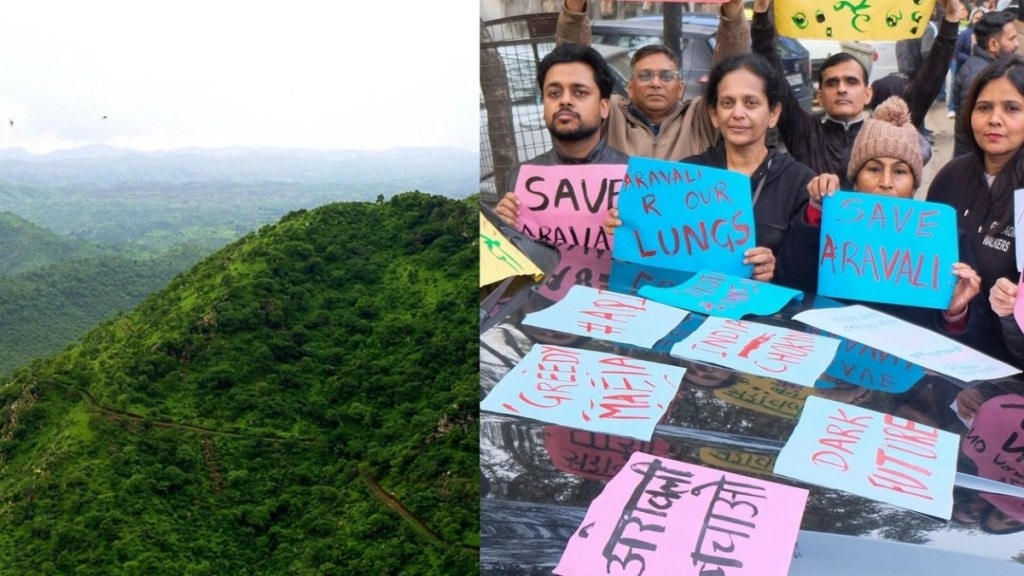
At first glance, the recent judicial acceptance of a narrower definition of the Aravalli Range appears to be a technical exercise—a question of maps, classifications, and boundaries. In reality, it represents a deeper legal shift – one where environmental damage is not treated as a reason for stronger protection.
What constitutes the Aravalli Range?
The Aravallis are among the world’s oldest mountain systems. Over centuries of natural erosion and decades of intensive anthropogenic interference—particularly mining and construction—much of the range has been flattened or fragmented. In many places, the hills no longer dominate the surface landscape. But a hill does not cease to be part of the range just because it has been quarried into invisibility; such destruction is evidence of harm, not proof of non-existence. This distinction is critical, yet it is precisely this scientific nuance that the law now appears unwilling to engage with.
The premise of environment law is to recognise that ecosystems perform vital functions and can continue to exist—even after they have been damaged. The underground rock formations, mineral structures, and water channels that define the Aravalis still exist beneath the surface. These structures help recharge groundwater, regulate water flow, moderate heat, and slow desertification. None of these functions depend on whether a hill is visually prominent. Damage to one segment of the range has cascading effects across regions, particularly in water-stressed areas of Haryana and the Delhi-NCR, which already face severe air and water stress.
This is why treating damaged land as if it never formed part of the Aravalli system is legally significant. It converts the effect of environmental harm into a justification for removing protection.
An overview of Indian environment jurisprudence
Historically, Indian environmental jurisprudence has rejected this logic. The Supreme Court has repeatedly rejected reliance on narrow, formalistic classification of forests as the sole basis for environmental protection. In the judgement of T.N Godavarman Thirumulpad vs Union of India (1996), where the top court ruled that the term “forest” must be understood according to its broad, dictionary sense. The reasoning was straightforward: environmental protection cannot be contingent upon the happenstance of notification. It is this reasoning that has shaped Indian environment jurisprudence. Courts developed the precautionary principle; which means that when an activity poses a serious risk to the environment, the absence of complete scientific certainty can not be a reason to delay the protection. In simpler terms, the law prefers caution over regret. Waiting for perfect data in the face of potential irreversible damage is seen as irresponsible.
Alongside this, sits the public trust doctrine, which holds that natural resources- forests, rivers, mountains- are not owned by the State in the ordinary sense. The government holds them in trust for the people of this country and future generations. The expansive interpretation of Article 21 i.e., right to life and liberty, includes the right to a clean and healthy environment. Thus, environmental adjudication, at its best, recognises that scientific uncertainty and administrative gaps demand greater, not lesser, judicial vigilance.
Decoding the findings of Central Empowered Committee
The recent narrowing of the Aravalli definition departs from these principles. The shift relies heavily on the findings of the Central Empowered Committee (CEC). While the committee correctly identifies the historical absence of uniform notifications and the administrative confusion surrounding Aravalli protection, it commits a deeper analytical error by treating a lack of uniform records, visible hills and clear classifications as proof that these areas fall outside the Aravalli system altogether. Observations on geological properties and the cumulative impact of decades of illegal and unregulated mining receive insufficient engagement, if not outright dismissal.
The consequences are not abstract. Once areas are excluded from the Aravalli definition, environmental clearance requirements no longer apply. Mining operations acquire legitimacy, real estate development escapes environmental clearance thresholds, and state authorities are insulated from accountability for decades of enforcement failure.
Even though the courts are neither expected nor equipped to function as scientific bodies, environmental adjudication requires a critical engagement with expert opinion. Not all expertise is equal, and not all expert bodies speak the language of science. Administrative classifications serve governance purposes; they do not define nor reflect geological reality. When such differentiation fails, they risk transforming the precautionary principle into its opposite, permitting development in the face of uncertainty rather than restraining it.
PIB Clarification : The fatal ‘hill’ and ‘range’ distinction
While the PIB statement tempers the immediate alarm, it does not resolve the deeper legal concerns. In fact, the PIB clarification emphasised that; (i) environmental safeguards remain in place, i.e., mining, construction and other development activity remain governed by environment clearance laws and other regulations (ii) the Supreme Court has not de-notified the Aravalli range and that the judgement merely clarifies the legal position regarding what constitutes the Aravalli range for regulatory purposes. Existing forest land, protected areas and regions already covered under environmental laws continue to remain protected (iii) Third, the clarification argued that there was never a single, legally recognised definition of the Aravalli range across states. Different criterias have been used over the years, leading to uncertainty and inconsistent enforcement.
This is where the legal gaps remain unaddressed; one by repeatedly stating that ‘already protected’ or notified areas remain safeguarded, the clarification implicitly accepts that areas not previously notified may now fall outside special protection. Second, where a region is no longer recognised as a part of a sensitive ecological system, projects are assessed in isolation-which weakens the ability of law to respond to long-term, system-wide degradation such as groundwater depletion or desertification. Third, the clarification remains silent on illegal mining.. Fourth, repeatedly viewing the Aravallis system through the lens of mining-regulation.
One of the most critical flaws in the government’s clarification lies in the distinction it seeks to draw between a ‘hill’ and a ‘range’. This fatal distinction exposes a fundamental misunderstanding of both geology and environmental law. A ‘range’ is not a collection of visible hills stitched together on a map. It is in fact a continuous geological and ecological system, defined by characteristics like underlying rock formations, mineral continuity, and long-term ecological function. If this distinction is accepted, as stated above, environmental protection becomes conditional on visibility rather than existence and degradation becomes destiny. Soon this logic can apply to: wetlands erased by landfilling, floodplains consumed by encroachment and forests hollowed out through gradual thinning.
The Delhi Ridge Paradox
This judgement sits uneasily with the Supreme Court’s approach in the Delhi Ridge matter, where the Ridge (northern range of the Aravallis) was recognised as an ecologically continuous system whose protection cannot be negated due to inconsistent administrative records. The contrast between the two judgements is stark; ecological continuity is affirmed as legally significant in principle, yet diluted in practice through a case-specific balancing that privileges administrative convenience and development imperatives.
In the end, what must be understood is that geological reality does not disappear merely because the State fails to recognise it. Geological reality, in fact, is that within the crevices of this billion year old range, reside a variety of species of flora and fauna. However, when law allows administrative omission to override scientific truth, environmental adjudication slips from protection to permission, leaving the promise of sustainable development dangerously hollow.
Gayatri Srivastava is an advocate at the Delhi High Court and presently works with the law firm, Anantham Legal. She has previously also worked as a research assistant in the field of environmental law to Prof. Charu Sharma (Executive Director, Centre for Environment and Climate Change)